
Family-tested, kid-approved. Top board games for ages 6–9

Best Board Games for 6-9 Year Olds: From Luck to Strategy (2026 Guide)
Board games are more than just a way to pass the time—they are a secret weapon for child development. At this age, children are ready to move beyond simple luck and start exploring strategy, teamwork, and critical thinking.
What Your Child Learns While Playing:
Social Interaction: Learning how to win with grace and lose with a smile.
Problem-Solving: Thinking two steps ahead to beat the challenge.
Creativity: Immersing themselves in vibrant themes and new worlds.
Teamwork: Working together in cooperative adventures to reach a common goal.
The Quick Guide: Below, you’ll find our hand-picked collection of easy-to-learn games that balance friendly competition with meaningful skill-building.
As an Amazon Associate, I earn from qualifying purchases. This means if you click on a link, I may earn a commission. It doesn’t mean you pay more for the products in any way.
Overview of
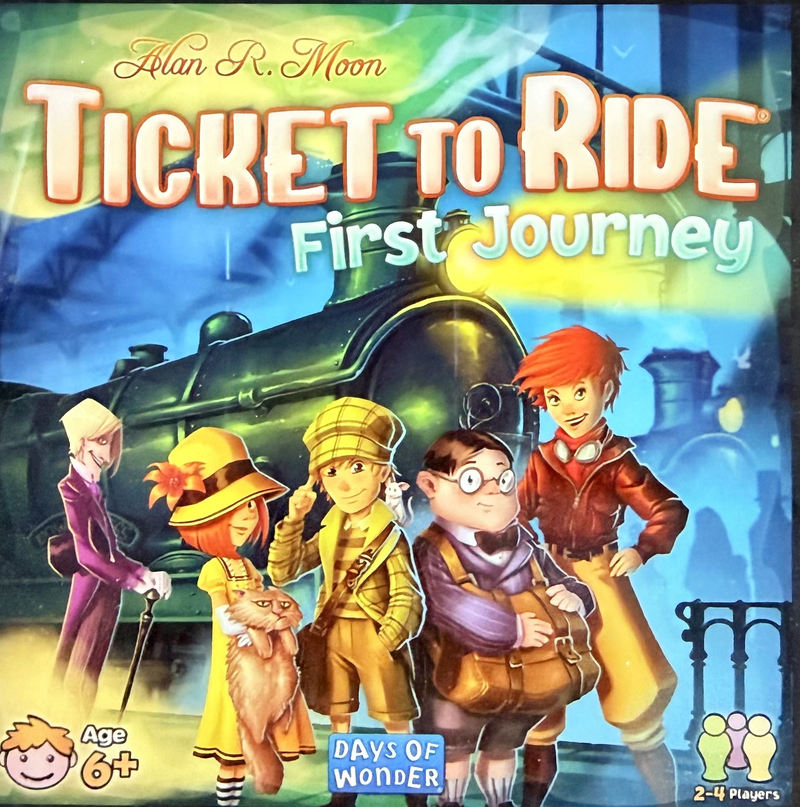
Ticket to Ride: First Journey
Whats it About: An epic train trip made simple. Collect colored train cards to claim routes
Why it’s perfect: It replaces complex rules with easy-to-read icons.
Goal: Connect cities to win the Golden Ticket.
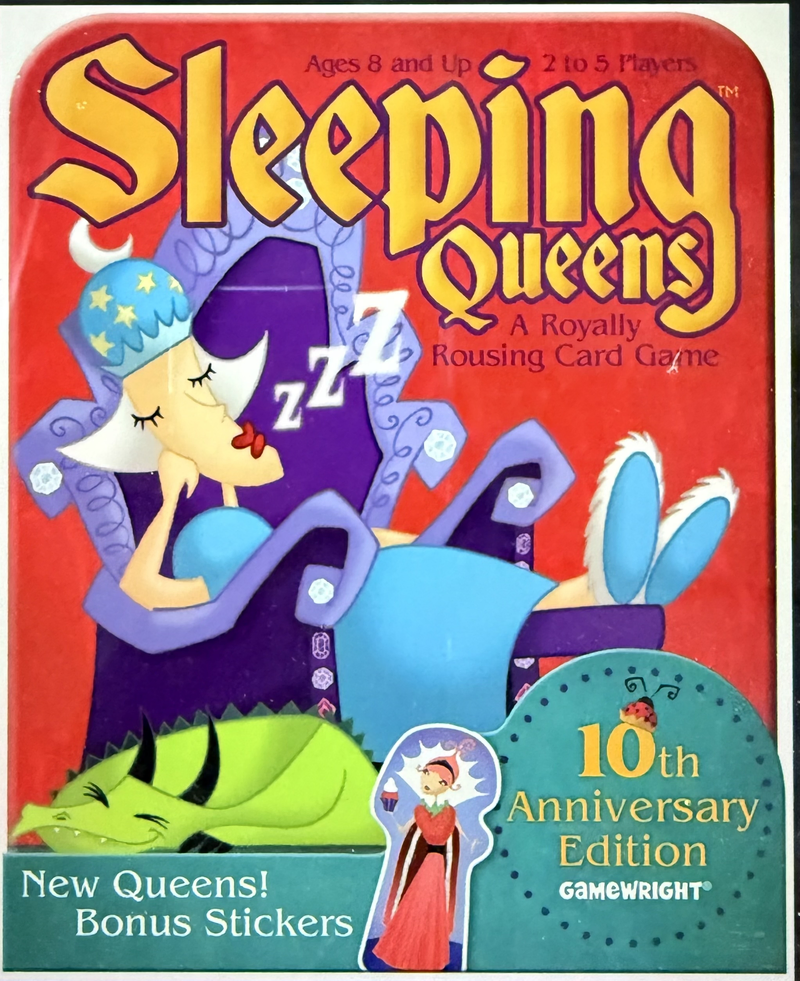
Sleeping Queens
The Vibe: As one of the most popular card games for 6-9 year olds, Sleeping Queens tasks players with using critical thinking and a little bit of luck to rouse napping nobles from their slumbers.
Why it’s perfect: Invented by a 6-year-old! It teaches basic math as kids wake up the Pancake Queen or the Tie-Dye Queen.
Goal: Wake the most queens to win.
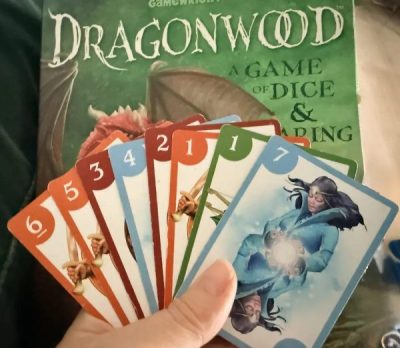
Dragonwood
What’s It About: This dice and card game is about capturing creatures in a deep-forest adventure.
Why it’s perfect: It’s a great “intro to strategy” for kids who love fantasy.
Goal: Capture monsters (including 2 special dragons) to earn the most points.
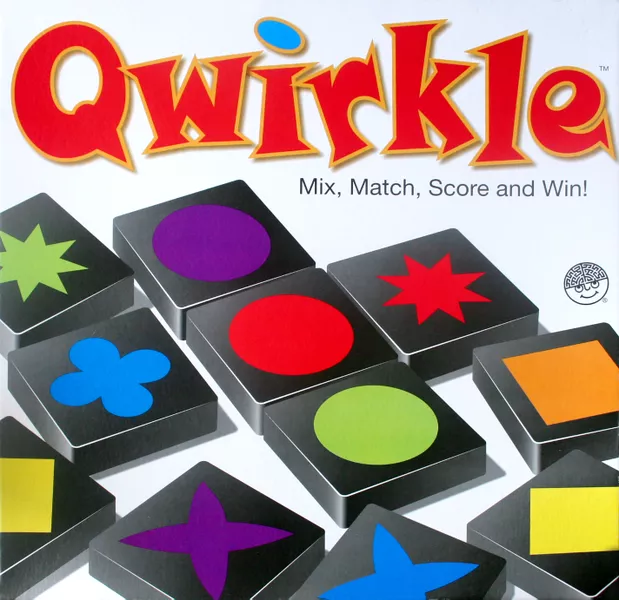
Qwirkle
What’s it About: Qwirkle is a fantastic tile-placement strategy game where players use 108 colorful wooden blocks to build rows based on matching shapes or colors. Since it requires no board and can be played on any flat surface, it is one of the best tactile board games for 6-9 year olds to develop spatial reasoning and pattern recognition skills.
Why it’s perfect: No reading required. If your child can match a red circle to a red square, they can play!
Goal: Create lines of 6 matching tiles.
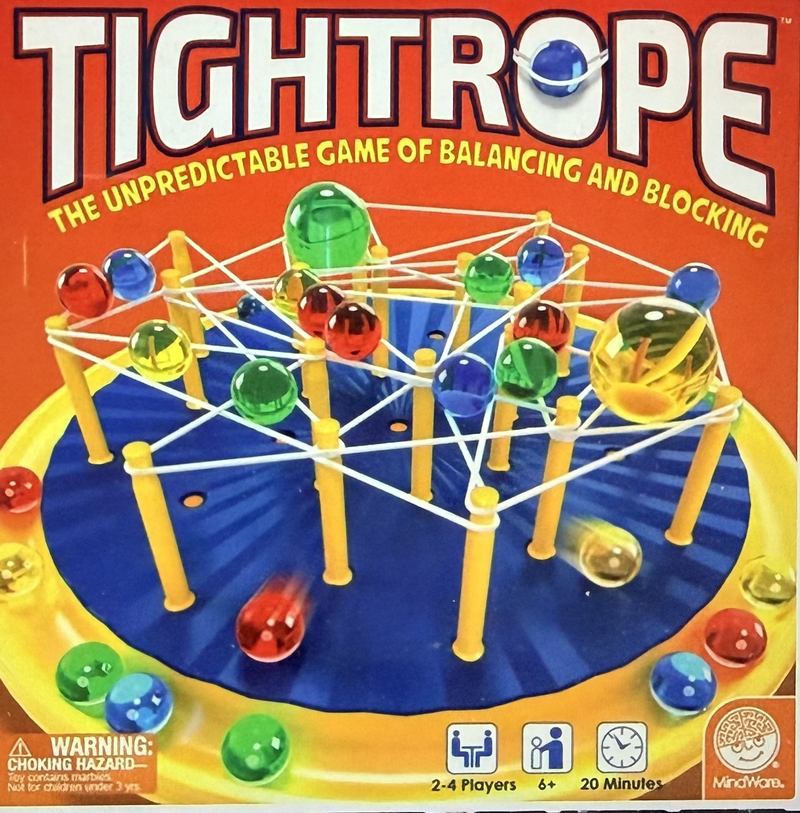
Tightrope Strategy
The Vibe: A tactile strategy game where players must carefully balance marbles on swaying, bouncy rubber bands to be the first to empty their pile. It is a fantastic choice for a family game night because it challenges fine motor skills and spatial awareness in a high-stakes race where one wrong move can send your pieces tumbling.
Why it’s perfect: It combines physical skill with strategy. Great for kids who have a hard time sitting still.
Goal: Place your pieces without tipping the rope.
It’s no surprise that Ticket to Ride has been a family favorite for generations. Now available in over 33 languages, it is widely considered one of the best board games for kids aged 6–9.
The beauty of this game lies in its simplicity. As game designer Alan R. Moon famously said, “The rules are simple enough to write on a train ticket.” It’s a perfect mix of luck (drawing the right cards) and strategy (mapping out your path), making it an ideal easy-to-learn family game.
Ticket to Ride: At a Glance
Complexity: 2/5 (Easy to learn, strategy)
Setup Time: 5 Minutes
Play Time: 30–60 Minutes
Best For: Teaching spatial planning and resource management.
Choose Your Adventure: Map Destinations
While the original game features North America and Canada, there are now dozens of versions to explore. Whether you want to travel through London, Paris, India, or even the Northern Lights, there is a map for every family interest.
Pro Tip: For younger players (ages 6–7), look for Ticket to Ride: First Journey. It features a smaller map and simpler goals to help them master the mechanics before moving to the standard editions!
How to Play Ticket to Ride (Simple Guide)
The Objective: Earn the most points by connecting iconic cities and claiming train routes across the map.
On your turn, you simply choose one of the following three actions:
Draw Train Cards: Take two cards from the deck or the face-up pile. These cards are your “currency” to buy routes.
Claim a Route: Match the color and length of a route on the board with cards from your hand. Place your plastic trains down to claim it!
Example: To claim a 3-space blue route, play 3 blue cards.
Draw Destination Tickets: Take three new goal cards. These give you massive bonus points if you connect the two cities listed, but be careful—if you don’t finish the route, those points are deducted!
Frequently Asked Questions – Ticket to Ride
Q. Is Ticket to Ride good for an 8-year-old?
A. Yes! It is frequently cited as the best strategy board game for 8-year-olds because the rules are intuitive, but the strategy grows as the child gets older. It helps develop counting, color matching, and long-term planning skills.
Q. How long does it take to learn Ticket to Ride?
A. The publisher, Days of Wonder, states the game can be learned in under 5 minutes. Most families can start playing their first round immediately after reading the three basic action choices.
Q. What is the best Ticket to Ride version for beginners?
A. For families with kids aged 6–9, the original North American map or Ticket to Ride: Europe are the best starting points. If you have very young children, Ticket to Ride: First Journey is specifically designed for the 6+ age group.
- 8+
- 2-5 Players
- 20-30 mins
A fast-paced game of waking queens and dodging knights.
The Objective
Be the first to wake the queens and reach 45 points (or collect the most queens).
How to Play
The Setup: You start with 5 cards in your hand. The 12 Queen cards are placed face-down in the center.
Your Turn: You must perform one of these actions:
Play a King: Wake any face-down Queen and add her to your collection.
Play a Number Card: Discard it to draw a new card.
Play Matching Numbers: Discard a pair (e.g., two 3s) to draw two new cards.
Play a Power Card: Use a special ability to attack or defend.
- 8+
- 2-4 Players
- 30-45 mins
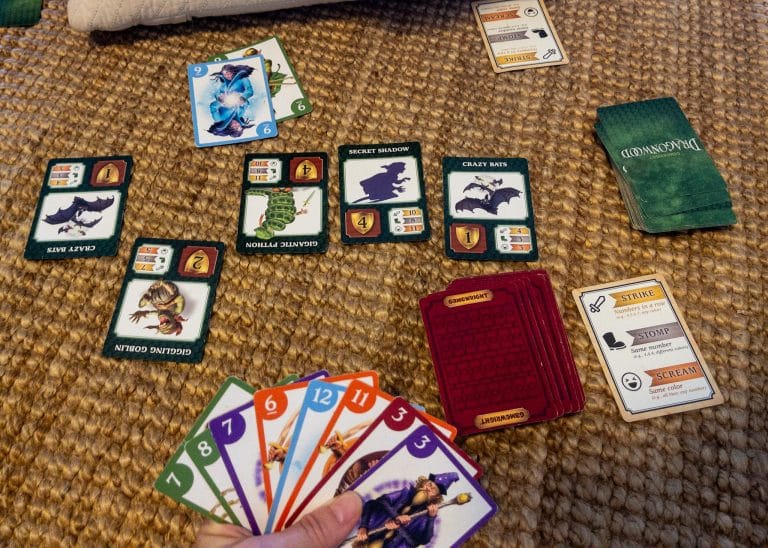
A mythical adventure where you stomp, strike, and scream your way to victory.
How to Capture Creatures
In Dragonwood, you collect Adventurer Cards to earn dice. The more cards you play, the more dice you roll to defeat monsters.
The Goal: Match or beat the “Capture Value” on the card.
The Mechanics:
Stomp: Play cards of the same number (e.g., three 7s).
Strike: Play cards in numerical order (e.g., 3, 4, 5).
Scream: Play cards of the same color (e.g., 4 orange cards).
Strategic Highlights
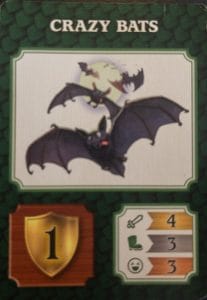
Risk vs. Reward: A “Crazy Bat” is worth only 1 point and has a Stomp value of 3. You could risk it with 1 die, or play 2 cards to be safe.
Enhancements: Look for cards like the Silver Sword (+2 to capture attempts). These don’t give points but make every future turn easier!
Why We Love It (From Our Family)
We bought Dragonwood for our son when he was 8 years old, and I still remember playing it for two hours solid on the living room floor.
Years later, he’s a teenager, and we’re still playing it. It has become our go-to family game because it’s:
Quick to set up (under 2 minutes).
Easy to learn (perfect for a weeknight).
Screen-free connection (the best way to build memories).
Quick Stats for Parents
Ideal Age: 8+ (but great for younger kids with a little help).
Play Time: 20–30 minutes.
Skills: Probability, set collection, and decision making.
- 6+
- 2-4 Players
- 30-45 mins
Objective
If you love the logic of Scrabble but prefer colors and shapes over letters, Qwirkle is a must-have. It is widely considered the best board game for kids 6–9 to hone tactical maneuvers, strategic planning, and forward-thinking.
With 108 wooden tiles featuring 36 different color-symbol combinations, the possibilities are massive, yet the gameplay remains incredibly simple.
Qwirkle Rules at a Glance
The Goal: Score the most points by building lines of tiles that match in color or shape.
The “Qwirkle”: Complete a line of 6 unique tiles to score a massive 6-point bonus!
Skills: Spatial recognition, pattern matching, and point counting.
How to Play Qwirkle
Setup: Every player starts with 6 hidden tiles. The player with the largest matching group (e.g., three different green shapes) goes first.
On your turn, you choose one of two actions:
1. Place Tiles
Add tiles from your hand to the board to expand a line.
The Rule: Tiles in a line must share the same shape (but different colors) OR the same color (but different shapes).
Scoring: You get 1 point for every tile in the line you just created or extended.
2. Trade Tiles
If you’re stuck or don’t like your hand, you can skip your turn to swap any number of tiles for new ones from the bag.
FAQ’s
Q. Is Qwirkle easy for a 6-year-old to play?
A. Absolutely. Because there is no reading required, Qwirkle is one of the best “grown-up” games that children can play on equal footing with adults. It’s a great way to practice basic addition while having fun.
Q. How do you score a “Qwirkle”?
A “Qwirkle” happens when you place the 6th and final tile in a sequence (e.g., all 6 different shapes in red). You score 6 points for the line plus a 6-point bonus, totaling 12 points!
Q. Why is Qwirkle a top-rated family game?
A. It’s portable, durable (wooden tiles, no board needed), and offers a “easy to learn, hard to master” depth that keeps parents from getting bored.
- 6+
- 2-4 Players
- 20 mins
How to play Tightrope
Each player is dealt 5 pegs and bands, and each person takes turns to place these on the board. Bands must go around at least 3 pegs. Once completed, each player then places a marble onto the bands. If they fall through, you place them back in your container. The first person to place all the marbles wins.
A great board game for hand-eye coordination and spatial recognition.
Frequently Asked Questions
Best Board Games For 6-9 year olds that teach basic maths, strategy and fine motor skills.
What are the best games for a 7-year-old with a short attention span?
The key is high engagement and tactile feedback. You want games where players are physically involved or where the “turn-around” time is very fast.
Tightrope: This is a fantastic choice because it is physically intense; the constant threat of marbles falling off the rubber bands keeps a child’s eyes glued to the table.
Dragonwood: Players are constantly rolling dice and playing cards to capture mythical creatures, so the action never stalls.
Taco Cat Goat Cheese Pizza: A high-energy card game that requires constant vigilance, keeping everyone active and laughing.
How can board games help with 2nd and 3rd-grade math?
Board games turn abstract equations into a tactile race for victory.
Sleeping Queens: This is a classic for reinforcing addition. Players discard number cards by creating equations (e.g., playing a 2, 3, and 5 because $2 + 3 = 5$).
Dragonwood: Kids calculate “probability” and basic math as they decide how many dice to roll to defeat a monster based on its strength.
Zeus on the Loose: A brilliant game for mental arithmetic where players add numbers to reach exactly 100.
Should I let my 6-year-old win at board games?
By age 6, children are ready to build emotional resilience. While they shouldn’t lose every time, they are old enough to learn “good sportsmanship.”
Sleeping Queens: Because this game relies on a mix of luck (drawing the right cards) and strategy, a 6-year-old can naturally beat an adult. This provides a genuine sense of victory without the adult having to “throw” the game.
Tip: Instead of playing poorly, use “handicapping” (e.g., start with fewer cards) so the child wins through their own effort.
What are good cooperative games for siblings of different ages?
Cooperative titles are the ultimate “sibling harmony” tool because they remove the “older vs. younger” power dynamic.
Ticket to Ride – First Journey: While competitive, the clear visual goals allow an older sibling to mentor a younger one, helping them identify landmarks and plan routes together.
Qwirkle: Since tiles are played in an “open” format on the table, siblings can collaborate on finding the highest-scoring moves, fostering a mentor-style relationship.
Outfoxed!: A cooperative “whodunnit” where players must work together to gather clues and catch a thieving fox.
Keep Exploring More Games
There are plenty more options if you wish to explore more.
- Board Games By Age
- Board Games By Type
- Or Explore our Articles for something different
- Uno Show Em No Mercy is always a favourite.
- Fast paced games
- Monopoly Deal

Share your family memories.
We’d love to see your special family time together. Send a photo, share you pick from this collection or lets us know a favourite game you like to play.
Or be a guest post.


