Top 6 Cooperative Board Games for a Meltdown-Free Night
Cooperative board games for kids who hate to lose are the ultimate solution for maintaining family harmony. We’ve all been there: a fun afternoon turns into a meltdown because of a “game over” or a competitive loss. If you are looking for ways to reconnect without the screens while keeping the peace, the answer lies in non-competitive family games for kids who hate to lose.
In a cooperative board game, everyone plays on the same team. You win together, or you lose together—which means the “sting” of defeat is shared, and the joy of victory is a group celebration.
I found shifting the focus from “me vs. you” to “us vs. the game,” cooperative board games, helps children develop social-emotional skills and resilience. These picks are the best family games for all ages because they ensure that when the game ends, everyone is still on the same team.
I am an Amazon Affiliate, and if you click a link, I may earn a small commission at no extra cost to you.
Cooperative Board Games for Kids Who Hate to Lose - Overview
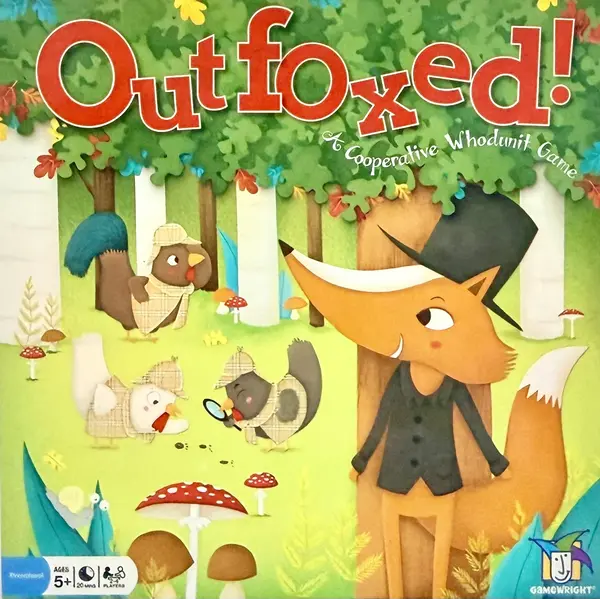
Outfoxed
- Ages: 5+
- Players: 2–4
- Play Time: 20 minutes
- The Vibe: A charming, cooperative whodunit where players become clever detectives on the trail of a pie-stealing bandit.
- What it Teaches: Deductive reasoning, probability, and collaborative problem-solving.
- Game Overview: Plumpert’s prized pot pie has gone missing, and it’s a race to crack the case! Players move around the board to collect clues and use a “Secret Decoder” to rule out suspects. You’ll have to work together quickly—the guilty fox is high-tailing it toward the exit. If you don’t identify the right culprit before they reach the burrow, the fox gets away!
- Want to Learn More: Click How To Play
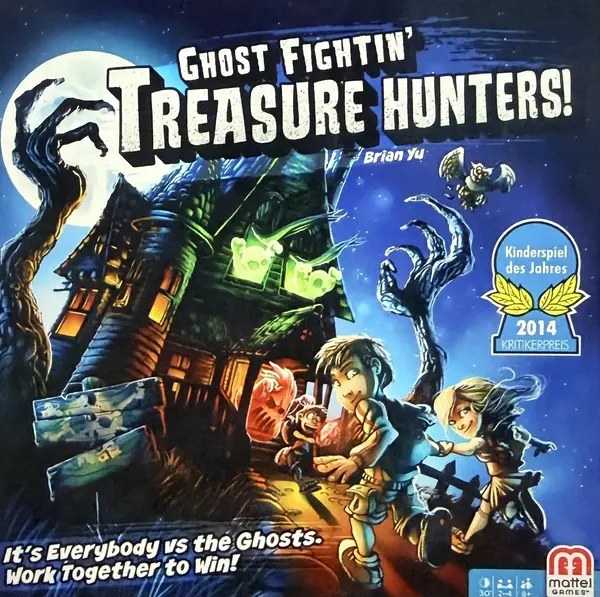
Ghost Fightin’ Treasure Hunters
- Ages: 8+
- Players: 2–4
- Play Time: 30 minutes
- The Vibe: A spooky, high-stakes race through a haunted mansion where teamwork is your only hope for survival.
- What it Teaches: Collaborative problem-solving, risk assessment, and managing shared anxiety under pressure.
- Game Overview: In this award-winning cooperative game (also known as Geister, Geister, Schatzsuchmeister!), you and your team of four treasure hunters must recover eight hidden jewels.
- But beware—the ghosts are multiplying. If you don’t clear the phantoms quickly, the house becomes “fully haunted,” and the team loses!
- How To Play: Click Here
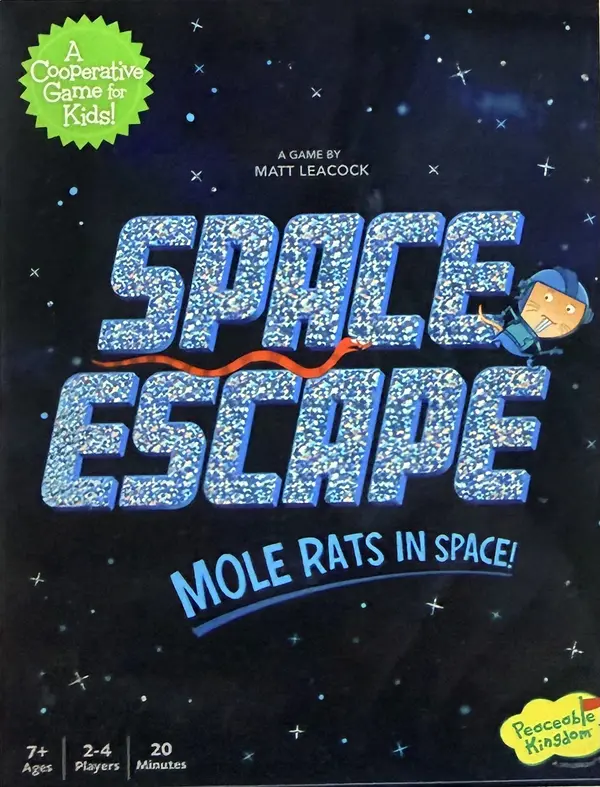
Space Escape- Mole Rats in Space
- Ages: 7+
- Players: 2–4
- Play Time: 20 minutes
- The Vibe:
- Think of this as a non-competitive but more of a strategic game version of Snakes and Ladders.
- Game Overview: Players work together to get their mole rats to an escape pod while avoiding snakes. It’s a quick family game that focuses on communication skills and group problem-solving.
- What it Teaches: Strategic thinking, forward planning.
- How to Play: Click Here

Forbidden Island
- Ages: 10+
- Players: 2–4
- Play Time: 30 minutes
- Game Overview: You and your team are adventurers exploring a mysterious, crumbling island that is literally sinking into the ocean with every turn. This high-suspense race requires players to coordinate their unique abilities to save the land from disappearing into the abyss.
- The Objective: Your goal is to work together to collect four sacred treasures and escape to Fools’ Landing for a helicopter extraction before the entire island sinks.
- What it Teaches: * This game builds resilience by providing a safe environment for children to handle setbacks as the island sinks under their feet. It also hones collaborative problem-solving as players must communicate and use their unique roles to ensure the whole team survives.
- How To Play: Click Here
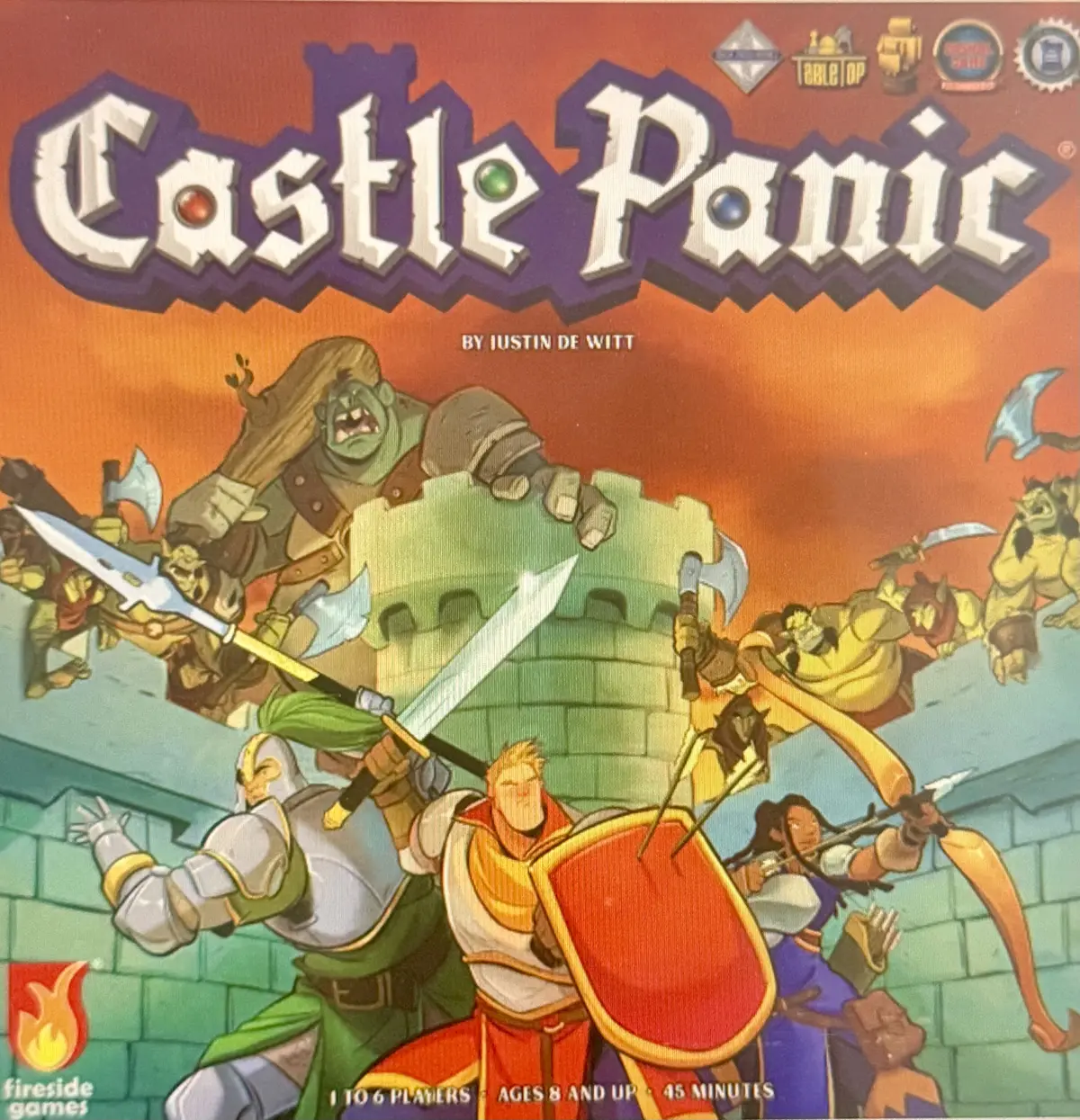
Castle Panic
- Ages: 8+
- Players: 1-6
- Play Time: 45 minutes
- Game Overview: In this tower-defense challenge, players work together to protect their central castle from a relentless horde of monsters emerging from the forest. It is a high-energy race to slay every creature before they can smash through your towers and walls.
- The Objective: Your team must defeat all the monsters in the bag while ensuring at least one of your six castle towers remains standing at the end of the game.
- What it Teaches: This game develops resilience by teaching children how to manage constant pressure and recover quickly when a monster breaks through a wall. It also encourages collaborative problem-solving because players must trade cards and plan their attacks together to stop the most dangerous threats.
- Click Here For – How To Play

Sky Team
- Ages: 8+
- Players: 1-6
- Play Time: 45 minutes
- s in the bag while ensuring at least one of your six castle towers remains standing at the end of the game.
Game Overview: You and your teammate act as a Pilot and Co-Pilot in a two-player cockpit, working together to land a commercial airliner in various international airports. It is a unique communication-based challenge where you must coordinate your actions without speaking once the dice are rolled.
The Objective: Your team must successfully land the plane by managing speed, flaps, and landing gear while clearing the air traffic in your path before you reach the runway.
What it Teaches: This game hones non-verbal communication and social-emotional skills by forcing players to anticipate their partner’s needs and strategy through silent observation. It also builds resilience as players must adapt to “bad rolls” and high-pressure scenarios to bring the plane down safely.
- Click Here For: How To Play
How to Play Outfoxed
This game deftly combines memory and logic in a non-competitive environment, making it perfect for kids who aren’t quite ready for the high stakes of Clue.
- Choose Your Action: On your turn, you must declare whether you are “Searching for Clues” or “Revealing Suspects” before rolling the dice.
- Gather Evidence: Move your detective hat around the board to land on clue spaces. Once there, you’ll use the special evidence scanner. It will tell you if the thief is wearing a specific item (like a scarf, hat, or umbrella).
- Deduce and Eliminate: Use the information from the scanner to rule out innocent foxes from the lineup. “The thief is wearing a scarf? Then it can’t be Beatrice!”
- Beat the Clock: Every time the dice don’t go your way, the fox moves closer to the exit. You must name the guilty party before the fox flies the coop.
Why Parents Love It for Skill Building
Outfoxed! is a wonderful venue for honing attention to detail. Because it is a cooperative game, children learn the important role that collaboration plays in reaching a goal. It introduces the concept of estimating probability (choosing whether to move or reveal) without the frustration of playing against others.
How to Play Ghost Fightin' - Treasure Hunters
How to Play: A Quick Guide
To escape with the bounty, players must balance treasure hunting with “ghost-busting” before the house is overrun.
- Move and Explore: On your turn, roll the movement die to see how many spaces you can travel. If you land on a room with a jewel, pop it into your backpack!
- The Ghost Roll: The dice also determine if a new ghost is added to the board. If the ghouls start piling up, your focus has to shift from treasure to defense.
- Banish the Phantoms: End your turn in a room with a ghost? Roll the “Fight Die.” If the symbols match, the ghost is removed.
- The Haunting Mechanic: If a third ghost enters a single room, it transforms into a Haunting. These are much harder to clear—you’ll need at least two players in the room to fight a Haunting together.
How to Win (and How You Lose)
- The Win: Successfully retrieve all eight treasures and get the entire team out of the front door.
- The Loss: If six Hauntings appear on the board at once, the house is lost, and the treasure hunters face a gruesome demise!
Why It’s Great for Emotional Regulation
This is a “stress-test” in a box. Because the ghosts appear randomly, it creates a sense of “micro-urgency.” It’s an excellent tool for teaching children how to stay calm and communicate when things feel like they are spinning out of control.
How to Play Space Escape
In this high-stakes space race, every move matters. Here is the breakdown of how the turn-based action works:
- Follow the Cards: On your turn, play the card in front of you. These instructions will have you moving your own character, shifting teammates, or strategically placing/moving snakes on the board.
- Ladders & Chutes:
- Ladders: Land on the bottom to advance one level closer to the escape pod. (Note: Snakes can use these, too!)
- Chutes: These send you down a level—or worse. If a player is “shot out” into space, it’s game over for them. Goal: Ensure only the snakes suffer this fate!
- The Three Ways to Lose:
- Snake Bites: Get bit once, and you return to start. Get bit twice, and you’re out.
- Resource Drain: If you run out of cards, you don’t survive.
- Breach: If a snake reaches the escape pod before you, the mission fails.
Pro Tip for Experienced Players: Once you’ve mastered the base game, add the included Expansion Pack to the deck. These cards significantly increase the difficulty for those who think they can outsmart the space-snakes!
How to Play - Sky Team
A Quick Guide
Roll and Hide: At the start of each round, both players roll their four dice behind a screen so the other player cannot see the results.
The Silent Phase: Once the dice are rolled, you are not allowed to talk or signal your partner about your numbers or your plan.
Place the Dice: Players take turns placing one die at a time onto specific cockpit slots to control different functions:
Axis (Mandatory): Both players must place a die here to keep the plane level; if the difference between your dice is too high, the plane tilts and you lose.
Engines (Mandatory): Both must place dice here to determine the plane’s speed and how far it moves on the approach map.
Radio: Use dice here to clear away other airplanes (traffic) that are blocking your flight path.
Landing Gear & Flaps: You must gradually deploy these throughout the game to ensure the plane is ready for a safe touchdown.
Brakes: These are essential in the final round to stop the plane once you hit the runway.
Successful Landing: You win if you reach the final space of the map with all gear deployed, flaps set, and enough braking power to stop the plane.
How to Play Castle Panic
Castle Panic: Defend the Castle!
Castle Panic is a cooperative adventure where everyone teams up to protect Castle Bravehold from waves of incoming monsters. It is a fun and light game that is easy to introduce to new players while remaining challenging for veterans.
How to Win
The team wins by successfully defending the castle. To do this, you must:
- Reveal every Monster token.
- Defeat every creature that appears.
- Keep at least one Tower
- Lose Condition: If all six Towers fall, the castle crumbles and the team loses together.
Turn Sequence
Each turn follows a simple, consistent flow to help players manage the monster invasion:
- Draw Cards: Start your turn by drawing cards until your hand is full.
- Discard and Draw One: You may choose to discard one card and draw a replacement to look for better options.
- Trade With Teammates (Optional): Help your team by swapping cards:
- 2–5 Players: Trade one card.
- 6 Players: Trade up to two cards.
- Play Your Cards: Play as many cards as you want, provided they match a monster or complete a specific card effect.
FAQ's Cooperative Board Games for Kids Who Hate to Lose
Frequently Asked Questions
Cooperative Board Games For Kids Who Hate to Lose
What makes a board game “cooperative”?
A. A cooperative board game is one where players work together toward a shared goal instead of competing. Everyone wins or loses as a team.
Do cooperative games work for younger kids?
Yes! Outfoxed and Castle Panic and my favourite simple game- Just One are especially good for children 8 and up.
What’s a great first cooperative game for beginners?
A. Ghost Fightin, Space Escape, and Just One. They are a perfect start because they are fast, light, and easy for anyone to play.
Which cooperative games are best for older kids or teens?
A. Sky Team and Forbidden Island add more strategy and mystery, making them ideal for tweens and teens.
Overview
Cooperative board games create something special around the table — shared victories, laughter, and lessons in teamwork. I also find they help me understand my children better. Like, how they navigate situations, how they think about things. They offer all the benefits of board games — improved communication, problem-solving, and togetherness — while keeping things light and fun.
If you’re ready to strengthen your family’s bond while having a great time, these cooperative board games for families under one hour are the perfect place to start.
Why Cooperative Tabletop Games Play Wins
Unlike traditional games, cooperative trick-taking and team-based games allow parents to model “healthy losing” and teamwork. These screen-free family activities turn “waiting for a turn” into “planning a victory,” keeping even the most competitive kids engaged and happy.
Wanting a bit of competition. Check out the best family games:
- Best Family Games
- Card Games for Families
- Dice Games for Families
- Or for a balance of luck and strategy, Roll and Write Games
- Cranium—all versions—has a creative spin to family game nights.
- Or, go back to some good old classic board games.
Drop me a note – Let me know your favorite game for kids who hate to lose.