
Best Nature Board Games for Families in 2026
Nature board games have become the “Goldilocks” of the tabletop world: they are beautiful, easy to teach, and generally low-stress. Whether you are looking for a sensory-friendly puzzle for a child with autism or a quick strategic battle, this list features the top 9 picks for 2026—all playable in under 60 minutes.
I am an Amazon Affiliate. If you click a link, I may earn a commission at no extra cost to you.
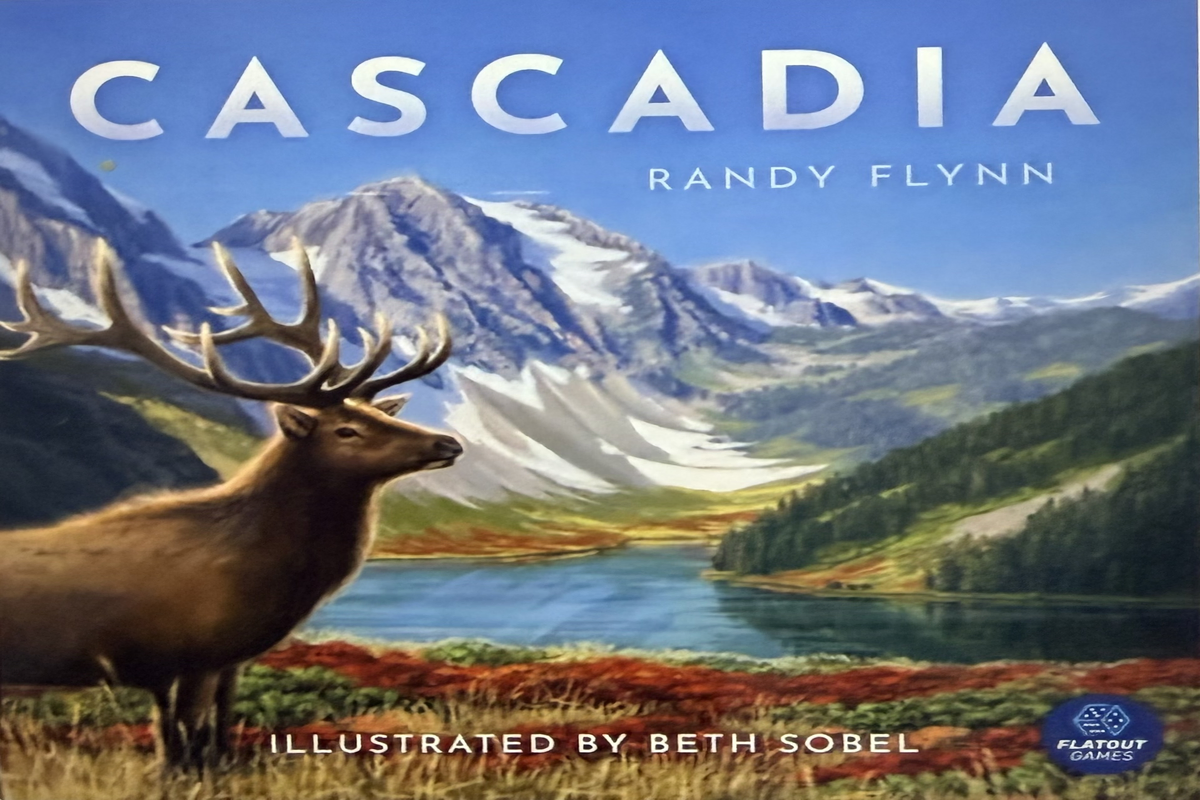
Cascadia
- Game Type: Tile-Laying & Pattern Building
- Age: 8+ | Players: 1–4 | Time: 30–45 min
- How to Play: On your turn, you draft a “Habitat Tile” (like a river or mountain) and a paired “Wildlife Token” (Bears, Elk, Salmon). You place the tile into your map and the animal on a matching habitat.
- The Goal: Build the largest habitat areas while arranging animals into specific scoring patterns (e.g., a “line” of salmon).
- Why Parents Love It: It’s arguably the most “teachable” game on this list. I enjoy when you finish you end up with a beautiful map you’ve built.This game continues to rank as a recommendation, not just in nature board games but also as a general must-have for families.
This game is rated at 4.9/5 on Amazon and everyone I speak to highly rates this game also.
Our family loves this game because of the beautiful artwork, high-quality components, which make it a joy to play. I also love that it’s easy to learn but offers enough strategy and replayability to keep both kids and adults coming back for more.
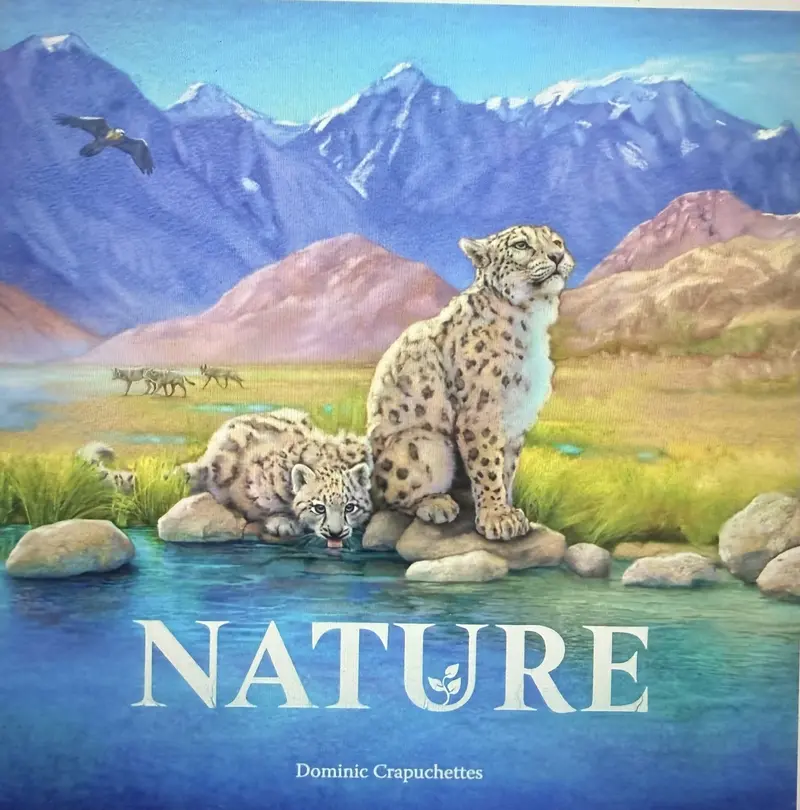
Nature (by North Star Games)
- Game Type: Hand Management & Species Building
- Age: 10+ | Players: 1–4 | Time: 30–45 min
- How to Play: You begin with one species. Each round, you play “Trait Cards” like Long Neck or Claws to help them survive. You can discard cards to increase your species’ population or body size.
- The Goal: Adapt your species to survive a shifting environment and collect the most food.
- Why Strategic Families Like It: This 2026 successor to the Evolution series is much more forgiving. If your species “starves,” your progress “evolves” into your next species rather than being wiped out entirely. Versatility of Nature also having the option of a solo player game.
- Watch it Here
- Editions: This edition is the base game but there are beautiful expansion such as Nature Board Games, from Jurassic to Flight and Natural Disasters, which you can check out on Amazon here.
We found that we did need to play a couple of times to fully understand but its diffently worth it. I suggest whom ever is teaching it to be familar with the game and rules to help everyone else out.
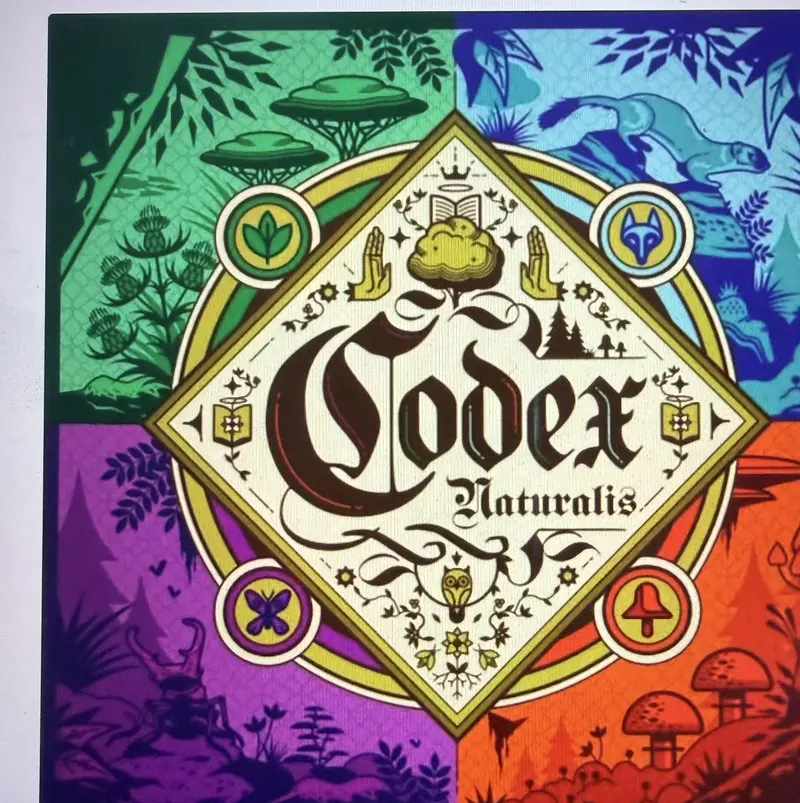
Codex Naturalis
- Game Type: Pattern Building & Card Overlapping
- Age: 7+ | Players: 2–4 | Time: 20–30 min
- How to Play: You start with one card and place new ones by overlapping their corners. Some cards provide resources (mushrooms, butterflies), while “Gold” cards require specific resources to be visible to play them.
- The Goal: The goal is to be the first player to reach 20 points by strategically overlapping cards in my personal play area. I win by scoring the most points from card placements, my private secret objective, and the two shared public objectives visible on the table
- I loved Codex for a couple of reasons. It comes in a beautiful tiny metal tin, making it ideal as a travel game. Plus, I liked the gold-foil cards; they make it look like a high-end art piece.
- I like how the game is simple to learn but holds your attention by trying to obtain different patterns and point-scoring systems.
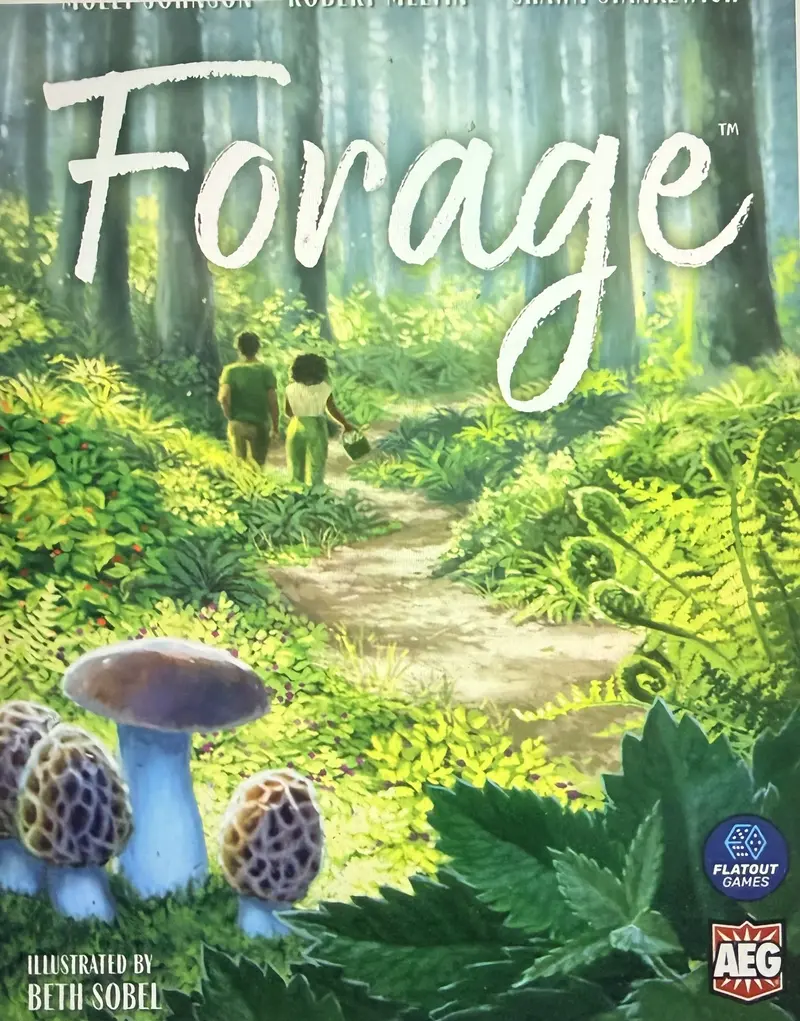
Forage - Being Released Aug 2026
- Game Type: Tableau Building & Roll-and-Write
- Age: 8+ | Players: 1–6 | Time: 15–20 min
- Objective: In Forage, players compete to become the most renowned naturalist by traversing wild trails, stocking a sustainable pantry, and crafting thoughtful gifts. By strategically managing your time across various journeys, you will accumulate knowledge, experience, and prestige to claim victory.
- Game Overview: Embark on a unique seasonal journey where every decision branches into a new discovery. Each round, players roll forage dice to reveal new trail tiles and choose a combination of results to execute one of three core actions:
- Exploration: Build a spatial trail puzzle. Place cards into your tableau and surround forest icons to trigger powerful bonuses.
- Pantry: Manage your harvest. Store goods in jars to complete rows and columns on your shelves for immediate rewards.
- Gift-Giving: Master your craft. Collect precise ingredients to fulfill unique gift orders and secure massive end-game scoring.
Harmonies
- Game Type: 3D Tile Placement & Pattern Development
- Age: 10+ | Players: 1–4 | Time: 30–45 min
- How to Play:
- The game is an elegant “optimization puzzle” where every turn involves balancing the growth of your terrain with the specific needs of the animals you want to attract.
- Draft and Place Tokens: Each turn, you must take a set of three landscape tokens from the central market and place them on your board. These tokens represent different biomes like mountains, rivers, fields, and forests.
- Build Vertically and Horizontally: Unlike many tile-placement games, Harmonies features verticality. Certain tokens, like mountains and trees, can be stacked to reach higher levels, which changes how they score and how they attract specific animals.
- Invite Animals: You can optionally draft Animal cards, which outline specific habitats to grow. When you replicate the exact pattern shown on that animal card you place an animal cube on your board to lock in those points.
- The Goal: Complete animal patterns to place “Animal Cubes” on your board for points. While also creating the longest rivers, trees, and mountains.
- Why Visual Learners Love It: I love the unique 3D approach of this game! While most tile-placing games are flat, Harmonies lets me build a forest that grows vertically off my board. It is a very tactile and engaging experience, making it a great “fidget-friendly” choice for anyone who loves to build and stack as they play. I do enjoy the balance of the strategic element of the game also.
- Tip: Make sure you keep the handy reference card close to maximise points.
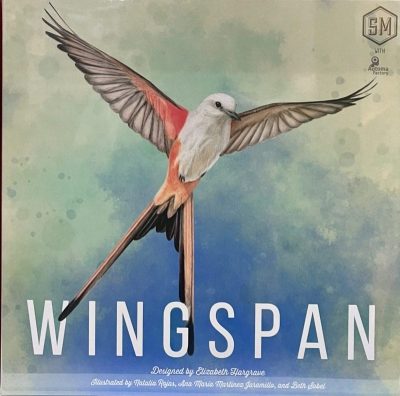
Wingspan
- Game Type: Card-Driven Engine Building
- Age: 10+ | Players: 1–5 | Time: 40–60 min
- How to Play:
- You build a thriving wildlife sanctuary by placing birds into three unique habitats: the Forest, Grasslands, and Wetlands. The game is an “engine-builder,” meaning that as you add more birds to a habitat, the actions become much stronger and trigger a chain reaction of special abilities. On your turn:
- Play a bird from my hand into my preserve by paying for it with food and eggs.
- Gain food from the birdfeeder to feed future birds.
- Lay eggs on my birds to earn points and help play new cards.
- Draw new bird cards to find the perfect additions to my ecosystem.
- The more birds you attract, the more powerful my preserve becomes, allowing me to perform multiple actions at once as I head toward the final score.
- Objective: The goal is to have the most successful wildlife preserve by earning the highest total score. You can earn points by:
- Attracting birds with high point values.
- Completing secret bonus objectives and end-of-round goals.
- Collecting eggs, food, and other cards stored on my bird cards.
- Why Educators Choose It: It includes real-world bird facts on every card. It is a beautiful biology lesson disguised as a top-tier strategy game.
- Wingspan is incredibly popular and is definitely worth checking out to see if its suitable for your family.
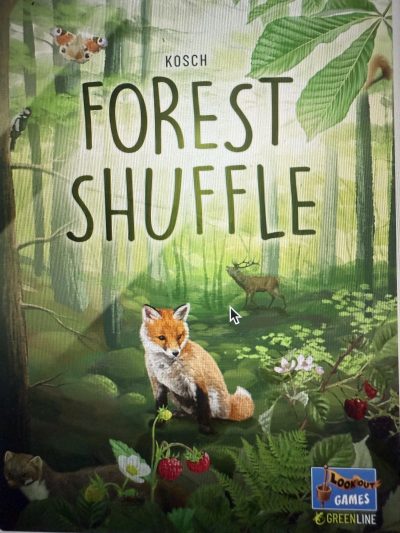
Forest Shuffle
- Game Type: Tableau Building & Multi-Use Cards
- Age: 10+ | Players: 2–5 | Time: 40–60 min
- How to Play: On your turn, you choose one of two actions:
- Gather Resources: I can draw two cards into my hand, choosing either secret cards from the deck or face-up cards from the “clearing” on the table.
- Expand the Forest: I can play a card from my hand by paying its cost. I can plant a new Tree or play a Forest Dweller (like an animal or mushroom). Since dweller cards are split in half, I must decide which side to use when I tuck it under a tree in my forest.
- The game ends instantly when the third “Winter” card is drawn from the deck, at which point everyone tallies their points to see who created the most successful habitat.
- The Goal: Create synergies where specific animals score more points if they live near specific trees.
- Why it Ranks: We found it fast and addictive. Because cards are tucked under others, your forest physically grows across the table in a very rewarding way.
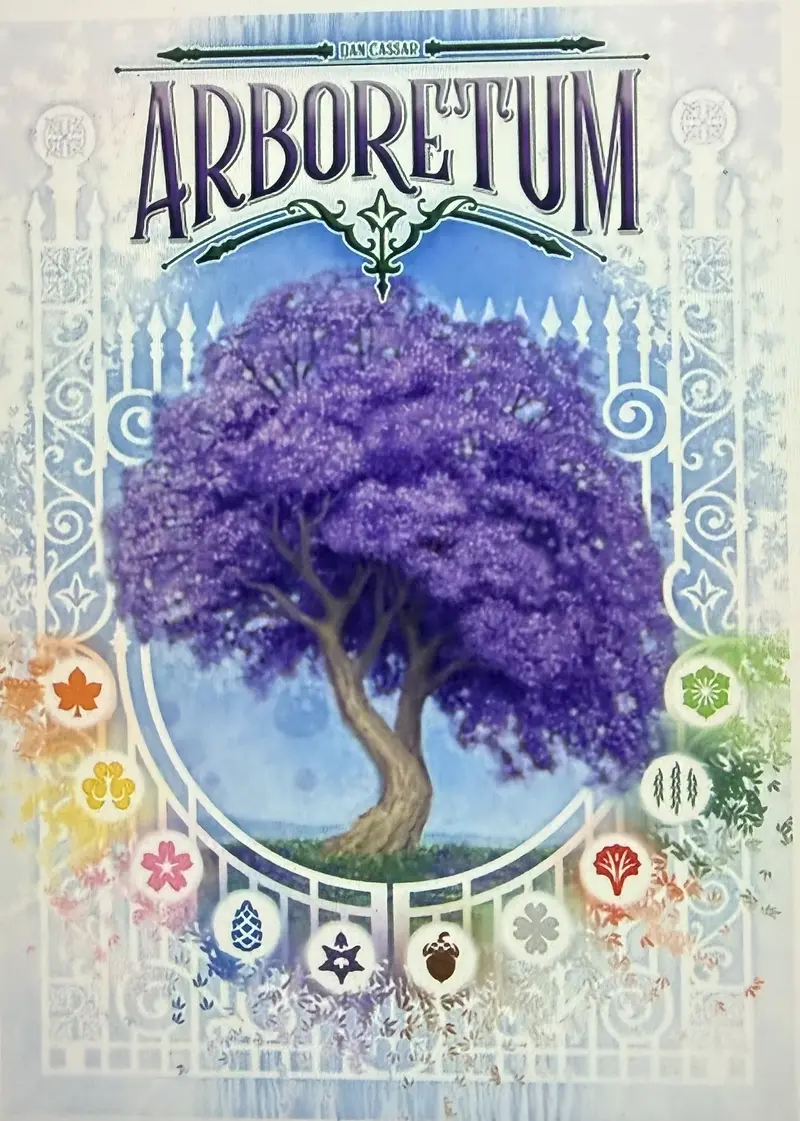
Arboretum
- Game Type: Grid Placement & Hand Management
- Age: 8+ | Players: 2–4 | Time: 30 min
- How to Play: Draw two cards, play one to your garden grid, and discard one. You are trying to build “paths” of trees in ascending numerical order (e.g., 2, 4, 7).
- The Goal: In Arboretum, I’m competing to build the most beautiful botanical garden by planting paths of different types of trees. To win, I have to balance two things: the trees I actually plant in the forest in front of me and the cards I keep hidden in my hand.
- The “catch” is that at the end of the game, I only get to score points for a path in my garden if I’m also holding the most “knowledge” about that tree in my hand (meaning the highest card values). If a rival is holding more, I won’t get any points for that path at all, no matter how long it is.
- Why Competitive Families Enjoy It: We were deceived by the peaceful feel of this game, but it’s definitely a “brain burner”.
- It’s perfect for kids and adults who love a tricky challenge where they have to outsmart their parents. you’ll also never know who is going to win because your forest may look like a winner, but you have no idea what people are holding in their hands to see if you score points or not.
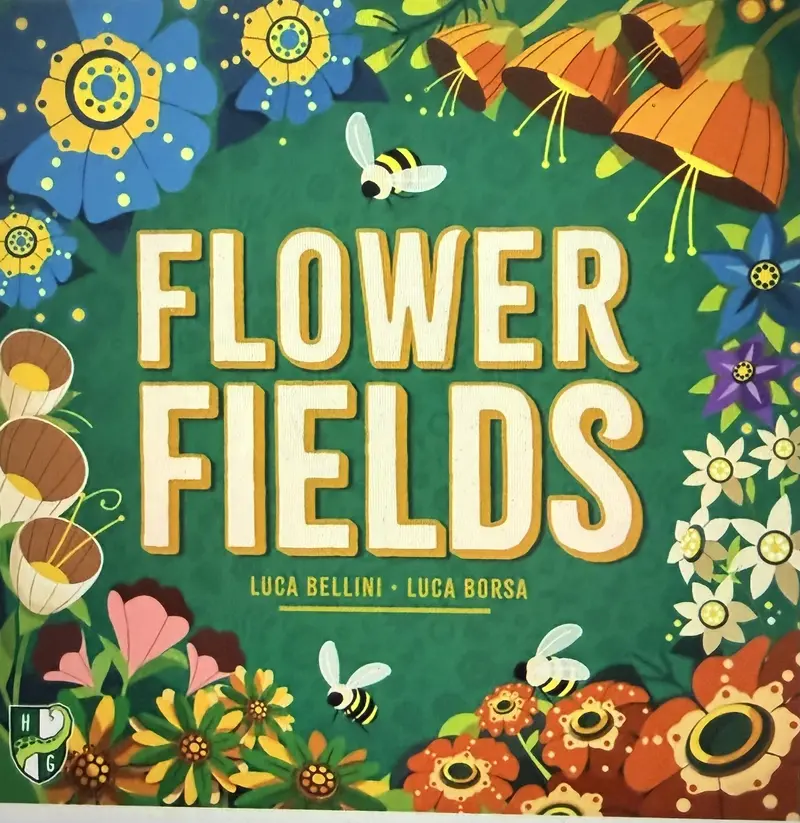
Flower Fields
- Game Type: Tile-Laying & Resource Management
- Age: 8+ | Players: 1–4 | Time: 30–40 min
- How to Play: Draft flower tiles from a central field and place them on your garden board. Use “Bee” tokens to pollinate large areas in order to score more points. Or pay bees to skip over tiles you don’t want. But you only have a certain number of bees and tiles to choose from.
- The Goal: Create large connecting groups of the same color flowerbeds. If you are lucky enough to have a bee you multiply that number of sections by the number of bees. You only count the largest number of the same flower patches, not all. Also aiming to collect more points by completely filling a row or column.
- Why Teachers Like It: It teaches “resource management” (saving your bees for the best flowers) in a bright, non-intimidating way for younger players.
- Games like Flower Fields include: Azul, Harmonies, Patchwork.
Best Nature Board Games Conclusion
In a world increasingly dominated by digital noise, nature board games offer more than just a diversion—they provide a ‘green’ reset for the mind. By blending strategic depth with the calming aesthetics of the wild, these games allow families to reconnect with the environment and each other. Whether you are carefully balancing a forest ecosystem or stocking a virtual pantry with the season’s harvest, you are engaging in a tradition that celebrates curiosity, sustainability, and the simple joy of discovery.
For the 2026 gaming season, the trend is clear: players are looking for an experience that brings the beauty of the outdoors to their table.
Keep Exploring
- Planted – Card Drafting- Nature Themed Board Game
- Best Family Games for 2026
- Tacta – Strategy Card Game
- Board Games For Adults – page
- Left Center Right – popular dice game
- Tiny games for travel