

Best Social Deduction Games Under 30 Minutes
Click for you Choice of Social Deduction Games
When my kids first started asking to play quick social deduction games with secret roles and ‘hidden traitors,’ I wasn’t quite sure what to expect. I wondered if they would grasp the concept or if it would be too complex for a school night.
But once we sat down to play, I realized these quick social deduction board games are just a big game of ‘pretend’ mixed with a fun puzzle. They’re a great way for the family to practice observing body language, listening closely, and working through mysteries together. Plus, they always end in a lot of laughs.
If you’ve been wondering, “Are social deduction games actually okay for my kids to play?” the answer is a resounding yes, provided you pick the right ones. Here are five unique titles that fit perfectly into a busy family schedule (all under 30 minutes) and answer that very question.
I am an Amazon Affiliate and may earn a commission if you click a link—at no extra cost to you.
Which quick social deduction games can you actually finish in 30 minutes?"
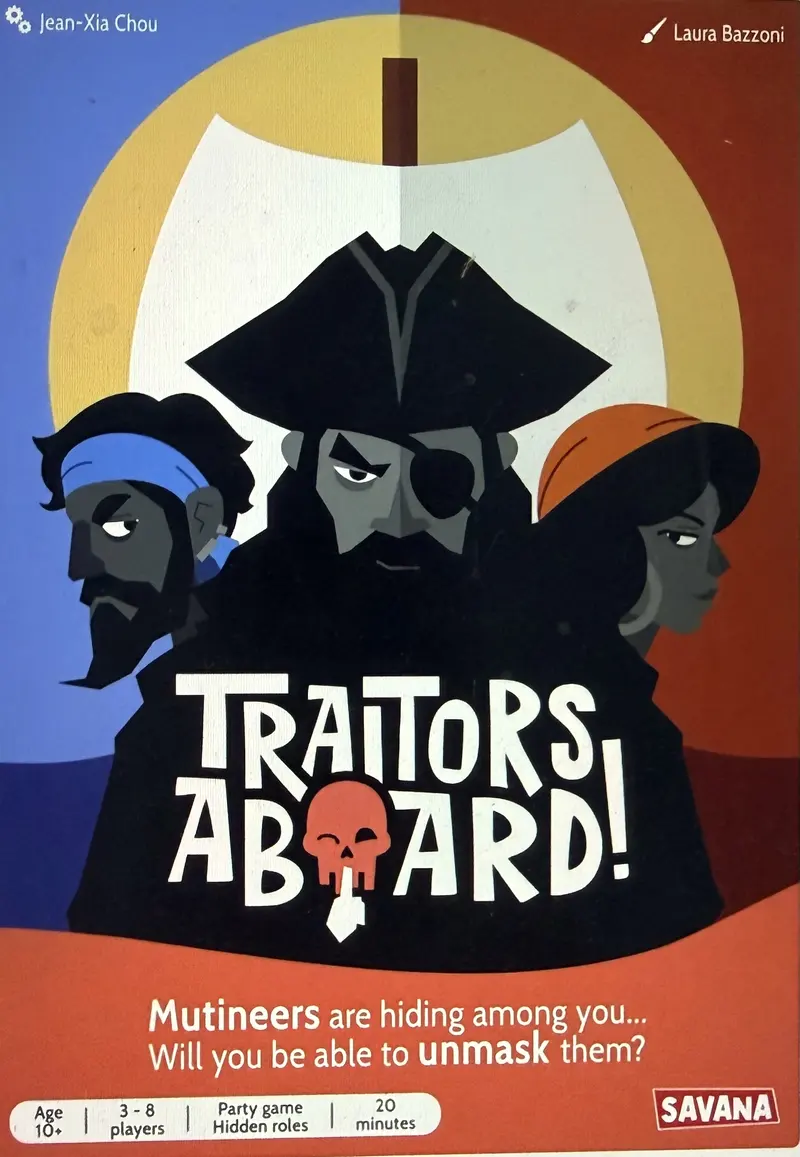
Traitors Aboard
A pirate-themed race to fill the treasure chest.
- Age: 10+
- Time: 15–20 mins
- Players: 3–8
- The Objective: While their secret identities remain hidden, ‘Good Pirates’ work to fill the ship’s chest with gold as ‘Mutineers’ try to sneak in empty cards to sabotage the haul.
How to Play: Traitors Aboard
In this social deduction game, a pirate crew must refill their treasure chest while mutineers work from the shadows to sabotage the hoard or seize control of the ship.
Game Setup
Assign Roles: Shuffle and deal one Role card to each player. Keep this secret!
Deal Cards: Shuffle Loot and Action cards together. Deal 3 cards to each player.
Prepare the Center: Place the Draw Pile in the middle. Set aside space for the Chest Pile (loot) and the Discard Pile.
Target Value: Determine your win condition based on the player count:
- 3 Players: 5 points
- 4 Players: 8 points
- 5 Players: 11 points
- 6 Players: 14 points
- 7 Players: 17 points
- 8 Players: 20 points
Turn Structure
The most talkative player starts. On your turn, you must perform one of the following actions:
1. Place a Loot Card Place a Loot card face down on the Chest and announce its value aloud.
Loot Values: +1 (Add), 0 (Neutral), or -2 (Subtract).
The Catch: You are allowed to lie about the value you just placed!
2. Play an Action Card Reveal the card, apply the effect, and discard it.
Plank: Place this in front of a player. If a player gets 3 Plank cards, they are thrown overboard and eliminated.
Good Riddance: Discard the top 2 cards of the Chest without looking.
Spyglass: Look at the top 3 cards of the Chest, shuffle them, and put them back.
Miraculous Catch: Draw 3 cards, keep one, and put two back on the Draw Pile.
Empty Your Pockets: Force a player to discard their hand and draw 3 new cards.
End of Turn: Always draw back up to 3 cards in hand.
Game End
The game ends immediately if any of these occur:
Target Declared: A Pirate reveals their role and claims the target value is met. Sum the Chest:
Value ≥ Target: Pirates win.
Value < Target: Mutineers win.
Mutineers Eliminated: If all Mutineers are thrown overboard, Pirates win.
Pirates Outnumbered: If Mutineers equal or outnumber Pirates, Mutineers win.
Empty Deck: If the Draw Pile runs out, Mutineers win.
I find Traitors Aboard strikes a perfect balance between a standard card game and a heavy social deduction experience.
I enjoy the “Loot” mechanic—it forces Mutineers to be clever. At times you have to play negative cards, otherwise you’ll be spotted. You have to find that balance to stay under the radar.
It’s an excellent party game that keeps everyone talking, accusing, and laughing for the full 30 minutes.
Quick Strategy Tips
Pirates: Watch for players who play “Good Riddance” at suspicious times or those whose “Spyglass” reports don’t match later reveals.
Mutineers: Early on, try to win the crew’s trust by placing +1 cards. Wait for the deck to get thin before dropping the -2 sabotages.
For New Players: Don’t be afraid to use the Plank! Even if you’re wrong, it forces people to reveal their intentions.

Inside Job
A classic card game with a sneaky twist.
- Age: 10+
- Time: 20 mins
- Players: 3–5
- The Objective: Agents try to complete missions by winning “tricks” (rounds), while the Insider tries to win enough rounds for themselves.
How to Play: Inside Job
Inside Job is a mostly cooperative trick-taking game for 3 to 5 players. While most players act as loyal Agents trying to complete missions, one player is a secret Insider working to sabotage the team and steal intel.
Game Setup
Assign Roles: Shuffle and deal one role card face down to each player. There is always exactly one Insider card and enough Agent cards for the remaining players.
Deal Playing Cards: Distribute the 52-card deck based on player count: 13 cards (3 players), 12 cards (4 players), or 10 cards (5 players).
Intel Supply: Every player starts with one Intel token visible in front of them; place the rest in a common supply.
Missions: Remove the four “Risky Mission” cards, shuffle the remaining 24 mission cards, and place them face down.
How to Play a Trick
The game is played in a series of tricks, each following these steps:
1. Mission Selection The starting player draws two mission cards, secretly chooses one to be active for the trick, and discards the other. The mission card shows:
The Objective: Specific card requirements needed to “complete” the mission.
The Trump Suit: The suit that beats all others for this specific trick.
2. Playing Cards
Leading: The starting player plays any card to set the leading suit.
Agents: Must follow suit if possible. If they cannot follow suit, they may play any card.
The Insider: Is never obligated to follow suit and may play any card regardless of the leader’s suit.
3. Wager Intel (Optional Rule) After playing a card, a player (except the starting player) may place one of their Intel tokens on it. That card is now treated as the trump suit for that trick.
Winning the Trick & Mission
Trick Winner: The player with the highest card in the Trump suit wins. If no trumps were played, the highest card in the leading suit wins.
Rewards: The winner takes one Intel token from the supply (plus any wagered tokens) and becomes the starting player for the next trick.
Mission Check: The starting player checks if the mission was met. If successful, the mission card is stored as a point for the Agents; otherwise, it is discarded.
The Final Vote
If no early victory occurs, the trick-taking phase ends when players have only 1 or 2 cards left in hand.
Discussion: Players discuss suspicions and speculate on who the Insider might be.
Point: On the count of three, everyone points at their suspect. You cannot vote for yourself.
Result: The player with the most votes (or tied for most) reveals their role. If it is the Insider, the Agents win. If it is an Agent, or if there is a tie, the Insider wins.
If you’re like me and enjoy a trick-taking game and want a twist and love a bit of accusing or analyzing people, then this is a fabulous game to add to your collection.

There's Been a Murder
One of the best collaborative social deduction games/mystery where everyone wins or loses together.
- Age: 14+ (Simple enough for younger teens, too!)
- Time: 5–15 mins
- Players: 3–8
- The Objective: Work as a team to figure out who is holding the “Murderer” card before the deck runs out.
How to Play There’s Been a Murder
This is mostly cooperative trick-taking game where players act as secret agents. While most are loyal to the team, one player is an Insider working to sabotage missions and steal intel.
The Objective
Winning depends entirely on your secret role:
Agents win immediately if they complete a specific number of missions: 9 (3 players), 7 (4 players), or 6 (5 players).
The Insider wins immediately if they collect enough Intel tokens: 6 (3 players), 5 (4 players), or 4 (5 players).
Voting Finale: If no one wins early before cards run out, players vote on who they think is the Insider. Agents win if they successfully unmask them.
Game Setup
Assign Roles: Deal one role card face down to each player. There is always exactly one Insider and the rest are standard Agents.
Deal Playing Cards: Hand out cards based on player count: 13 cards (3 players), 12 cards (4 players), or 10 cards (5 players).
Intel Supply: Every player starts with one visible Intel token.
Missions: Remove the four “Risky Mission” cards, shuffle the remaining 24, and place them face down.
The game is played in a series of tricks, following these steps:
1. Mission Selection
The starting player draws two mission cards, secretly chooses one for the trick, and discards the other. The card shows the mission objective and the trump suit for that trick.
2. Playing Cards
Leading: The starting player plays any card to set the leading suit.
Agents: Must follow suit if they have the same color. If they don’t, they can play any card.
The Insider: Never has to follow suit and can play any card they want to sabotage the mission or win the trick.
3. Wager Intel (Optional Rule) After playing a card, a player (except the starting player) can place an Intel token on it. This card is then treated as the trump suit for that trick.
Winning the Trick & Mission
Trick Winner: The highest card in the Trump suit wins. If no trumps were played, the highest card in the leading suit wins.
Rewards: The winner takes one Intel token from the supply (plus any wagered tokens) and starts the next trick.
Mission Check: The starting player checks if the mission was met. Successful missions are saved as points for the Agents; failed missions are discarded.
The Final Vote
If the deck runs out, players discuss their suspicions and then simultaneously point at who they believe is the Insider.
Agents win if the person with the most votes is the Insider.
The Insider wins if someone else is chosen or if there is a tie.
It’s perfect for families who want the mystery feel without the competitive pressure.

One Night Ultimate Alien
High-energy chaos with a helpful app.
- Age: 8+
- Time: 10 mins
- Players: 3–10
- The Objective: Find at least one Alien hiding among the townsfolk to win.
How to Play: One Night Ultimate Alien
In this social deduction game, players take on secret roles and use a companion app to navigate a “Night Phase” where roles are swapped, cards are viewed, and alliances change.
1. Setup
Role Selection: Use any combination of roles, but always include three more cards than the total number of players.
Aliens: For the best balance, it is recommended to include at least two Aliens (regular, Groob, or Zerb).
Table Layout: Deal one card face down to each player. Place the three extra cards in the center of the table.
Player Tokens: Give each player a Number Token (1 to X) and arrange them in a circle to help track locations.
The App: Place the device running the companion app in the center of the table where everyone can reach and see it.
2. Team Objectives
Village Team: Wins if at least one Alien is killed (unless specific roles like the Synthetic Alien dictate otherwise).
Alien Team: Wins if no Aliens are killed.
Solo/Special Teams: Some roles (Blob, Mortician, Synthetic Alien) have unique goals and may win in addition to or instead of the main teams.
3. Key Alien Roles
Alien / Synthetic Alien: Aliens wake up to recognize each other. The Synthetic Alien is on a separate team; he only wins if he dies, which causes both the Village and Alien teams to lose.
Groob & Zerb: They wake up with the Aliens, then later wake up together. If both are in play, they become “frenemies”—Groob only wins if Zerb dies (and vice-versa).
Leader: Sees who the Aliens are (via thumbs/pointing). If both Groob and Zerb are in the game, the Leader only wins if both of them survive.
4. Village & Neutral Roles
Oracle: Responds to a question on the app to gain information.
Cow: Sticks out a fist during the night; an adjacent Alien must tap it.
Psychic & Rascal: The app directs them to view or move specific cards.
Exposer: Flips up to three center cards face up for the rest of the game.
Mortician: Wins if at least one of his immediate neighbors dies.
Blob: A group of players (the Blob and neighbors) who win as long as none of them are killed.
5. Epic Battles: Multi-Team Games
If you combine Aliens with Werewolves and Vampires, the stakes increase:
Massive Vote: If 3 or 4 teams are active, at least two players are killed (the most and second-most voted).
Win Conditions:
Alien Team: At least one Werewolf or Vampire must die; no Aliens may die.
Vampire Team: At least one Werewolf or Alien must die; no Vampires may die.
Werewolf Team: At least one Vampire or Alien must die; no Werewolves may die.
Villager Team: At least one player from two different opposing teams must be killed.
6. Pro Tips
The App is Boss: The app handles the night order and anomalies (like the Doppelganger). Always follow its specific instructions for each session.
Changing Roles: Some Alien abilities allow them to turn a player into an Alien. That player is now on the Alien team regardless of the card in front of them.
Veteran Play: If you are experienced with other One Night games, try playing Alien on its own first to master the new mechanics before mixing in Werewolves or Vampires.
- I like that it’s a super quick social deduction game that gets everyone involved.
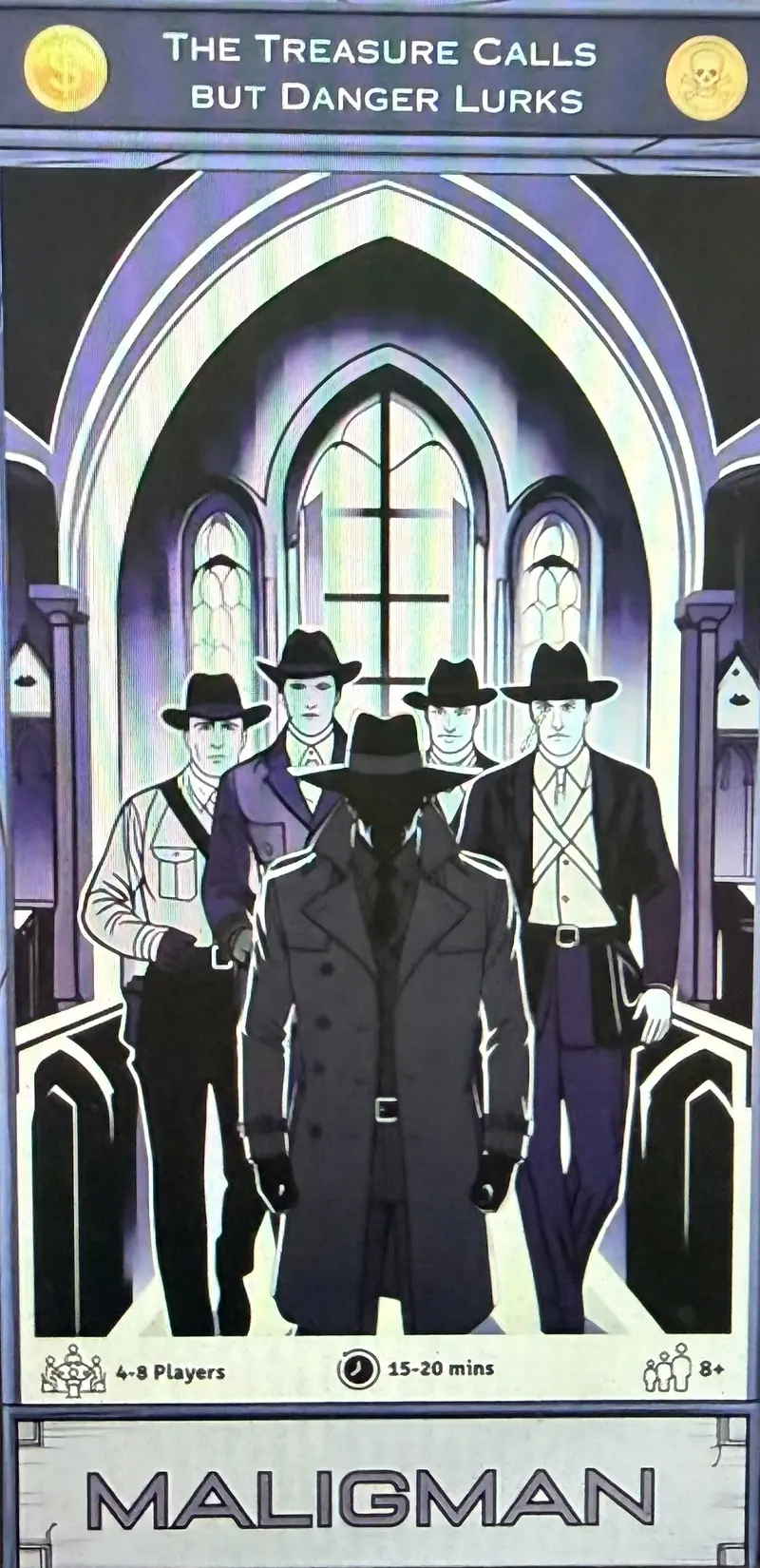
Maligman - (No Player Elimination Game)
Maligman is a high-stakes, no-elimination social deduction game and strategy game where trust is your most valuable resource—and your greatest liability.
- Players: 4–8 Players
- Game Time: 15–20 Minutes
- Ages: 8+
- The Objective: Outsmart, out-bluff, and out-maneuver your friends. Your goal is to cleverly manipulate cards and manage your reputation to stay ahead of the group. In a world where every “gift” might be a trap and every “ally” might be a saboteur, you win by being the last strategist standing with your goals intact.
- Gameplay Overview: The game thrives on a “Pick, Pass, and Play” mechanic that keeps the pace electric. Each round, players interact through a series of fast-paced card exchanges, secretly deciding which cards to keep for themselves and which to pass to their rivals.
- Unlike traditional deduction games, Maligman features no player elimination. Even if you are caught in a lie or a bad trade, you stay in the action, using your wits to recover or get revenge, making it one of the reasons I love this quick social deduction game.
Frequently Asked Questions
Social Deduction Games
Have a question or want to let me know your favorite quick social deduction game? Click “Contact Us” and let us know.
Which social deduction games work best with only 3 or 4 players?
While many deduction games require a crowd, Inside Job is specifically designed to handle lower player counts brilliantly by using trick-taking mechanics. One Night Ultimate Alien also scales down well to 3 players because the “chaos” of the roles keeps the mystery alive even in a small group.
What are the easiest social deduction games for an 8-year-old?
For an 8-year-old, you want games with clear goals and minimal “lying”. There’s Been a Murder is a fantastic entry point because it is a cooperative game where players work together using social deduction to find the culprit. Traitors Aboard is another great choice as it uses simple “collect or sabotage” mechanics that are easy for kids to grasp
Are there social deduction games that don't involve player elimination?
Yes! Modern games have moved away from “killing” players off early. Inside Job is a perfect example where everyone plays until the end of the mission, and One Night Ultimate Alien and Maligman ensures everyone stays in the game for the full (and fast) duration.
How do you explain social deduction games to kids?
I expalin it in a very basic way of its a bit like a hide-and-seek game, but instead of hiding your body, you’re hiding a secret person in game. Trying to outsmart the other players so they don’t know who you are playing as. In most social deduction games, you may have teams, a good guy and a bad guy team, and they have to use clues and what people say to figure out who is on their side.
Best social deduction, bluffing games for a 10th birthday party
Traitors Aboard si great because of the group size, has a fun pirate theme that fits a party atmosphere, and the “shouting and pointing” phase of the game is always a hit with 10-year-olds.
Maligman is great for birthday parties because no one gets eliminated, so no one needs to feel excluded at a fun birthday party, while everyone else keeps playing.
Conclusion
Whether you are looking to unmask a traitor or successfully bluff your way to victory, adding a few social deduction games to your collection is the fastest way to turn a quiet evening into a memorable event. These games do more than just provide entertainment; they challenge your ability to read hidden roles, master the art of bluffing, and navigate the tension of a secret identity.
While the hidden traitor mechanic can get intense, the “quick” versions of these games ensure that any “betrayal” is short-lived and immediately ready for a rematch. By focusing on player interaction and voting rather than complex rules, these titles remain accessible for kids and adults alike. So, grab your deck, assign the roles, and get ready to see just how well you really know your family!
Keep Exploring
- Social Deduction Games
- 10 Minute Board Games
- Left Center Right – Popular Dice Game
- Best Family Games
- Try something new- Board Games by Type
- Or explore Age Groups