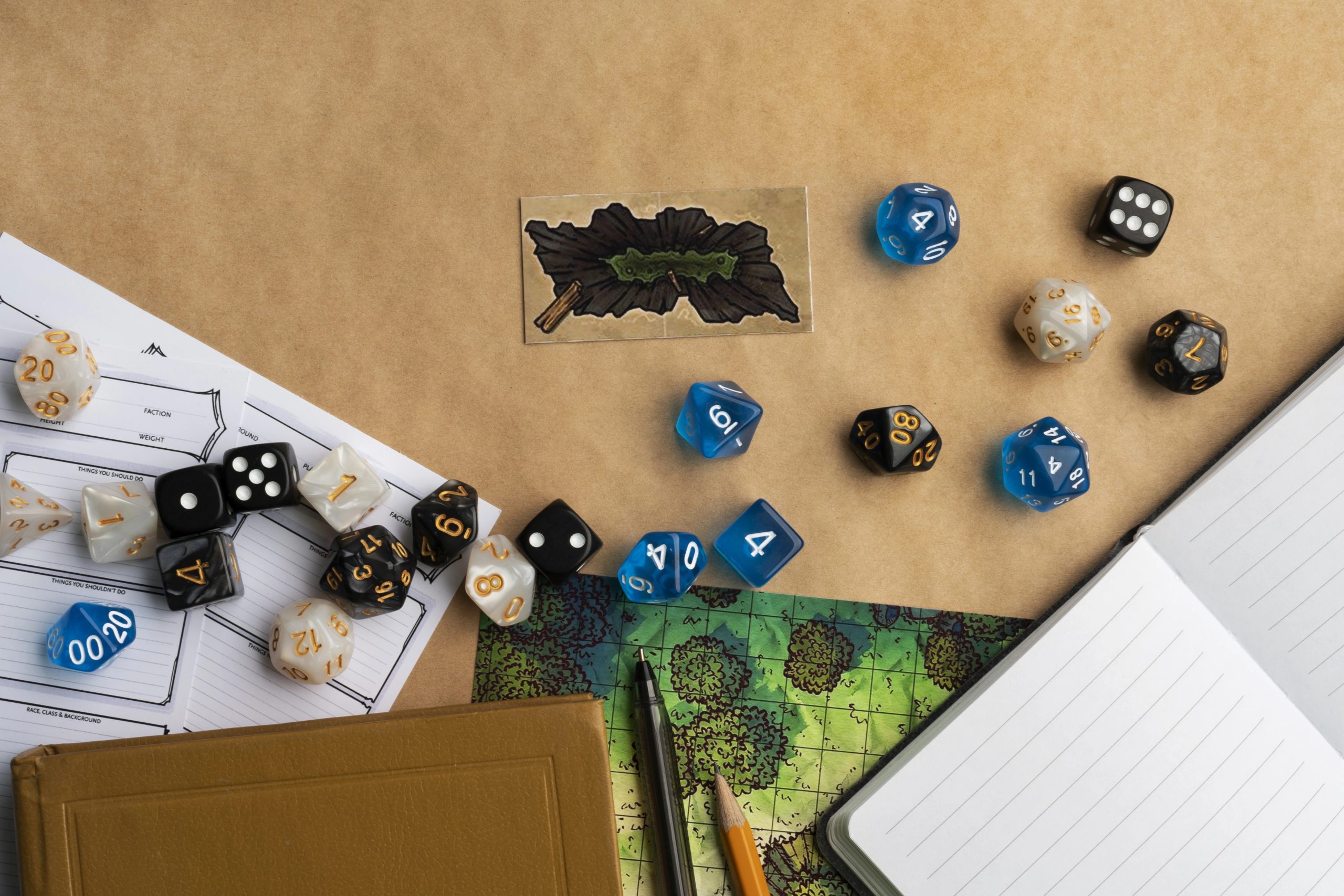
What is a roll and write dice game? They are a type of tabletop game that combines the elements of rolling dice and writing or marking down on a score sheet or game pad that outcome of the dice. Roll and write dice games are fun tabletop game that blends dice rolling with strategic decision-making. Typically roll and write games are quick to play, easy to learn, and perfect for families, casual gamers, and game night fun.
Core Gameplay of Roll and Write Dice Games
- Rolling Dice: Players roll a set of dice which may have a number or either symbols to determine a result or choice of actions.
- Writing or Marking: Players then use the results to fill in their own personal game board or score sheet. This could involve writing numbers, drawing shapes, or marking off boxes. The act of writing or marking typically follows certain rules or restrictions based on the dice roll.
- Scoring: As players fill in their sheets, they earn points, complete tasks, or unlock new actions, usually aiming to have the highest score by the end of the game.
Why Are Roll and Write Games Popular?
- Accessibility: Roll-and-write games are often easy to learn and fast to play, making them great for beginners and casual gamers.
- Portable: Many roll-and-write dice games are very compact, requiring just paper, a pencil, and dice—making them easy to take on the go.
- Replayability: The randomness of the dice rolls combined with strategic choices leads to high replay value because no two games play out the same way.
Roll and Write Games Summary
Yahtzee
The Vibe: The ultimate classic that most of us grew up with. It’s simple, nostalgic, and always a hit.
Core Logic: Rolling 5 dice up to three times to land specific combos like a Full House or the famous 5-of-a-kind “Yahtzee.”
Great If: You want a game with very simple rules that even the younger kids can jump into easily.
Lost Cities (Roll & Write)
The Vibe: An adventurous trek where you’re racing to fill colored tracks.
Core Logic: You must enter numbers in ascending order. It’s a balance of pushing your luck versus playing it safe to avoid “strike” penalties.
Great If: You enjoy a bit of a challenge and want a game that keeps everyone involved even when it’s not their turn to roll.
Welcome To
The Vibe: A “flip-and-write” (using cards instead of dice) where you act as a 1950s suburban architect.
Core Logic: You choose card pairs to assign house numbers to your streets and use special actions like building pools or fences.
Great If: You want a game with deep strategy and no “downtime,” as everyone plays at the same time!
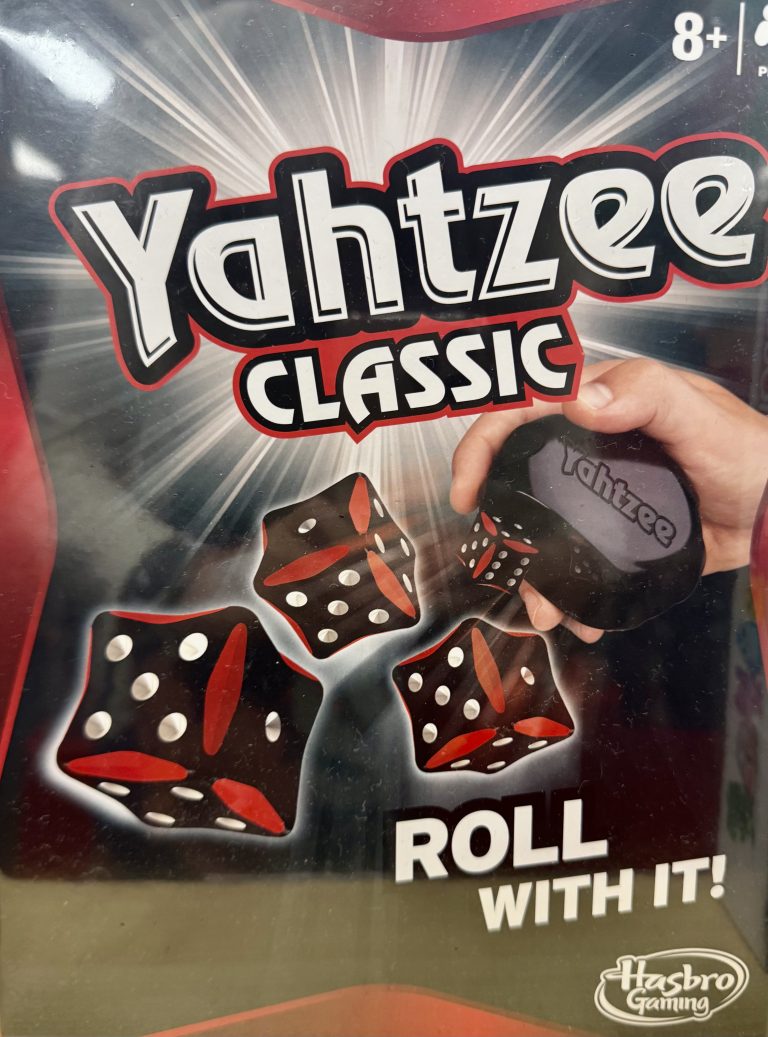
Age Rating: 6+, Players: 2-10, Play Time: 30mins
What is Yahtzee?
Yahtzee is a classic dice game where players roll five dice up to three times per turn to make combinations like full house, straights, or five-of-a-kind (Yahtzee!). The goal is to score the most points by strategically choosing which category to fill in on your scorecard each round.
Perhaps the most famous roll and write dice game since it was released in 1956. This was one of my first board games ever played and is one of the best dice games for families. I played when I was quite young and found it easy to play, with simple rules. The scoring pad kept me on track with what I needed to complete, making it one of the best board games for families.
Yahtzee is a classic dice game that blends luck with a bit of strategy. The goal is to score the most points by rolling five dice to make specific combinations.
The Basics of a Turn
On your turn, you can roll the dice up to three times to get the best score possible:
Roll 1: Roll all 5 dice. Look at your results and decide which dice to “keep” and which to re-roll.
Roll 2 & 3: Re-roll your chosen dice. You can stop after the first or second roll if you are happy with your results—you don’t have to roll all three times.
Mark Your Score: After your rolls are finished, you must pick one category on your score sheet to fill in.
Scoring the Dice
Points are calculated based on the combinations you achieve. Here are some common examples:
Three-of-a-Kind: Add up the total of all five dice (e.g., three 5s and two 2s = 19 points).
Full House: Three of one number and two of another (Worth a flat 25 points).
Small/Large Straight: A sequence of four or five consecutive numbers.
Yahtzee: Five-of-a-kind! This is the ultimate goal and is worth 50 points.
Winning the Game
Players take turns until everyone has filled in all 13 boxes on their score sheet. Once the final combinations are completed, you tally up your points. The player with the highest grand total wins!
Yahtzee FAQ’s
Q. What does Yahtzee mean?
A. Yahtzee, the highest-scoring combination is a five-of-a-kind, where all five dice show the same number.
Q. Is Yahtzee more luck or skill?
Lost Cities: Roll and Write

Age Rating: 8+ Number of Players: 2-5 Game Time: 30 mins
What is Lost Cities?
Lost Cities: Is a fast-paced roll-and-write adventure where players roll dice to lead expeditions across different colored tracks. You mark numbers in ascending order, aiming to go as far as possible for points—but starting an expedition comes at a cost, so plan carefull
How to Play Lost Cities
Each round, one player rolls the dice, selects a combination, and records it on their game sheet. Then, all other players choose from the remaining dice and write their results as well. But there’s a twist—numbers must be entered in ascending order.
Land on acceleration spaces or uncover ancient artifacts to gain valuable bonuses. Can’t (or don’t want to) write down a number? Use a strike box—but use them wisely. The fewer strikes you take and the more progress you make, the better your chances of finishing with the highest score.
Rolling the Dice & Choosing Combinations
1. On Your Turn:
Take all six dice (three color/symbol dice and three number dice) and roll them in the middle for everyone to see.
From the roll, choose one color/symbol die and one number die, and carefully place them in front of you without altering the result.
The remaining four dice stay in the centre of the table for the other players to use.
2. Other Players’ Choices:
All other players may then choose one color/symbol die and one number die from the four dice remaining in the center.
Players are allowed to choose the same dice combinations as others.
Do not move the center dice—everyone selects from the visible results.
Once selected, each player records their chosen combination on their score sheet, following the usual rules (e.g., numbers must be ascending in each column).
Refusing to Choose Dice
Both the active player (the one who rolled) and the other players may choose to refuse the dice if they don’t want to or can’t use any of the available combinations.
If the roller refuses, they leave all six dice in the center. The other players may still choose from the full set.
Any player who refuses to record a result on their sheet must instead mark a strike box as outlined in the rules (typically used when no legal moves are possible or strategic passing is preferred).
Once all players have made their choices (or passed), the next player clockwise becomes the new roller. Repeat the process until the game ends.
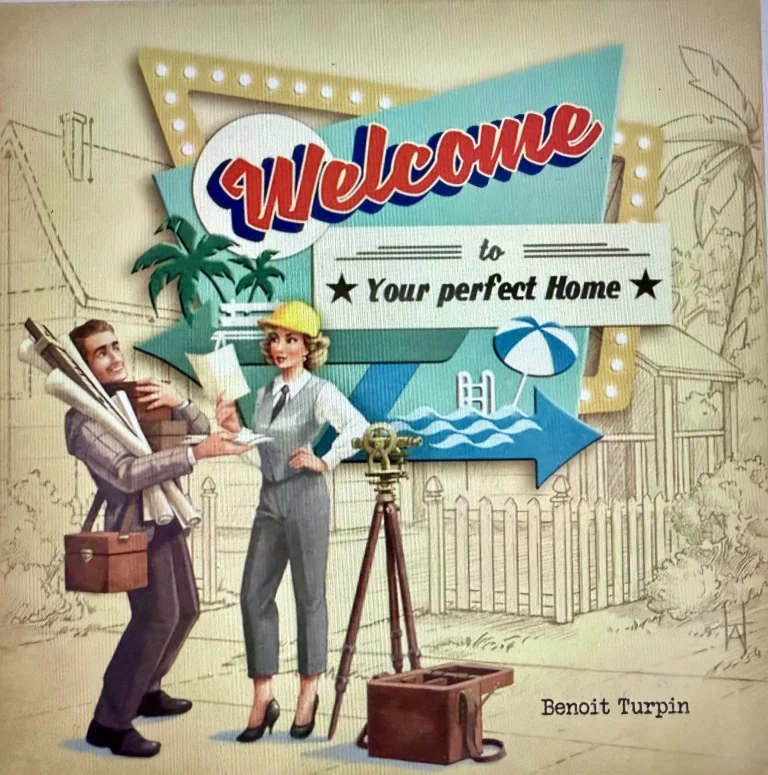
Age Rating 10+ Play time: 25 mins Players 1-6
This is more of a flip-and-write game with cards.
In my experience, Welcome To is a fantastic choice if you want a game that is easy to pick up but offers plenty of depth. It’s a “flip and write” classic that works brilliantly for ages 10 and up.
How the Game Works
Unlike traditional dice games, this one uses a deck of 81 cards. Each card has a house number on one side and a special action on the other.
The Setup: We place three random “City Plan” cards in the center. These are shared goals that everyone is racing to finish first.
The Turn: Three pairs of cards are flipped over. Each pair gives you a house number and an action (like building a pool, hiring a landscaper, or putting up a fence).
The Goal: You choose one pair and write that house number on one of your three streets. The catch? The numbers must always be placed in ascending order from left to right.
Where the Strategy Kicks In
The real fun is deciding how to balance your neighborhood. I often find myself debating:
Do I play it safe and just focus on getting my numbers in order?
Or do I take a risk on a specific action to score massive bonus points, even if it makes my street layout a bit trickier?
When Does the Game End?
The game doesn’t drag on; it ends immediately when one of these three things happens:
Plan Perfection: A player completes all three City Plan goals.
Full House: Someone successfully gives an address to every single house on their sheet.
Permit Refusal: A player can’t place a number three different times (the dreaded “Building Permit Refusal”).
At the end, we tally up the points from our parks, pools, and city plans. The player with the most points is crowned the best suburban architect.
Why Pick Roll And Write Dice Games
- Minimal Setup and Space: Roll and write dice games often require little more than paper, a pencil, and dice. Which makes them easy to set up and perfect for small spaces.
- Quick and Engaging: Usually dice games are fast-paced and simple to grasp. Making them perfect board games for families who want a short and fun experience. Dice games are also ideal for introducing a beginner gamer to the world of tabletop gaming.
- Strategic Depth: Despite their simplicity, many roll-and-write dice games offer surprising levels of strategy. Players have to make decisions about how to best use the dice rolls and maximize their points.
- Encourages math skills in younger children.
Who Enjoys Roll and Write Dice Games?
- Casual Gamers: People who enjoy quick, fun games without the commitment of long rulebooks or complex mechanics.
- Families: Since they are easy to teach and can be played in 20-30 minutes, they’re perfect for family game nights.
- Solo Players: Many roll-and-write games have a solo variant, making them suitable for solo players who want a game that’s easy to set up and play alone.
Conclusion:
Roll and write dice games are fun games to play and an accessible genre for both newcomers and experienced players alike. With simple rules, a bit of luck, and some strategic thinking. I find these games are often easy to pick up and hard to put down. Therefore, making them a great choice for anyone looking for a quick, engaging tabletop game experience.
Perfect for either home or as a travel game, you can enjoy the fast-paced roll and write game with little more than a pen and paper.
- Here are more dice game options to review.
- Or discover different types of board games by type.
- Pressed for time and like quicker-styled games? Card games also prove to be popular for their ease of play and transportable nature and shorter game time.
- Left Right Center dice game is very popular and also worth checking out as a fun game for families. And you can easily create Left Right Center at home without needing to buy the game.