
My Top 10 Word Games For Seniors and Families
Word games are the perfect way to stay mentally active while connecting with grandkids. Whether you love a quiet strategy or a fast-paced race, these top picks are chosen for easy-to-read pieces and simple rules.
As an Amazon Associate, I earn a small commission from qualifying purchases at no extra cost to you. I only recommend games I truly love.
Scrabble
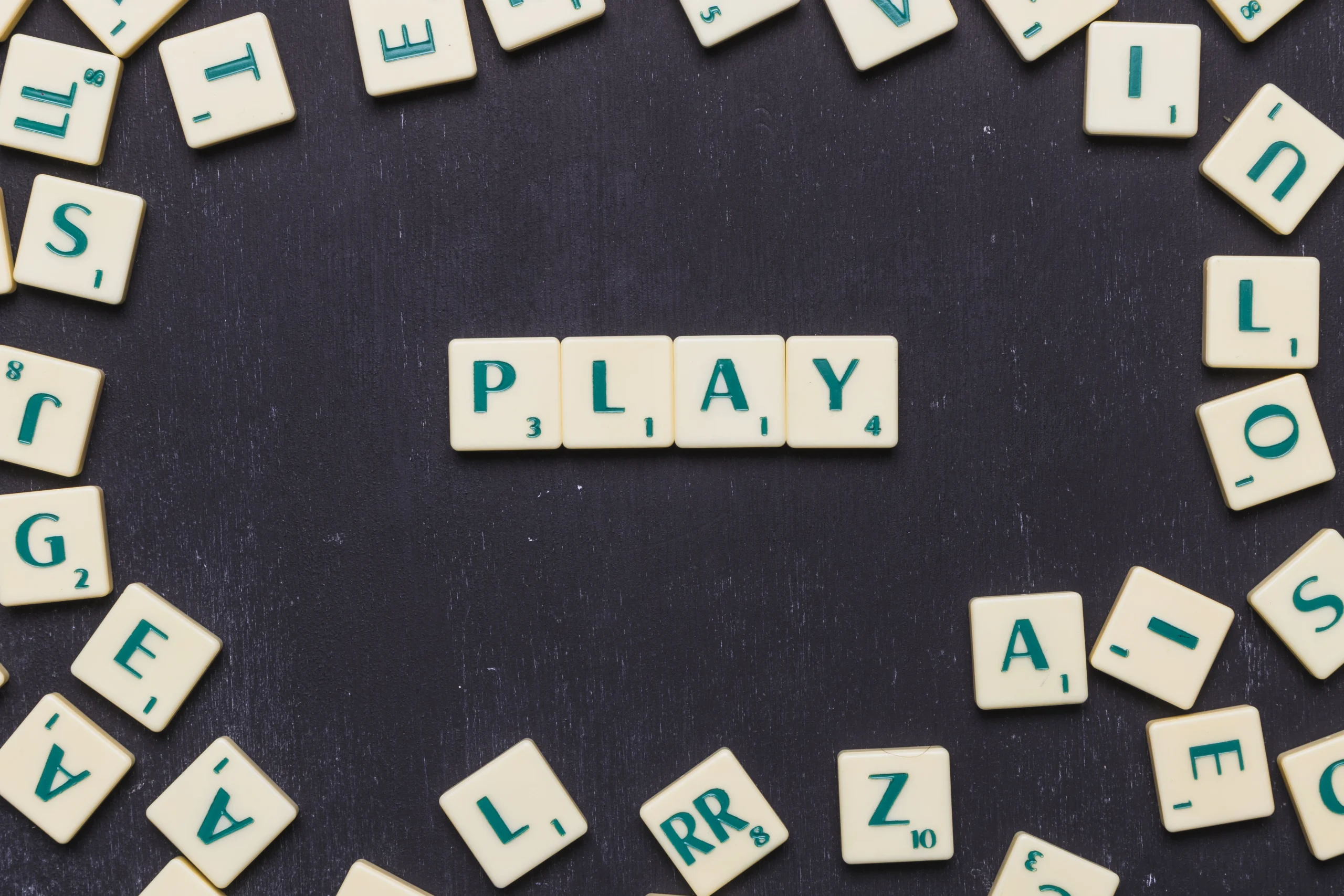
The timeless word board game that rewards vocabulary and strategy.
- On Your Turn
- You have three choices on your turn:
- Play a Word: Place tiles on the board to form a new word. It must connect to a word already on the grid (like a crossword).
- Exchange Tiles: If you have “bad” letters, you can trade any number of them for new ones from the bag (this ends your turn).
- Pass: If you can’t make a move, you can skip your turn.
- Scoring & Bonus Spaces
- Every letter has a number (e.g., A = 1, Z = 10). Add the numbers in your word together, but don’t forget the board bonuses:
- Double/Triple Letter (DL/TL): Multiplies the value of that specific tile.
- Double/Triple Word (DW/TW): Multiplies the score of the entire word.
- The Bingo: If you use all 7 tiles in one go, you get a massive 50-point bonus!
- Ending the Game
- The game ends when the bag is empty and one player has used all their tiles, or when no more moves can be made. The player with the highest final score wins.
Apples to Apples
The game includes two decks of cards: green description cards (with adjectives like “Hairy” or “Brilliant”) and Red Thing cards (nouns such as “My Grandma” or “Pizza”).Each round, one player acts as the judge and draws a description card.
The other players secretly choose one Thing card from their hand that they think best (or funniest) fits that description.
The judge then reveals all submissions, picks the one they like most, and awards that card’s player the round’s point.
The winner becomes the next judge, and play continues until someone reaches the agreed number of wins..
Word on the Street
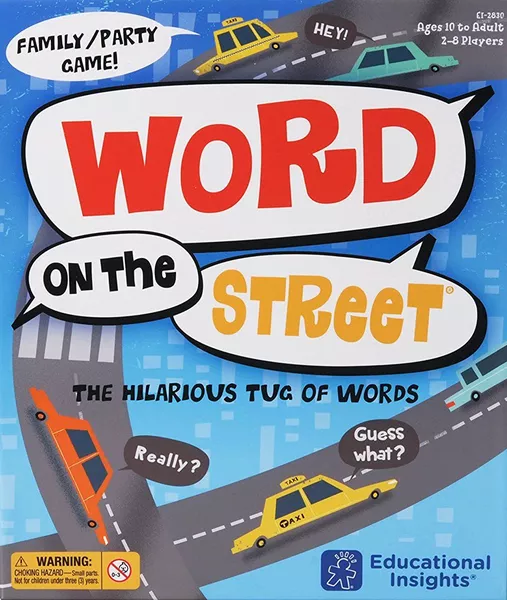
To set up the game, place seventeen letter tiles (all consonants except J, Q, X, and Z) in a line down the center of the board — the “median strip.”
Each side of this strip represents a team’s “lane.”
On your turn, a team is given a category such as “types of fruit” or “something a player is wearing.”
You have 30 seconds to name an answer in that category, then move the letters in that word toward their side of the board.
Letters not on the board are ignored. For example, if the answer is “pineapple,” the team would move P, N, P, P, and L.
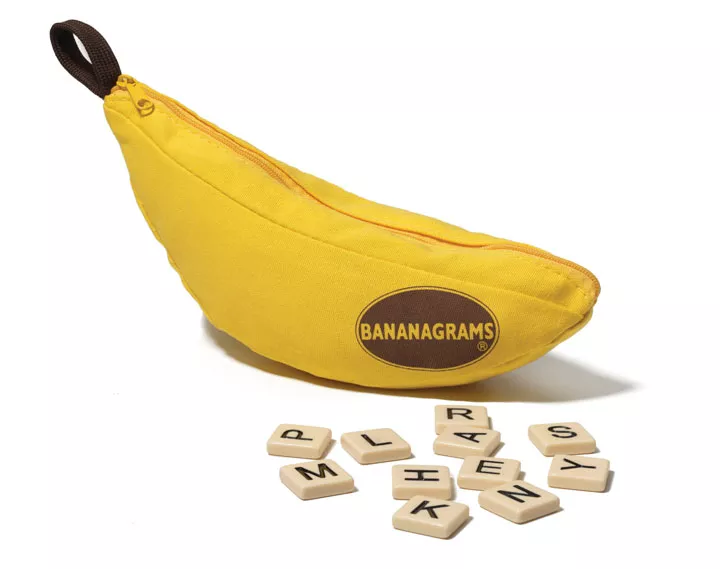
Bananagrams
Bananagrams – A fast-paced award winning game of building crossword grids with letter tiles.
The Game Flow
“Split!”: Someone yells “Split!” and everyone flips their tiles over and starts building their own connected crossword grid.
“Peel!”: Once you have used all your face-up tiles in a valid grid, yell “Peel!” Every player (including you) must now take one new tile from the Bunch.
“Dump!”: If you have a difficult letter (like a Q or X), you can yell “Dump!” Put that letter back into the Bunch face down, but you must take three new tiles in exchange.
Winning the Game
When the Bunch has fewer tiles than there are players, the first person to use all their remaining tiles in a completed grid yells “TOP BANANA!”
The other players inspect the winner’s grid. If all words are spelled correctly and connected, that player wins!
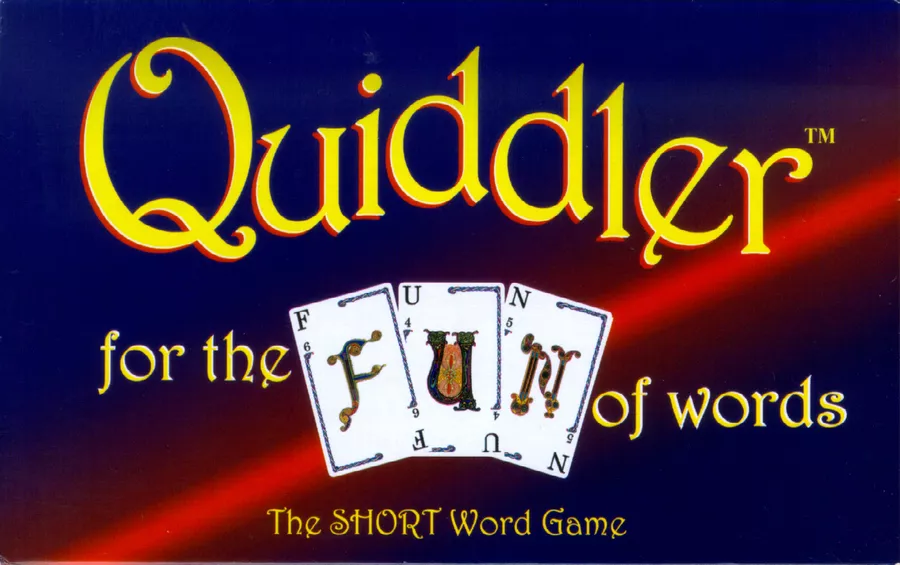
Quiddler
Quiddler is a word-building card game played over eight rounds, with players receiving one more card each round (starting with three).
Each card shows one or two letters and a point value. On a turn, players draw a card from the deck or discard pile, then discard one.
When a player can use all their cards (leaving one to discard) to form valid words of at least two letters, they “go out.” Others get one final turn before scoring.
Players earn points for cards used in words and lose points for leftover cards.
Bonuses of 10 points go to the player with the most words and the one with the longest word.
After eight rounds, the highest total wins. A solo variant is also included.
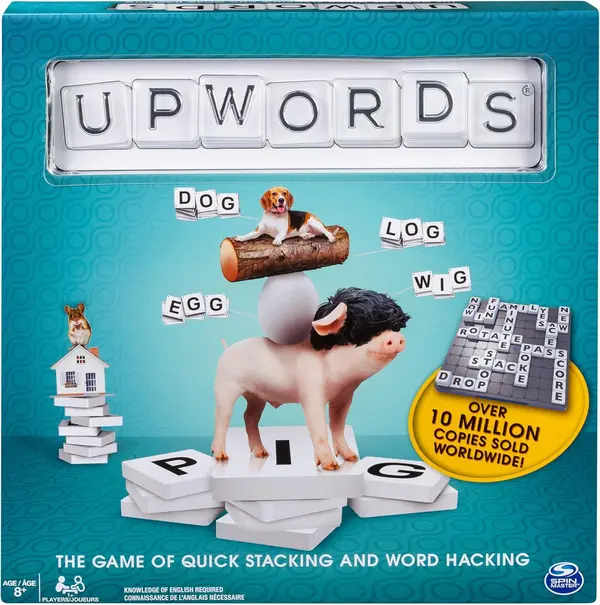
Upwords
The “3D” twist: stack letters on top of existing words to change them into something new!
The Goal: Build words across the board or upward (up to 5 tiles high).
The Move: Play a new word or “hijack” one already there. Example: Stack a B on CAT to make BAT.
The Rules: All words must connect. You cannot stack a letter on top of an identical letter.
Scoring: * Flat words: 2 points per tile.
Stacked words: 1 point for every tile in the stack (including those hidden underneath!).
Winning: Highest score wins once tiles run out.
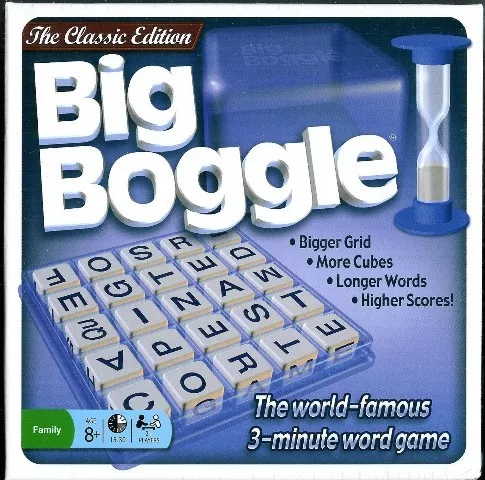
Big Boogle
Big Boggle takes the classic 4×4 grid and expands it to a 5×5 grid, offering more letters and longer word possibilities.
The Shake: Shake the cube to scramble the 25 letter tiles into the grid.
The Search: You have 3 minutes to find as many words as possible. Letters must be connected vertically, horizontally, or diagonally.
The Score: Longer words are worth more points. Words must be at least 4 letters long in Big Boggle (unlike the 3-letter rule in standard Boggle).
Why Seniors Love It: The larger 5×5 grid is often easier to read, and the hunt for hidden words is a relaxing yet stimulating mental exercise.
Scattergories
Scattergories is a fast-paced game of categories where being unique is the only way to win. For ages 13+
The Roll: Roll the 20-sided letter die to determine the key letter for the round.
The List: You have a limited time to fill out a list of 12 categories (like “Vegetables” or “Types of Cars”) using words that start with that letter.
The Twist: You only get points for unique answers. If you and another player both write “Carrot,” neither of you gets a point!
Why We Love It: It’s a wonderful “brain-spark” game that exercises quick recall without requiring complex board movements. It also can be really hilarious when you are under pressure and sometimes end up making up words.
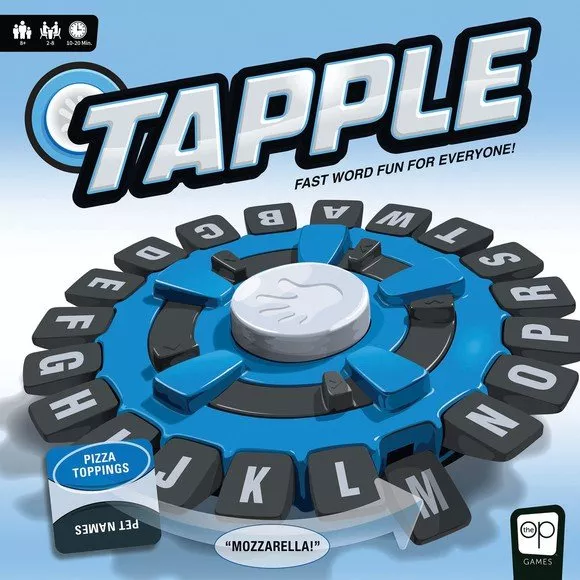
Tapple
Tapple is a modern, high-energy game that turns a category challenge into a race against the clock.
The Category: Pick a category (e.g., “Ice Cream Flavors” or “Famous Actors”).
The Tap: Start the 10-second timer. You must say a word that fits the category, press the corresponding letter on the Tapple wheel, and reset the timer.
The Elimination: Once a letter is pressed, it’s “locked out” for the round. If you can’t think of a word before the timer beeps, you’re out!
Why We Love It: The Tapple wheel is large, bright, and very “clicky.” It provides great tactile feedback and keeps the energy high without being overly complicated.
Or play Tapple: After Dark rated 17+, for more hilarious, sometimes completely inappropriate fun.
Password
Based on the classic TV game show, Password is all about communication and “reading” your partner’s mind.
The Secret: One player (the Clue Giver) is given a secret password.
The Hint: You must get your partner to guess the password using only one-word clues.
The Volley: If your partner misses, the other team gets a turn with a new one-word hint. The points decrease with every failed guess.
Why Choose Password: It’s a nostalgic favorite! It’s purely verbal, meaning no small pieces to handle and no board to keep track of—perfect for playing on the couch. Engaging but lighthearted but sometimes serious fun.
Word Games for Seniors and Families : Fun, Brain-Boosting, and Family Friendly
Word games for seniors are more than just entertainment—they’re a way to connect, laugh, and keep our minds sharp. We love how these games make it easy to exercise memory, vocabulary, and critical thinking. Playing with grandchildren or friends turns any evening into a warm and lively gathering.
The Benefits of Word Games for Seniors
Keeping your brain active is just as important as staying physically active. Word games are a wonderful way to do this while having fun.
Why Word Games are a Great Choice
Think & Recall: They help you practice memory and communication.
Play at Your Own Pace: There is no need to feel rushed. You can take your time with every move.
Social Connection: Playing with friends or family creates a sense of togetherness and helps prevent feelings of being alone.
What the Research Says
The National Library of Medicine shared a study on how recreational games (like word games and Bingo) affect seniors. They compared two groups of people living in rest homes and found that those who played games twice a week saw wonderful results:
Increased Happiness: Players felt more satisfied with their daily lives.
Reduced Loneliness: Spending time playing games together improved their social lives and decreased feelings of isolation.
Better Brain Health: The study showed a significant improvement in cognitive (mental) functioning.
Modern Word Games - A breath of fresh air
Newer word games are a wonderful way to enjoy a “tug-of-words” without the long setup of traditional games. They are colorful, interactive, and perfect for a friendly afternoon challenge.
Two Modern Favorites
Word on the Street: In this game, teams compete to pull letter tiles toward their side of the “street.” You move letters by thinking of words that fit a specific category. It is very hands-on and keeps everyone involved.
Quiddler: This is a fast card game where you try to build words from the cards in your hand. The rounds are short and manageable, so you never feel overwhelmed by a long game.
Bridging the Generations
Word games are the perfect “bridge” between grandparents and grandchildren. They allow everyone to sit at the same table and enjoy a shared activity.
Why it Works for Families:
Two-Way Learning: Children get to practice new vocabulary and spelling. Meanwhile, grandparents keep their memory sharp and share their wisdom.
Easy to Explain: These games have simple rules that can be taught in under five minutes.
Quick to Play: You can finish a full game in a short time, which is great for younger children with shorter attention spans.
3 Simple Tips for Inclusive Play
If you are playing with a mixed-age group, here are three ways to make sure everyone has the best time:
Use Large-Print Tools: Look for “XXL” versions of boards or large-print cards to make reading easier for everyone.
Play in Teams: Pair a grandchild with a grandparent! This takes the pressure off any one person and encourages teamwork.
Take Your Time: Don’t worry about using a timer. Allowing for longer turns makes the game more relaxing and lets the conversation flow.
Tips for Making Word Games For Seniors Enjoyable
Because a few small adjustments can make a big difference, here are some tips:
- Choose larger print versions of games to make reading easier.
- Shorten rounds or use flexible time limits to reduce pressure.
- Play cooperatively instead of competitively if that suits your group better.
- Encourage conversation — it’s not just about winning; it’s about laughing and connecting.
Wrapping Up: Why Word Board Games Work So Well for Seniors and Families
Finally, word games bring people together. They’re fun, brain-friendly, and perfect for seniors who want to stay mentally active. Whether you’re dusting off an old Scrabble board or trying a new card-based word challenge, the joy is in the shared experience.
With a little creativity, you can turn any evening into a memorable game night. Word games for seniors aren’t just about spelling—they’re about connection, conversation, and community.
Other board games worthy of a look:
- Just One—A Cooperative Word Game. Each player picks one word to describe an object on a card. If two people write the same word, it’s out. Each player shows their one-word description, and the person has one guess to determine what the chosen word is.
- More board games recommendations for seniors.
- Board Games For Adults
- Best Nature Board Games


