
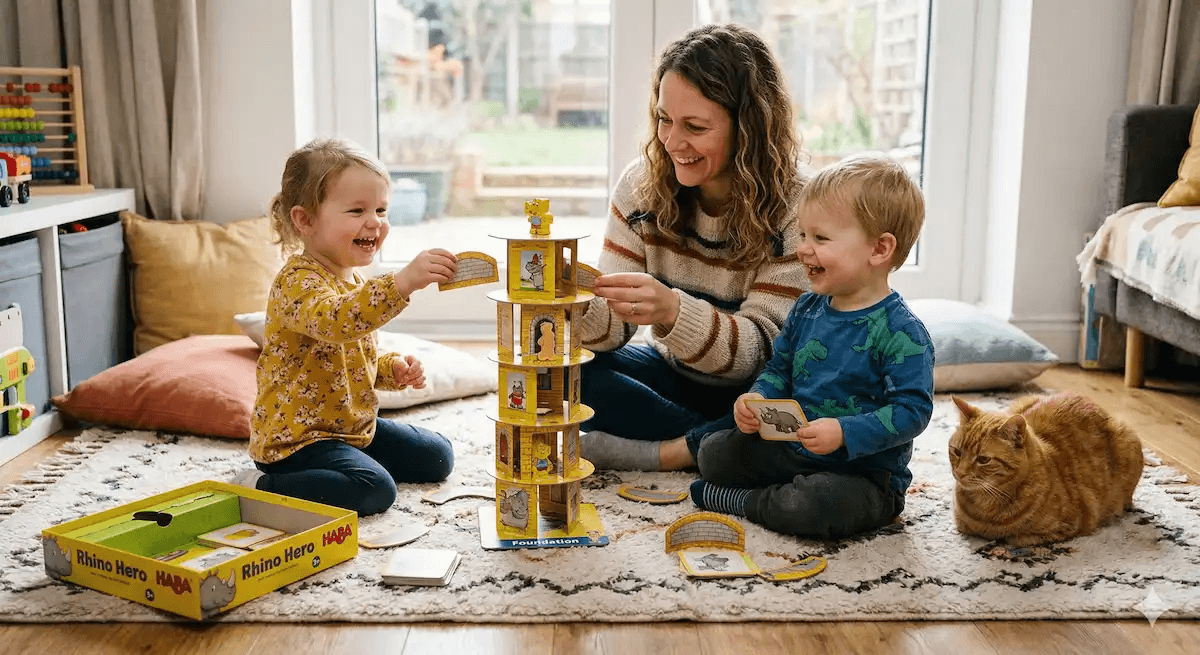
Utilize Board Games for Hand-Eye Coordination for School Readiness
Playing board games for hand-eye coordination is one of the most effective ways to support a child’s physical and cognitive growth. Preschoolers (typically ages 3–5) are in a prime stage for developing fine motor skills, visual-spatial awareness, and manual dexterity. Board games serve as a fantastic ‘stealth learning’ tool because they require precise movements—like pinching, stacking, and balancing—under the guise of engaging play.
I found including interactive preschool games, my child did improve their grip strength and concentration while they learned to navigate physical challenges.
Here is a list of top-rated educational board games specifically designed to build coordination for kids and refine those essential early motor milestones.
I am an Amazon Affiliate, and if you click a link, I may earn a commission. At not extra cost to you.
Our Picks for Board Games for Hand-Eye Coordination
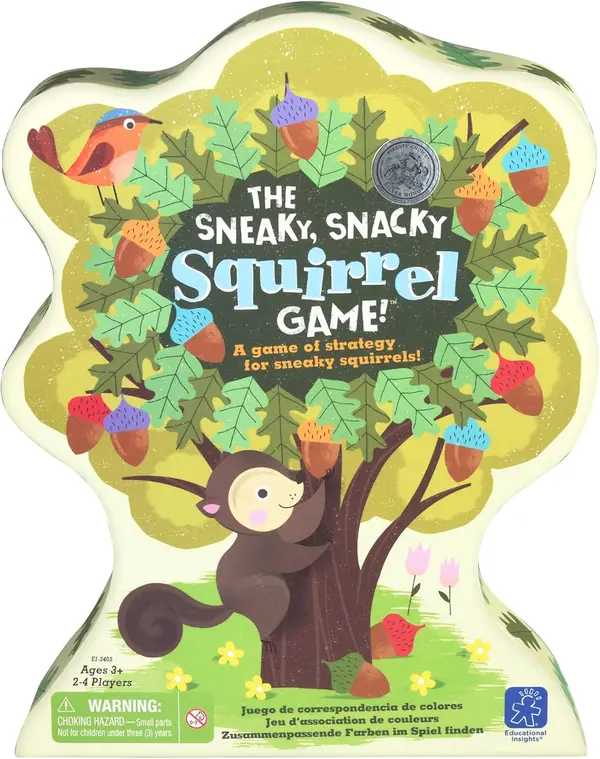
This is widely considered the “gold standard” for this age group. Players use a large Squirrel Squeezer (shaped like a pair of tongs) to pick up colored acorns and place them into matching holes in their tree log.
- Why it works: It builds the “pincer grasp” needed for holding a pencil and requires steady coordination to move the acorn without dropping it.
How to Play The Sneaky, Snacky Squirrel Game
Spin the Spinner: On your turn, spin to see if you get a specific color, a “Pick an Acorn” (wild), or the “Sneaky Squirrel” (steal an acorn!).
Squeeze & Move: Use the Squirrel Squeezers to grab the matching colored acorn from the main “tree” board.
Fill Your Log: Place the acorn into the matching colored hole in your log.
Who Wins? The first player to fill all five colored holes in their log wins the game.
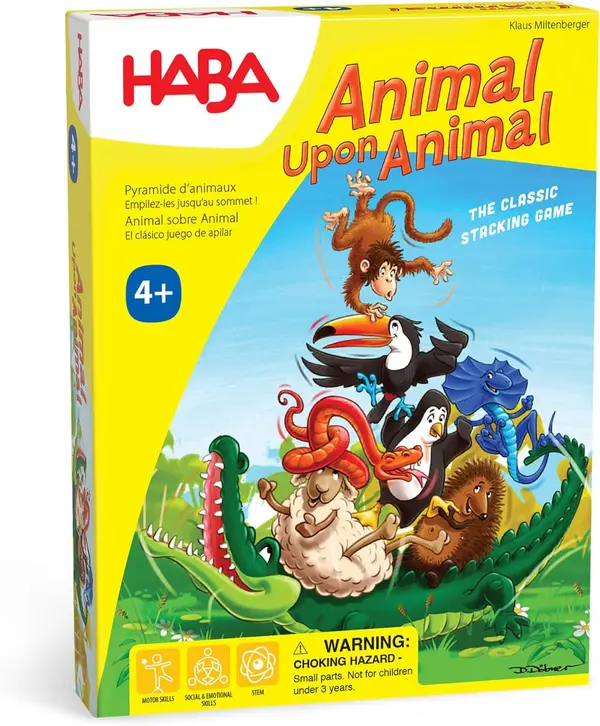
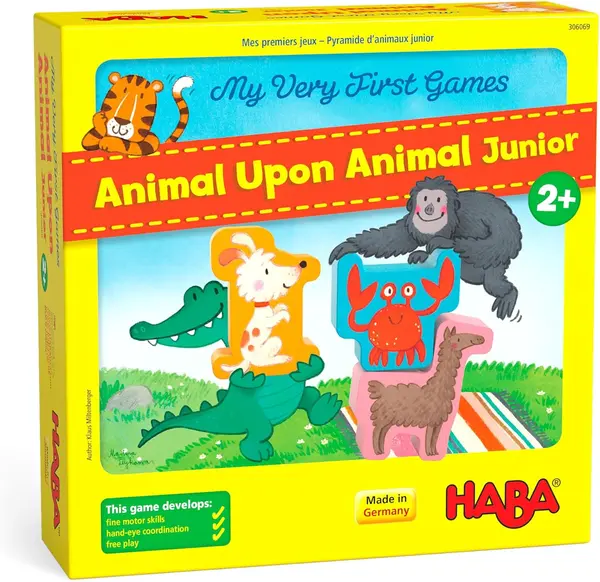
Animal Upon Animal
A classic balancing game from HABA. Players take turns rolling a die and stacking chunky wooden animals (crocodiles, monkeys, snakes) on top of each other. These board games help with hand-eye coordination in a super fun way, using animals in a playful theme.
- Why it works: It teaches kids to judge distance, weight, and center of gravity. One shaky hand can send the whole “animal tower” tumbling.
How to Play Animal Upon Animal
Roll the Die: The die tells you how many animals to stack (one or two), or if you can give an animal to another player to stack for you.
The Balancing Act: Carefully place your wooden animal onto the growing pyramid in the center.
The Crash: If any animals fall off during your turn, you must take them into your personal pile (up to two).
Who Wins? The first player to successfully stack all their animals wins.
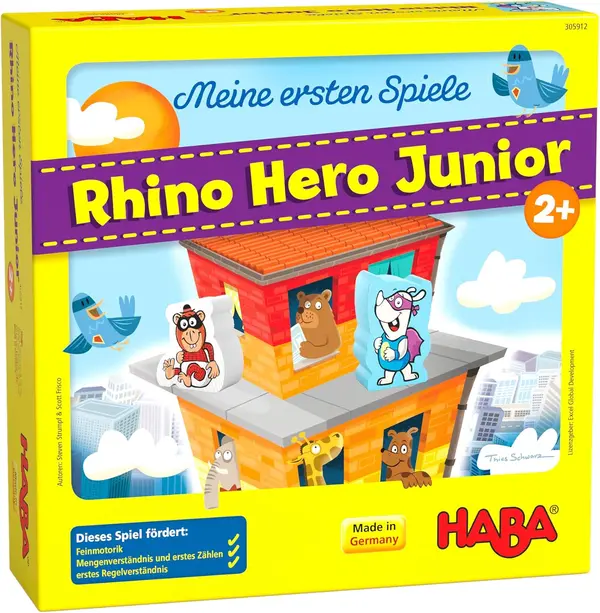
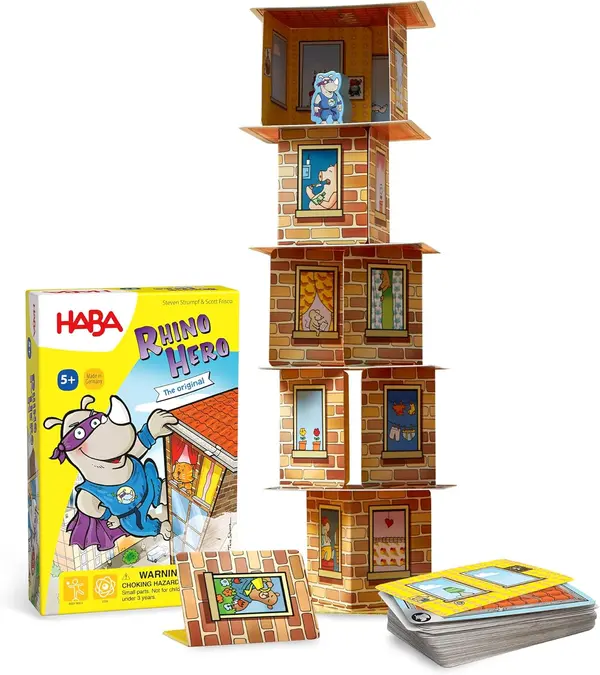
Rhino Hero / Rhino Hero Junior
In this “vertical” game, kids build a house out of cards. The “Junior” version is perfect for 2–3 year olds, while the standard version works well for 4–5 year olds.
- Why it works: Stacking paper “walls” and “roofs” requires extremely delicate finger control. Placing the little Rhino figurine on the higher floors adds a suspenseful dexterity challenge.
How to Play Rhino Hero
Build the Walls: Look at your roof card to see which symbols are shown. Place the folded “wall” cards on the matching spots on the board or the previous floor.
Add the Roof: Carefully place a new roof card on top of the walls you just built.
The Rhino Move: If your card has a Rhino symbol, you must move the wooden Rhino figurine to the new, higher floor without knocking the house over!
Who Wins? The game ends if the building collapses (the person who didn’t knock it down wins) or if a player uses all their roof cards.
At the time of writing, Rhino Hero on Amazon was advertised as $100, so here is the link to HABA games to get it at the appropriate cost. I am not affiliated with HABA. Plus, it’s definitely worthwhile checking out their other games while you are there also.
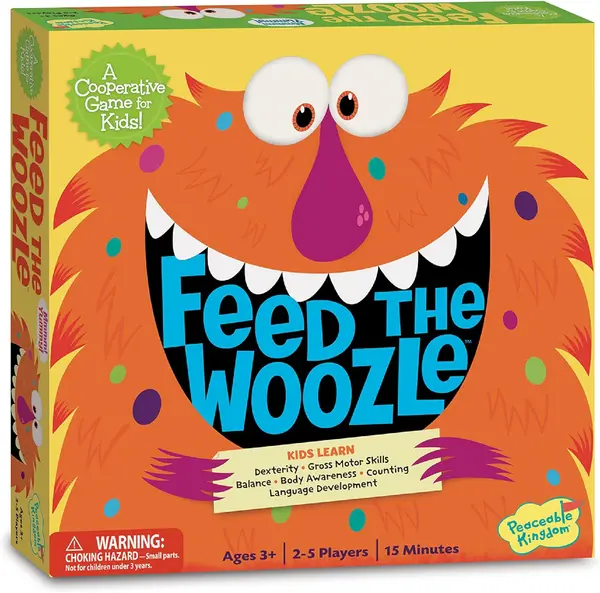
This is a cooperative game where kids use a large spoon to carry “silly snacks” (like hairy pickles) to a cardboard monster’s mouth.
- Why it works: It focuses on dynamic balance—moving the body while keeping the hand steady. For an extra challenge, the game often asks kids to do it while “marching” or “spinning.”
How to Play Feed the Woozle
Roll & Count: Roll the die to see how many “Silly Snacks” (like hairy pickles or sardine jam) the Woozle wants to eat.
The Spoon Challenge: Place the snacks on the large spoon.
The Movement: Walk toward the cardboard Woozle monster. For a challenge, try “marching” or “hopping” while balancing the spoon!
Feed the Monster: Drop the snacks into the Woozle’s mouth.
Who Wins? This is a cooperative game—if the group feeds the Woozle 12 snacks before the snack pile runs out, everyone wins together!
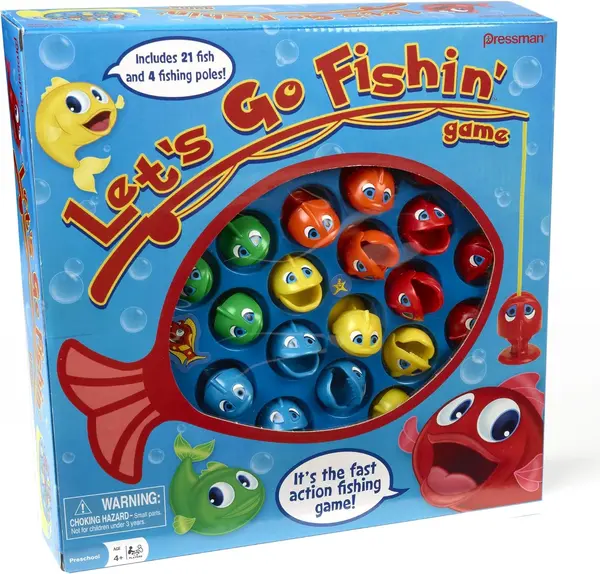
A mechanical classic where a rotating “pond” of fish opens and closes their mouths. Players must use a small fishing rod to snag them.
- Why it works: It introduces timing. Kids have to coordinate their hand movement with a moving target, which is a significant leap in hand-eye development.
How to Play Let’s Go Fishin’
Start the Pond: Turn the switch to start the pond rotating and making the fish “chomp” their mouths open and shut.
Cast Your Line: Use your small fishing rod to try and catch a fish while its mouth is open.
The Catch: Hook the fish and pull it out of the rotating base.
Who Wins? Once the pond is empty, everyone counts their catch. The player with the most fish is the winner.
This game also comes in an XL version.
As a parent who has spent years testing tabletop hits, I’ve found that the best board games for hand-eye coordination are the ones where the learning is totally invisible. Preschoolers get so caught up in the excitement of the challenge that they don’t even realize they’re mastering the fine motor skills and manual precision they’ll use for a lifetime.
More game options highly recommended
With iPads being introduced to children as young as 2, some children can lose those important fine motor skills needed for tying shoelaces, buttoning clothes, and grasping pencils for school. Finding ways to work on these skills is key—and board games help with hand-eye coordination in a way that feels like play rather than a lesson. It really boosts their confidence when they see they can master these small tasks on their own.
Another fun fine motor skills game is Yeti in the Spaghetti. Read our article by Catherine, an Occupational Therapist who provides tips and strategies on how board games can help fine motor skills.
Other articles that you might be interested in include:
- Low sensory games for children
- We also love Tinderblox – a campfire block building game. Comes in a metal tin, great for taking out to restaurants or on holiday.
- Games for kids who hate to lose
- Screen Free Week is in May—there are some fabulous tips on how to build unplugged activities into your week.