

Push Your Luck Favourites
Waiting for a big win is half the fun! If you’re looking for that ‘Risk it for the Biscuit’ moment, push your luck games (also known as press your luck games) are the ultimate game night hero. These risk-reward board games turn simple probability into high-stakes family drama where every turn is a gamble.
Our family has personally tested these titles to find the best fast-paced tabletop games that offer minimal setup and high interaction. Whether you prefer dice-rolling games or strategic card drafting, this 2026 guide features the top-rated picks that are easy to learn and play in under 45 minutes. Check out our comparison below to find the perfect match for your next family game night.
- Flip 7: 3–18 Players | 15–20 Mins | Best for large groups
- MLEM: Space Agency: 2–5 Players | 30–45 Mins | Best for cat lovers and families
- Stomp the Plank: 2–4 Players | 15 Mins | Best for younger kids (Age 5+)
- Lure: 2–5 Players | 15–25 Mins | Best for secret bidding
- Trash Pandas: 2–4 Players | 20 Mins | Best for fast and fun scavenging
- Mountain Goats: 2–4 Players | 20 Mins | Best for dice management
- Can’t Stop: 2–4 Players | 30 Mins | Best for a pure, classic experience
- Dead Man’s Draw: 2–4 Players | 15 Mins | Best for pirate fans and card abilities
- Welcome to the Dungeon: 2–4 Players | 30 Mins | Best for social bluffing
I am an Amazon Affiliate and may earn a commission if you click a link—at no extra cost to you.

MLEM: Space Agency
A classic push your luck game experience where the stakes are astronomical. You have to decide to leave the rocket and take the points on the current planet or stay on board and risk the Captain crashing the ship on the next roll.
- Stats: 2–5 Players | 30–45 Mins | Age 8+
- Type: Classic PYL / Dice Rolling
- Objective: Land your cat astronauts on high-scoring planets.
- Overview: One player (the Captain) rolls dice to move the shared rocket. After each move, passengers choose to stay or hop off for points. If the Captain fails a roll, the rocket crashes and everyone still inside gets zero.
A fun carefree evening for families and friends with MLEM Space Agency. It has replayability.
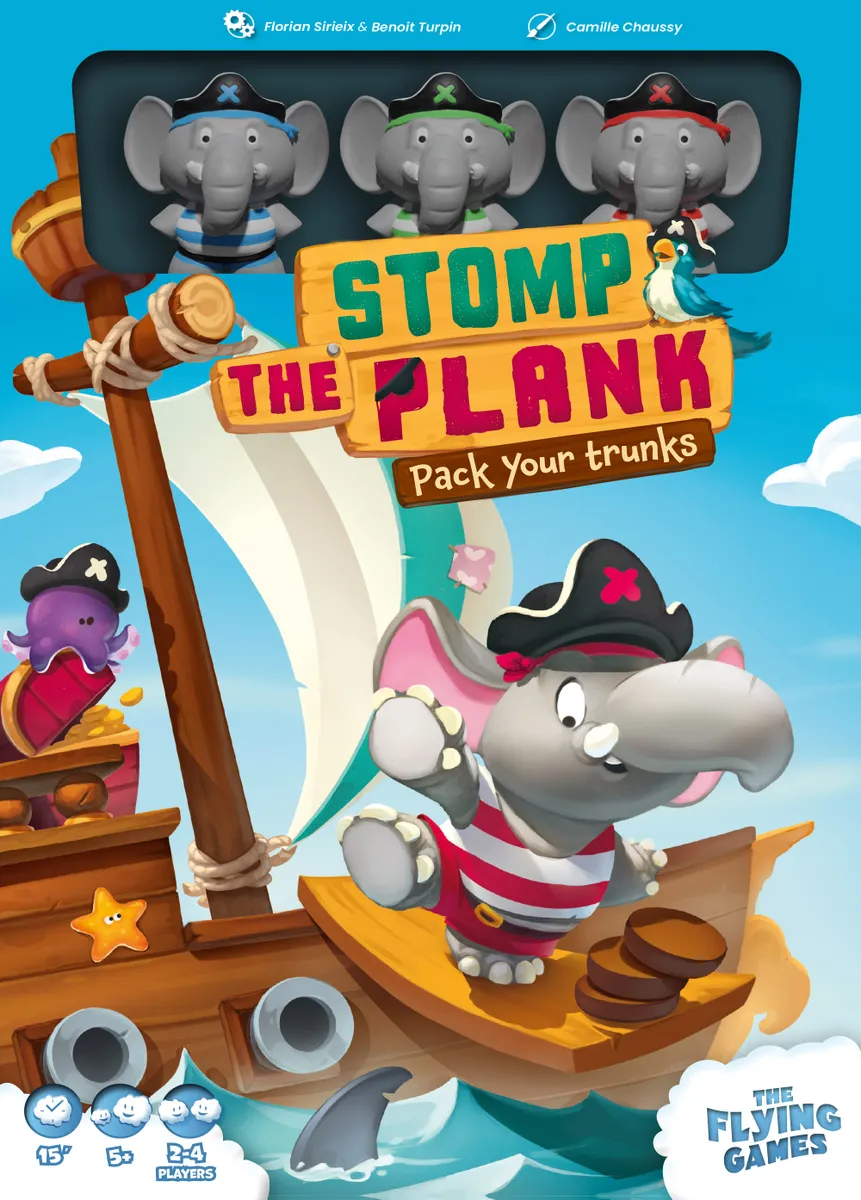
Stomp The Plank
Designed for the whole family, this is a push your luck game with adorable components. You keep flipping cards to punish your opponents, but the moment you hit a duplicate, you are the one who has to walk further out on the plank.
- Stats: 2–4 Players | 15 Mins | Age 5+
- Type: Dexterity / Pure push your luck
- Objective: Be the last pirate standing on the plank.
- How to Play: Flip treasure cards. The more you flip, the more “weight” you put on your friends’ planks.
- But if you flip a duplicate, you have to move your own elephant one step closer to the edge.
- Pros: Perfect easy fun, for families with younger children.
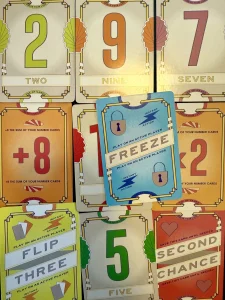
Flip 7
This is perhaps the purest of all push your luck games. Every card you flip is a high-stakes gamble.
You can stop and bank your points at any time, or flip one more and risk losing everything for that round.
- Stats: 3–18 Players | 15–20 Mins | Age 8+
- Type: Pure PYL / Card Drafting
- Objective: Reach 200 points by collecting unique numbers.
- How to Play: Flip cards one by one. If you flip a duplicate number, you bust.
- If you stop, you score the sum of your cards.
- Flip 7 unique cards to end the round with a 15-point bonus.
- Of course the fun action cards, such as Freeze, Flip 3, x 2, + 4, etc., add a great spin to the game.
I find this game never lets you done. Its perfect form families, friends, parties with a classic push-your-luck card element for game night.
It’s light, fun, easy to learn, quick to play, and perfect hold your breath fun game.

Mountain Goats
This is more of a Dice Management and Racing game. The “luck” is in the roll, but the “push” is social—you’re trying to milk a mountain for points before someone else kicks you off.
- Stats: 2–4 Players | 20 Mins | Age 8+
- Type: Dice Management / Racing
- Objective: Score the most point tokens from mountain peaks.
- How to Play: Roll four dice and group them to match mountain numbers (1-10). Move up the tracks.
- Once at the top, you score every time you roll that number, but watch out—other players can knock you back to the start!
I enjoy this game for its balance between luck and strategy. Sometimes it’s best to not use all your dice and just score points.
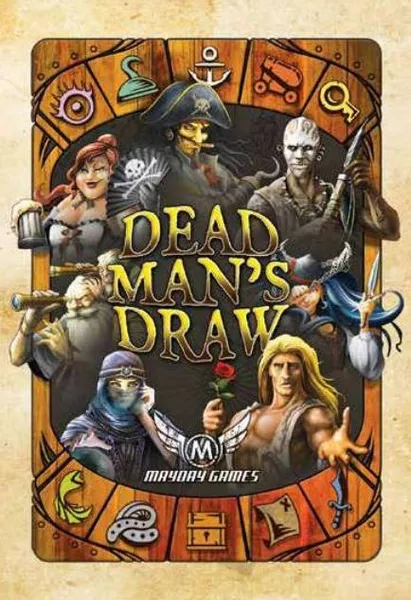
Dead Man's Draw
A pirate-themed card game where you flip cards to trigger powers but “bust” if you draw two of the same suit. It’s one of the most addicting push your luck games because of the special abilities.
- Stats: 2–4 Players | 15 Mins | Age 13+
- Type: Card Flipping / PYL
- Objective: Have the highest point total when the deck runs out.
- How to Play Dead Man’s Draw: Draw if You Dare. On your turn, flip the top card of the deck into the Play Area.
- Activate Abilities: You must immediately resolve the unique ability of every card’s suit as it is played (except for the Key and Chest, which only trigger when paired).
- Continue or Stop: After resolving the ability, decide whether to draw again or stop and Collect.
- The “Bust” Rule If you draw a card that matches a suit already in the Play Area, you Bust.
- When you Bust, you lose all cards currently in the Play Area—they go straight to the discard pile, you score zero for the turn, and your turn ends immediately.
- Collecting & Banking If you choose to stop before busting, you Collect all cards in the Play Area and move them to your Bank.
- Organize your Bank into Suit Stacks in descending order (highest value on top).
- All cards in your Bank are public knowledge and must be visible to other players.
- Ending the Game The game ends once the final card is drawn from the deck. That player finishes their turn, and everyone tallies their score.
- Determining the Winner
- Scoring: Only the top card (the most valuable) of each Suit Stack in your Bank counts toward your score. Add these values together.
- Tie-Breaker: If scores are tied, the player with the most total cards in their Bank wins.
- Pro-Tip: Remember, only your highest card in each suit counts! Don’t risk a massive Bust just to grab a ‘4’ if you already have a ‘7’ of that suit safely in your Bank.
Pros: Light game, with each card having abilities that either impact you or your competitors.

Can't Stop
The ultimate push your luck game where you climb three columns at once. If you don’t make progress on any of them during a roll, you lose all progress made that turn.
- Stats: 2–4 Players | 30 Mins | Age 9+
- Type: Pure PYL / Dice Rolling
- Objective: Be the first to “cap” three columns.
- How to Play Cant Stop:
- Rolling and Pairing On your turn, roll all four dice and divide them into two pairs of your choice. The sum of each pair tells you which columns you can move in.
- Example: A roll of 3, 4, 2, 6 allows you to move in columns 7 and 8, 5 and 10, or 9 and 6.
- Moving with White Cubes You have three white cubes to mark your temporary progress during your turn.
- New Column: If a white cube isn’t on the board, place it at the start of a chosen column (or one space ahead of your colored marker).
- Existing Column: If a white cube is already in a column, move it up one space.
- Shared Spaces: You can share spaces with other players’ markers.
- The Limit: You can only use three white cubes per turn. Once they are placed, you can only move in those three columns for the rest of your turn.
- Decision: Stop or Push? After every roll and move, you must choose:
- Stop: Replace your white cubes with your permanent colored markers. This “banks” your progress.
- Roll Again: Try to move the white cubes even higher.
- Going Bust If you roll the dice and cannot legally move or place any of your white cubes, you go Bust. Your turn ends immediately, and you lose all progress made during that turn (your colored markers stay where they were at the start of the turn).
- Claiming a Column If you reach the very top space of a column and choose to Stop, you claim it!
- Your colored marker stays at the top, and all other players are kicked out of that column.
- For the rest of the game, that column is “closed”—no one can move in it again.
- Winning the Game The first player to claim three columns wins the game!
- Pro-Tip: The columns for 6, 7, and 8 are the longest but have the highest probability of being rolled. Columns 2 and 12 are very short but much harder to hit—choose your risk wisely!
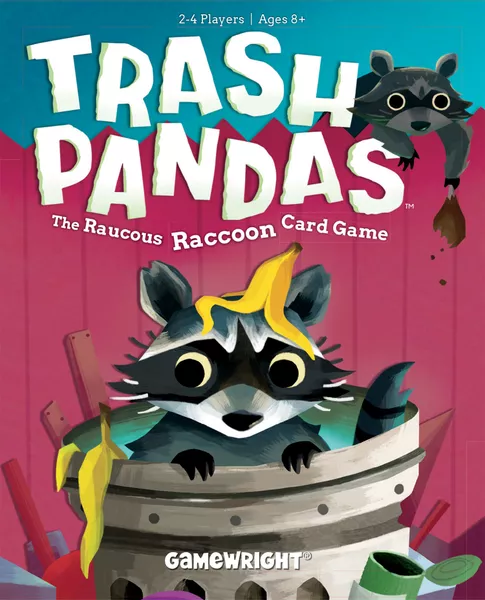
Trash Pandas
In Trash Pandas, your goal is to become the ultimate “fluffy thief” (racoon) by scavenging the most junk before the deck runs out! You’ll compete to collect and stash the highest number of each item type to outscore your rivals and prove you’re the best raccoon at the table.
- Stats: 2–4 Players | 20 Mins | Age 8+
- Type: Dice Rolling / Hand Management
- Objective: Score the most points by stashing sets of “trash” cards.
How to Play Trash Pandas
In this game, you take risks to collect tokens that allow you to draw, steal, or stash cards. The goal is to have the most cards of each type stashed by the time the trash can is empty.
1. On Your Turn
The player with the fewest cards starts. Each turn follows a two-step sequence:
A. Roll the Die Roll the die and take the matching token from the middle. You then choose to STOP or CONTINUE.
Continue: Roll again to get more tokens. However, if you roll a result that matches a token you’ve already taken this turn, you BUST.
Busting: You lose all tokens for the turn. As a consolation prize, draw one card from the trash can.
Bonus: If you collect all six tokens without busting, resolve them and then take a bonus turn (limited to three tokens).
Saves: Discard a Blammo! card to re-roll, or a Nanners card to ignore your last roll.
B. Resolve Tokens If you stopped without busting, resolve your tokens in any order:
Steal: Take one random card from an opponent’s hand. They can block this with a Doggo or Kitteh card.
Trash Can: Draw the top card and reveal it. Opponents can stash a matching card from their hand face up. For every card they stash, you draw an extra card from the trash.
Recycle: Swap this for any token remaining in the middle.
Stash (Tree/Bandit Mask): These allow you to move cards from your hand to your secure stash.
2. Important Rules
Card Use: You cannot use cards you just gained on the same turn.
Stashing: You can only stash cards when a specific token action allows it.
Stashed Cards: These are kept face down unless a specific action (like the Bandit Mask) forces them face up.
3. Game End & Scoring
The game ends immediately when the last card is drawn from the trash can. Players discard any cards remaining in their hands and reveal their stashes.
Scoring Points:
Majorities: Compare your card types with opponents. Scoring is based on the icons in the upper-left corner (e.g., 5 points for the most Feesh, 3 for second, etc.).
Ties: If you tie for a position, you receive one fewer point than that rank usually offers.
Blammo! Cards: Score 1 point for every Blammo! card in your stash.
Minimum: You must have at least one card of a type to score points for it.
Winning: The player with the most points wins. If there is a tie, the player with the most variety of card types wins. If still tied, the player with the highest total card count wins.
It’s simple, a fantastic small game for travel, and reminds me of the fast-paced fun of Sushi Go!, but with an even easier learning curve.
I find the balance between luck and skill is completed well; with a nice blend of strategic. It’s also incredibly easy to teach.
For the price, it is an excellent value for a game that gets played this often.
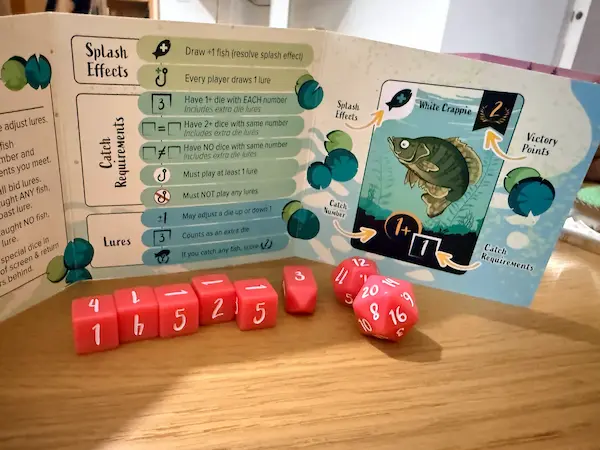
Lure
Published by Allplay, Lure turns a quiet morning of fishing into a high-stakes gambling match. This is one of the most unique push your luck games because you are bidding on how much risk you’re willing to take before you even roll.
- Stats: 2–5 Players | 15–25 Mins | Age 7+
- Type: Secret Bidding / Dice Rolling
- Objective: Catch the most valuable fish cards.
How to Play Lure
A game is played over several rounds where you must decide how many dice to risk to catch the best fish. The more dice you use, the better your chances—but the later you’ll get to act.
1. Round Sequence
Each round consists of three phases:
Splash: Draw 3 new fish into the middle (2 fish for 2-3 players). If a fish has a “Splash Effect” in the top-left corner, resolve it immediately.
Cast: Secretly choose any number of dice and lures from behind your screen. Reveal them simultaneously by shouting “Ready… Cast!”
Fish: Turn order is determined by the number of dice revealed. The player with the fewest dice goes first.
2. Fishing Turns
On your turn, perform these steps:
Roll: Roll your revealed dice.
Adjust: Use any revealed “Adjust” lures to change die faces up or down by one.
Catch: You catch a fish if your total meets the Catch Number AND your dice meet any specific Catch Requirements.
Score: Place caught fish and any “Boast” lures into your facedown score pile.
Clean Up: If you caught nothing, draw 1 lure. Return regular dice behind your screen and place used special dice in front of your screen (unavailable for one round).
3. Key Rules
Rolling Together: If players reveal the same number of dice, they roll at the same time. If multiple people can catch the same fish, the player with the lowest total takes it. If tied, the fish stays in the middle.
Lures:
Adjust: Rotate a die ±1.
Extra Die: Adds a flat number to your total; helps with requirements but doesn’t affect turn order.
Boast: Worth bonus VP, but only if you catch at least one fish this round.
Empty Middle: If all fish are caught before your turn, discard your played lures, draw 1 new lure, and return your dice.
4. Game End & Scoring
The game ends once the last fish is drawn from the deck and that final round is completed.
Calculate Your Total:
Victory Points (VP): Add up all points on your caught fish and your successful Boast lures.
Tiebreaker: The tied player with the fewest fish wins. If still tied, the victory is shared.
I love the unpredictability of this game. Do you bid too much or too little? Do you think you know what your competitors are bidding and think you can outsmart them?
I learnt quickly that sometimes if you bet more dice, then you possible go last but can win more cards, if the players before you were successful.
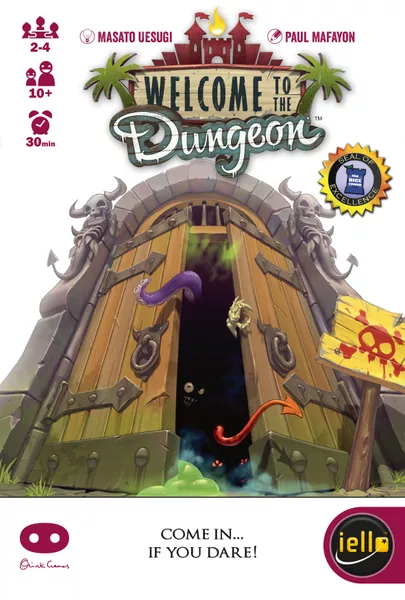
Welcome To The Dungeon
In this “reverse” dungeon crawler, you and your friends are standing outside a dungeon entrance, bragging about who can survive it. It’s a brilliant push your luck games pick because you aren’t just betting on yourself—you’re betting on how much gear you can throw away and still win.
- Stats: 2–4 Players | 30 Mins | Age 10+
- Type: Bidding / Elimination
- Objective: Be the last hero standing or win two successful dungeon runs.
How to Play: Welcome to the Dungeon
This is a push-your-luck game where players compete to see who is brave (or foolish) enough to enter a monster-filled dungeon with dwindling equipment.
1. The Bidding Phase
Players take turns clockwise. On your turn, you must either Draw a Card or Pass.
Draw a Card: Take the top Monster card, look at it, and choose one:
Add to Dungeon: Place the Monster facedown in the Dungeon pile.
Discard & Strip Equipment: Place the Monster facedown in front of you and choose one piece of Equipment from the Adventurer to remove for the rest of the round.
Pass: You are out for the rest of the round.
The Survivor: The last player who has not passed must enter the Dungeon alone with whatever Equipment remains.
2. The Dungeon Phase
Only the remaining player participates. They must face every monster in the pile one by one, starting with the last card placed.
Calculate HP: Total the Health Points from the Adventurer tile and any remaining HP-boosting Equipment.
Reveal Monsters:
Defeated: If your Equipment counteracts the Monster, discard it safely.
Damaged: If you cannot defeat the Monster, subtract its strength from your total HP.
Outcome:
Success: If you survive all monsters with at least 1 HP, you earn a Success Card.
Failure: If your HP hits 0, flip your player aid to the red side. If it was already red, you are eliminated.
3. Starting a New Round
If no one has won yet:
Collect and shuffle all Monster cards.
The player who just entered the Dungeon chooses the next Adventurer (Necromancer, Princess, Ninja, or Bard) and resets their Equipment.
That same player starts the bidding for the next round.
4. How to Win
There are two ways to achieve victory:
The Hero: Be the first player to earn two Success Cards.
The Survivor: Be the last player remaining after everyone else has been eliminated.
Because everyone plays the same character, the challenge is purely mathematical; you have to calculate whether the remaining weapons and abilities are enough to survive the monsters hidden in the dungeon.
The real fun comes from scaring other players. You win by removing key abilities to make the dungeon look impossible, forcing others to retreat until the last person is stuck facing the task. It rarely ends in a perfect victory, which makes it exciting when someone actually manages to beat the dungeon. It’s a fast, competitive experience that gets better as everyone learns the specific monsters and weapons.
Push Your Luck - Frequently Asked Questions
What exactly is a "Push Your Luck" game?
A push your luck (PYL) game is a genre where players must decide between keeping their current gains or risking them for a potentially greater reward. If the risk doesn’t pay off, the player usually loses everything they gained during that turn—often called “busting.”
How do I win a push your luck game?
While luck is a factor, the secret is probability management. Knowing when the deck is “thin” or when the dice are against you is key. The most successful players know when to bank their points and let their opponents take the unnecessary risks.
Are push your luck games good for kids?
Absolutely! Many of the best interactive 5-player games in this genre, like Stomp the Plank, help children develop basic probability skills and emotional resilience in a fun, low-stakes environment.
Can these games be played with large groups?
Yes! Titles like Flip 7 are famous for supporting huge groups (up to 18 players!), making them the best choice for parties or large family gatherings where you want to avoid people sitting around.
Wrapping Up: Why Push Your Luck Games are the Ultimate Game Night Hero
There is a reason push your luck games are dominating the 2026 tabletop scene. They offer the perfect blend of simple rules, high-stakes drama, and that “just one more turn” addictive quality that keeps everyone engaged. Whether you are outrunning a cat-filled rocket in MLEM, diving for treasure in Lure, or scavenging like a “fluffy thief” in Trash Pandas, these games prove that sometimes the biggest risks lead to the best memories.
By choosing games with low downtime and high interaction, you ensure that your family game night stays energetic and inclusive for players of all ages.
Looking for More Tabletop Inspiration?
If you enjoyed this guide to the best push your luck games, you might want to check out these other resources to round out your collection:
Top 10 Games for 5 Players: For when your group wants something a bit “meatier” than a quick dice game.
The Best 10-Minute Board Games: Perfect for busy weeknights when you only have a small window for fun.
- Games for 8 Year Olds with Short Attention Spans.