
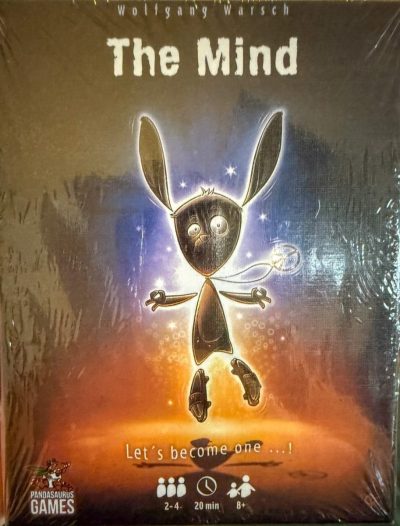
The Mind card game is a unique and fun cooperative card game that challenges your nonverbal communication skills and your ability to sync with others.
Quick Game Stats
| Feature | Details |
| Age Rating | 8+ (Great for any child who can count and read numbers to 100) |
| Number of Players | 2–4 players |
| Game Time | 15–20 minutes |
| Complexity | Very Low (Easy to learn, hard to master) |
The Objective of The Mind Game
In The Mind, the goal is to play all cards in your hand in ascending order (1 to 100) without making mistakes. You’ll have to rely solely on your instincts and your ability to sync with your fellow players. It’s not just about winning—it’s about working as a team. If you complete all levels, your team wins!
How to Setup The Mind Card Game
- Shuffle the deck (cards 1–100).
- Set Lives and Throwing Stars: Place these openly on the table based on player count:
- 2 Players: Levels 1-12 • 2 Lives • 1 Throwing Star
- 3 Players: Levels 1-10 • 3 Lives • 1 Throwing Star
- 4 Players: Levels 1-8 • 4 Lives • 1 Throwing Star
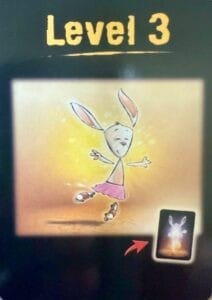
- Level Deck: Stack the level cards in order with Level 1 on top.
How to Play The Mind Game: Step by Step
The game begins at Level 1.
1. Deal Cards to Each Player
Each player is dealt cards equal to the level number (Level 1 = 1 card). Before playing, everyone places one hand on the table. Once everyone feels “synced,” you remove your hands. This is a great moment of calm that helps my kids reset and focus.
2. Play in Ascending Order
There are no turns. If you think you have the lowest card, you play it. If I have a 3 and a 10, I’m going to play that 3 almost immediately. It requires massive trust in your intuition since you can’t see anyone else’s hand.
3. Mistakes and “Re-Syncing”
If someone plays a card out of order (e.g., I play a 20, but you had a 15), the team loses a life. To keep going, everyone discards any cards lower than the one just played, and you “re-sync” by putting your hands back on the table.
4. Using the Throwing Star
If you’re stuck and no one knows who should go next, anyone can raise their hand to suggest a Throwing Star. If everyone agrees, the star is spent, and each player discards their lowest card face up. It’s a perfect safety net for when the game gets intense.
Tips for Success with The Mind Game
When my husband and I first played, we didn’t read the “black box” info in the rules, and honestly, we found it a bit frustrating. We couldn’t even pass Level 2. However, once we read the secret to “counting the rhythm,” it became much more enjoyable.
Watch the Hands: If a teammate’s hand is hovering over the table, they are ready to play.
The Internal Clock: Try counting at a steady pace in your head.
Stay Calm: The silence prevents bickering, making it one of the best cooperative card games for 8-year-olds or kids who hate the pressure of competition.
The Ultimate Challenge: Once you win, try “Blind Mode” where you play cards face down and only reveal them at the end of the level.
Use the Throwing Star Wisely: The Throwing Star is a powerful tool, but don’t waste it too early. Save it for when the game gets tough.
Frequently Asked Questions
The Mind Game
What is The Mind Game?
The Mind game is a unique and fun cooperative card game that challenges your non-communication skills and your ability to sync with others, while trying to place your cards in ascending order without talking.
How to play The Mind game with kids who hate losing?
Remind them that losing a life is a team event, not an individual “fail.” It’s a “telepathic experiment,” so mistakes are just part of the game.
Don’t take it seriously, because they will be looking for your reactions.
Is The Mind card game too hard for kids?
A. Not at all! As long as they understand numerical order, they can play. It actually helps kids develop patience and emotional regulation.
Rated for ages 8+.
Is The Mind card game a good game?
Yes, it’s a fun cooperative game the whole family can enjoy. It brings a different twist to normal card games by not talking, so its great to try and introduce to your family. My teenager enjoys this. They may find the first couple of rounds a bit frustrating, so do read the tips first.
Why Play The Mind Card Game
The Mind card game is a fun and engaging game that involves timing and teamwork. It’s a refreshing twist on traditional card games, focusing on communication through silent coordination rather than speaking. Which makes it a great card game for families, friends, or anyone looking for a new challenge.
I found it to be a relaxing game for my children. Being quiet and focusing was a great skill for them in playing.
By following the above guide, you can understand how to play The Mind card game with ease. Use the tips and tricks shared here to enhance your gameplay and enjoy hours of fun.
Or look at different styles of easy card games for families here.
Explore Other Games:
- Another family favourite is Monopoly Deal; all the fun of the real estate tycoon but in a card game.
- Tacta Strategy Card Game
- Best Family Games
- Cooperative games for kids who hate to lose
- How to Play Dragonwood – Great easy to learn strategy game for 8+
- Or step up the acion and play fast-paced card games.
- Skull Card Game
- Vocabulary Games for an 8 Year Old