
Best Social Deduction Board Games for 2026
Jump to social deduction board games
- Secret Hitler Overview or How to Play Secret Hitler
- The Resistance Overview or How To Play The Resistance
- Ultimate Werewolf Overview or How To Play Ultimate Werewolf
- Cheese Thief Overview or How To Play Cheese Thief – great for playing with younger family members
- Insider (Overview) or How to play Insider (quick social deduction game)
- Good Cop Bad Cop and How To Play
- Staked! or How to play Staked!
- What is a Social Deduction Game
I’ve noticed that social deduction board games have absolutely exploded in popularity lately. There is something incredibly addictive about a game that relies less on a board and more on the people sitting around it. If you’re looking for quick social deduction games (less than 30 mins) read this article.
In my experience, these games are the ultimate intellectual battle. You’re not just moving pieces; you’re using wit, reading social cues, and trusting your intuition to outmaneuver your friends. It’s a game of “he said, she said,” but with high stakes and even higher levels of laughter.
As an Amazon Affiliate if you click a link, I may earn a commission.If so, I am very grateful, as it does help our board game loving family continue to bring recommendations to you.
Top Social Deduction Board Games Overview
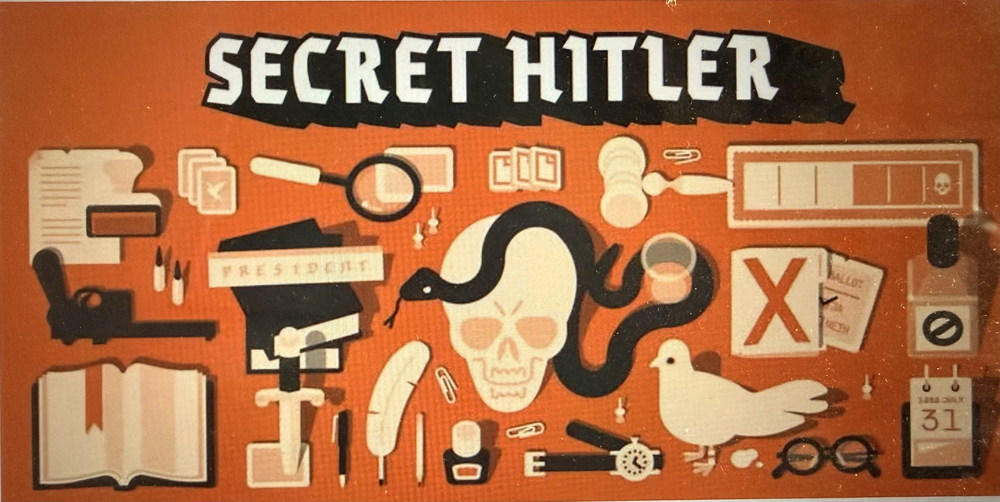
- Number of Players: 5-10
- Game time: 45 mins
- Age Rating: 17+
- Objective: Players must either work together to enact five Liberal policies or identify and stop the Secret Hitler before they are elected Chancellor after three Fascist policies are passed.
- Best For: Groups that love loud debates and “unmasking” a hidden leader.
- Difficulty: Moderate
Secret Hitler board game is the perfect choice for a fun and chaotic group night. It creates a “sweet spot” of gameplay where you have to be ready to lie to your best friends and question everyone’s motives, which makes for a hilarious and engaging experience.
I appreciate how easy it is to learn, and the high quality of the pieces makes the game feel premium.
A friend said ” I have a blast playing Secret Hilter board game at least once a month; it’s a total 10/10 if you’re looking for something that keeps everyone talking and laughing.”
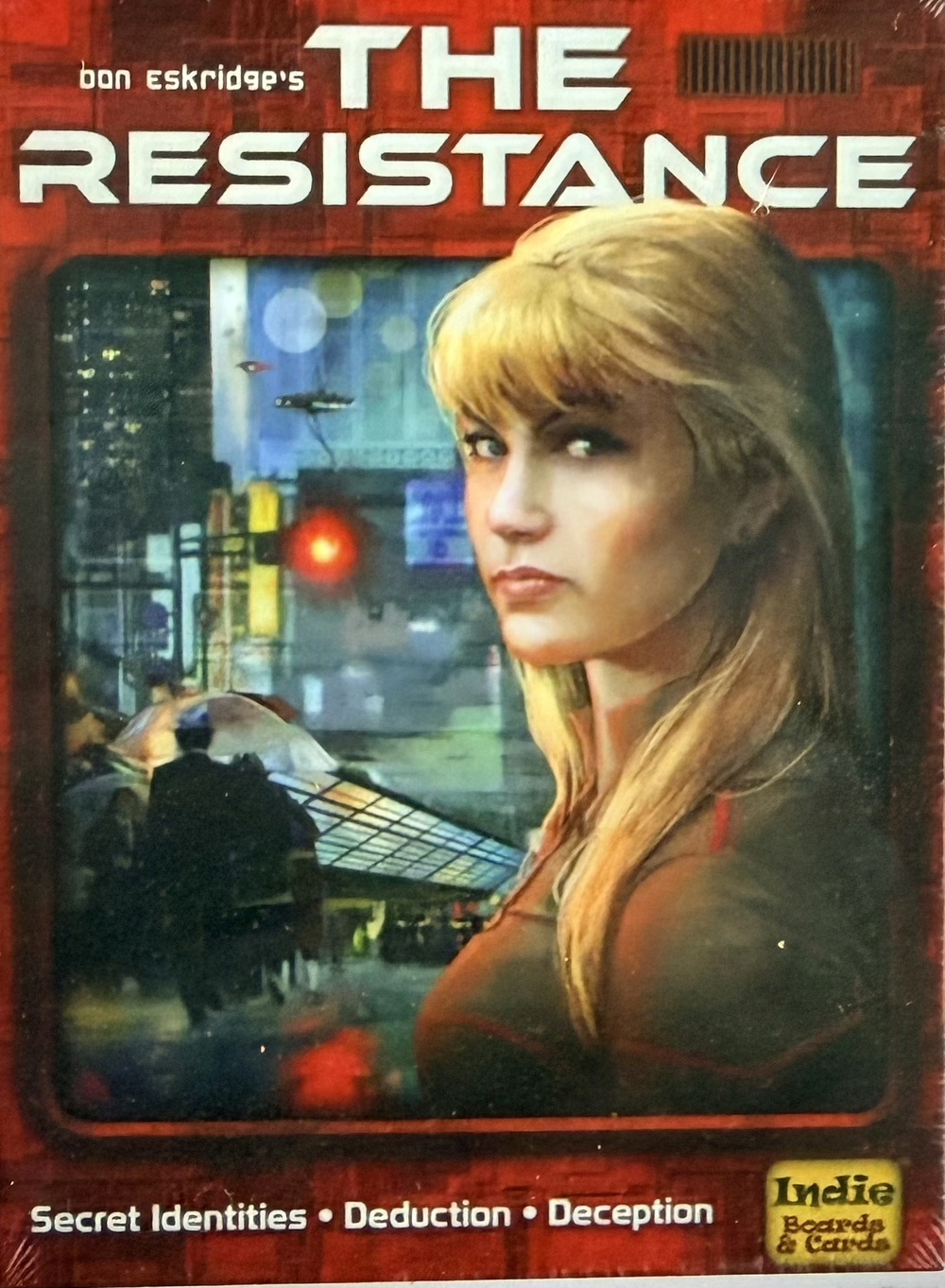
The Resistance
- Game Time: 30 mins
- Age Rating: 13+
- Objective Resistance Operatives must successfully complete three missions by identifying the Imperial Spies in their midst, while the Spies strive to sabotage those missions without blowing their cover.
- Best For: Groups who hate “player elimination” (everyone plays until the very end).
- Players: 5–10
- Difficulty: Moderate
If you enjoy social deduction, this is a must-have for your collection. It captures that perfect balance of tension and table talk that keeps a group engaged for hours.
The experience evolves as your group gets more familiar with the mechanics. You’ll find that spies tend to win more often when new players are at the table, but don’t let that discourage you.
Once everyone gets a feel for the bluffing and logic involved, the win rate evens out significantly. It’s worth sticking with it through those early games because the deeper strategy is where the game truly shines.

- Game Time: 30-90 mins
- Age Rating: 13+
- Objective: Villagers must deduce and eliminate all hidden Werewolves through daily discussion and voting, while the Werewolves aim to outnumber the Villagers by secretly “eating” them each night.
- Best For: Huge parties and large family gatherings.
- Players: 7–30+
- Difficulty: Easy
- Why I Love It: With dozens of unique roles (like the Seer or the Bodyguard), no two games ever feel the same.
- Note: This is a player elimination game. Some people dont like this component as people can feel left out.

- Game Time: 10-15 mins
- Age Rating: 8+
- Objective: While most players try to identify who stole the cheese during the “night” phase, the Thief must successfully deflect suspicion and remain undetected until the end of the round.
- Best For: Families with younger kids or a quick “filler” game.
- Players: 4–8
- Difficulty: Very Easy
Why I Love It: This is the family-friendly version of Ultimate Werewolf in a way. It uses custom dice and a “sleep” mechanic that is simpler to manage.
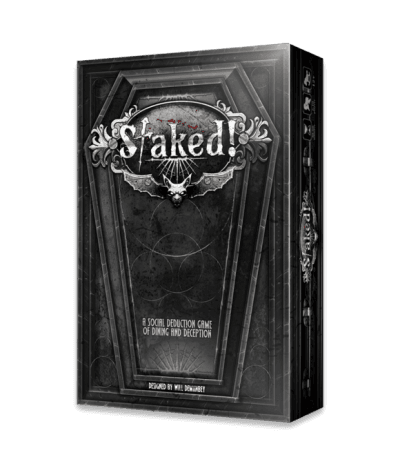
Before diving into the rules, let’s look at the essential details of this hidden-role party game:
- Designer: Will deManbey
- Publisher: Plain Spaghetti Games
- Player Count: 6–10 players (expands up to 12 with expansions)
- Play Time: 45–60 minutes
- Recommended Age: 12+
- Core Mechanics: Secret roles, asymmetric teams, voting tokens, variable player powers, and active ghost mechanics.

- Player Count: 4 to 8 players
- Play Time: 20-30 minutes
- Publisher: Pull the Pin Games
- Age Rating: Various depending on versions but from 12+ or 14+
- Core Mechanics: Hidden Roles, Player Elimination, Grid-based Identity
- Win Condition: Eliminate the opposing team’s leader
- Watch Video on How to Play Here
“I absolutely love this game and highly recommend it, especially if you enjoy high-energy social deduction games.
Quick to set up and incredibly easy to learn once you get going.

- Publisher: Oink Games
- Player Count: 4 to 8 players
- Play Time:~15 minutes
- Age Rating: 9+
- Core Mechanics: Hidden Roles, Question and Answer, Traitor Detection
- Jump To: How to Play
I enjoy playing Insider because it is incredibly easy to explain, fast to play, and serves as the perfect tiny game for travel that can spark up any gathering.
The gameplay is well-planned, transitioning from a cooperative word-guessing phase into an accusation showdown to uncover the traitor. This clever sequence forces the hidden insider to actively participate.
A wide variety of ages enjoy this game also.
Social Deduction Games - How To Plays
- 45 minutes
- 5-10 players
- 17+
One of the most iconic social deduction board games, Secret Hitler board game is set in 1930s Germany during the rise of fascism.
The game pits players against each other in a battle between two teams: Liberals and Fascists. The ultimate goal is for the Liberals to enact five liberal policies or assassinate Hitler, while the Fascists aim to enact six fascist policies or elect Hitler as Chancellor after three fascist policies have been passed.
Objective
Liberals must pass five liberal policies or assassinate Hitler, while Fascists aim to pass six fascist policies or elect Hitler as Chancellor.
How to Play: Secret Hitler
Secret Hitler is a dramatic game of political intrigue and betrayal set in 1930s Germany. Players are secretly divided into two teams: the Liberals and the Fascists.
1. The Goal
Liberals: Enact 5 Liberal Policies OR Execute Hitler.
Fascists: Enact 6 Fascist Policies OR Elect Hitler as Chancellor (anytime after the 3rd Fascist Policy is enacted).
2. Setup
Prepare Envelopes: Each player receives an envelope containing:
One Secret Role card (Liberal, Fascist, or Hitler).
One Party Membership card (Liberal or Fascist).
One Ja! (Yes) and one Nein (No) Ballot card.
The Deck: Shuffle 11 Fascist Policies and 6 Liberal Policies together and place them on the Draw pile.
Roles: Use the table below based on player count:
- 5 Players: 3 Liberals, 2 Fascists (1 Fascist + Hitler)
- 6 Players: 4 Liberals, 2 Fascists (1 Fascist + Hitler)
- 7 Players: 4 Liberals, 3 Fascists (2 Fascists + Hitler)
- 8 Players: 5 Liberals, 3 Fascists (2 Fascists + Hitler)
- 9 Players: 5 Liberals, 4 Fascists (3 Fascists + Hitler)
- 10 Players: 6 Liberals, 4 Fascists (3 Fascists + Hitler)
3. The Night Phase (Opening Eyes)
Before the first round, players must identify their teammates.
5-6 Players: Hitler and the Fascist open their eyes and look at each other.
7-10 Players:
Everyone closes eyes.
Fascists (not Hitler) open their eyes to recognize each other.
Hitler keeps eyes closed but gives a Thumbs Up so the Fascists know who he is.
4. Gameplay Structure
Each round consists of three distinct phases:
A. Election
Pass Presidency: The President placard moves clockwise.
Nominate: The new President nominates a Chancellor Candidate.
Term Limits: The last elected President and Chancellor cannot be the new Chancellor.
Vote: Everyone reveals Ja! or Nein cards simultaneously.
Success (Majority Ja!): The Candidates become the Government. If 3 Fascist policies are active, check if the Chancellor is Hitler (if yes, Fascists win).
Failure: The Election Tracker advances. If it reaches 3, the top policy in the deck is enacted automatically.
B. Legislative Session
The President and Chancellor enact a policy in secret:
The President draws 3 tiles, discards 1 face down, and passes 2 to the Chancellor.
The Chancellor discards 1 face down and places the remaining policy on the board.
No Talking: Communication is forbidden until the policy is placed. You may (and likely will) lie about what you saw afterward.
C. Executive Action
If a Fascist Policy was enacted, the President may be granted a special power:
Investigate: Look at a player’s Party Membership card.
Special Election: Choose the next Presidential Candidate (rotation resumes normally afterward).
Policy Peek: Look at the top 3 tiles of the Policy deck.
Execution: Kill one player. If they were Hitler, Liberals win.
5. The Veto Power
After 5 Fascist Policies are enacted, the Veto is unlocked. During a Legislative Session, if the Chancellor dislikes both cards, they can propose a Veto. If the President agrees, all 3 cards are discarded and the Election Tracker advances.
6. Strategy Tips
For Liberals: Tell the truth. Lying creates the chaos Fascists need to win.
For Fascists: Everyone should claim to be a Liberal.
For Hitler: Play like a “Super-Liberal.” Build trust early so you can be elected Chancellor later when it matters most.
The Resistance
- 30 minutes
- 5-10 players
- 13+
I like that The Resistance is the ultimate test of trust. Set in a gritty, dystopian future, it’s a social deduction game that keeps everyone on the edge of their seats because, unlike other games in this genre, nobody ever gets “knocked out.” Everyone stays in the fight until the very last mission.
In my experience, this is the perfect party game if you want a pure battle of wits without the distraction of complex cards or character abilities.
How I Play: The Mission Cycle
1. Secret Assignments I deal out the role cards in total silence. If you’re a spy, you get to see who your teammates are during the “heads down, thumbs up” phase. If you’re Resistance? You’re completely in the dark.
2. Building the Team Each round, a Leader proposes a team to go on a mission. Everyone at the table then votes Approve or Reject. This is where I start looking for “sus” behavior—why is the Leader so eager to include a certain player?
3. The Mission Result If the team is approved, they each play a secret “Success” or “Fail” card.
Resistance members MUST play Success. * Spies can choose to play Success (to blend in) or Fail (to sabotage).
Warning: If even one Fail card appears, the whole mission fails!
Tips for Success
For the Resistance (The Good Guys)
Watch the Votes: I always pay more attention to how people vote than what they say. Spies often vote together to get their teammates onto missions.
Trust Your Gut: If someone is being too quiet or too aggressive, they might be overcompensating.
For the Spies (The Saboteurs)
The “Long Game”: I sometimes play a “Success” card on an early mission to gain the group’s trust. It makes the final sabotage much more devastating.
Sow Confusion: If a mission fails, I immediately try to point the finger at someone else on the team. If you can get the Resistance to argue with each other, you’ve already won.
- 30-90 minutes
- up to 75 Players
- 13+
Ultimate Werewolf is one of the most popular social deduction board games, and it’s perfect for large groups. In fact, the game designer, Ted Alspach, said it can have up to 75 players!
Ultimate Werewolf is a two-team game: Villagers and Werewolves. The Villagers don’t know who the Werewolves are, and the Werewolves try to remain undectected while they slowly kill off the Villagers.
One player is selected as the moderator who “runs” the game, facilitating each stage of Ultimate Werewolf. And another player becomes the seer. The game ends when either all the Villagers or all the Werewolves are dead.
How to Play: One Night Ultimate Werewolf
In this fast-paced version of Werewolf, roles change, cards are swapped, and everyone has a special ability. The game always uses three more cards than the number of players, ensuring some roles remain in the center.
Night Wake Order
If you aren’t using the free app, you must wake the roles in this exact order:
- Doppelgänger
- Werewolves
- Minion
- Masons
- Seer
- Robber
- Troublemaker
- Drunk
- Insomniac
Role Abilities
The Doppelgänger Wakes up first and looks at one other player’s card.
She immediately becomes that role.
If she sees a Seer, Robber, Troublemaker, or Drunk, she performs that action now.
If she sees a Werewolf or Mason, she wakes up later when those roles are called.
The Minion Wakes up to see who the Werewolves are.
The Werewolves stick out their thumbs (eyes closed) so the Minion can identify them.
The Minion is on the Werewolf team, but the Werewolves do not know who the Minion is.
The Masons Always used in a pair.
They wake up and look for each other.
If a Mason doesn’t see another player with eyes open, the other Mason card is in the center.
The Drunk Too “drunk” to know who he is.
He must exchange his card for one of the three cards in the center without looking at the new one.
He is now that new role and on that team, but he won’t know which until the game ends.
The Insomniac Wakes up at the very end of the night.
She looks at her own card to see if the Robber or Troublemaker changed it during the night.
This role is best used when cards are likely to be swapped.
Pro-Tips for Setup
Use Tokens: Place the corresponding role tokens in the center so everyone knows which roles are active this round.
Team Balance: Don’t worry if one team wins consistently at first; strategy evolves as players learn the roles.
Creative Play: Try a “Village of Specials” by using no standard Villager cards, or shuffle and deal completely at random for maximum chaos.
The App: It is highly recommended to use the free One Night app to manage the narration, music, and complex role interactions automatically.
And now just let the fun begin!

In this game, players receive a secret role of either the Cheese Thief or a Sleepyhead. While everyone is asleep at night the Cheese Thief will steal the cheese. Sleepheads only wake up at certain times which is based on the number you rolled on the dice. The Sleepyheads will try to hunt the thief down together.
How to Play Cheese Thief: The Night Phase
The night moves hour-by-hour from 1 a.m. to 6 a.m. You only open your eyes when the Moderator calls the number that matches your die roll.
The Cheese Thief: When your hour is called, you must physically take the cheese token and hide it.
The Sleepyheads: If you wake up and you’re alone, you get to peek at someone else’s die. If you wake up and others are awake, you have to stay still and do nothing!
Followers: These players are on the Thief’s team. Their job is to help the Thief get away with the crime.
The Day Phase: The Great Debate
Once everyone wakes up and realizes the cheese is gone, the chaos begins.
The Discussion: Sleepyheads share what they saw (or didn’t see). You can lie about your die roll, but you can never show your character card.
The Vote: On the count of three, everyone points at their prime suspect.
The Reveal: The player with the most votes must show their card.
Winning Conditions:
Sleepyhead Victory: If you catch the Cheese Thief, you win!
Thief/Follower Victory: If the Thief escapes detection (even if a Follower gets blamed instead), the Thief’s team wins.
Why This Game Works for All Ages
The beauty of Cheese Thief lies in its simplicity. Because the “night actions” are tied to dice rolls, it takes the pressure off players to remember complex rules. It’s lighthearted, the theme is adorable, and it’s one of those social deduction board games where you can play five rounds in under an hour.
The Objective
Players are secretly divided into two primary teams: the Honest Cops and the Crooked Cops.
Your hidden identity is determined by the three Integrity Cards dealt to you face-down. The majority of your cards determines your loyalty:
Honest Team: You hold a majority of “Honest” cards, or you hold the Agent card (the Honest leader).
Crooked Team: You hold a majority of “Crooked” cards, or you hold the Kingpin card (the Crooked leader).
Note: If a single player somehow ends up with both the Agent and the Kingpin cards, they form a rogue solo team and win alone if both teams fail.
The Honest team wins immediately if the Kingpin is eliminated. The Crooked team wins if the Agent is eliminated.
Setup
Adjust the Decks: Filter the Integrity and Gun decks based on your player count by removing cards marked with a number higher than your group size.
Separate the Leaders: Pull the Agent and Kingpin cards out. Shuffle them with enough random Integrity Cards so that every player receives exactly one card from this pile. Deal them out face-down.
Deal Remaining Integrity Cards: Deal two more face-down Integrity Cards to each player. Players can look at their own cards and arrange them in any order on the table face-down, but cannot change that order later.
Equip and Arm: Deal one face-down Equipment Card to each player. Place all Guns and remaining Equipment Cards in the center of the table.
First Player: The person who was most recently shot (either in a game or in real life) takes the Lead Investigator token and goes first.
Gameplay Structure
On your turn, you must perform an action, handle your aim, and pass the turn clockwise. This rapid turn cycle keeps the momentum high, which is a staple for fast-paced social deduction games.
Step 1: Take One Action
Choose exactly one of the following options:
Investigate: Look at one hidden Integrity Card belonging to any living player, then return it exactly where it was.
Arm: Take a Gun from the center of the table. If you have any hidden Integrity Cards, you must permanently flip one face-up.
Equip: Draw one Equipment Card from the deck. If you have any hidden Integrity Cards, you must permanently flip one face-up. (Note: The hand limit for Equipment is 1 card).
Shoot: Fire a Gun you are holding at the player you are currently aiming at. After resolving the shot, return the Gun to the center of the table.
Step 2: Take Aim
If you are holding a Gun at the end of your action, you must physically point the barrel at another living player. You can only change your target during this specific phase of your turn.
Step 3: End Turn
Pass the Lead Investigator token to your left.
Resolving Gunshots and Equipment
Unlike text-heavy social deduction games, Good Cop Bad Cop relies on hardware and gear cards to flip the script.
Using Equipment: Equipment Cards can be played at almost any time, even on another player’s turn to disrupt an action or counter a threat. When an item is used, resolve its text fully before any other cards or actions take place.
Getting Shot: When a player shoots you, you must flip all of your remaining Integrity Cards face-up.
Regular Officers: If you are not a leader, you are instantly eliminated. Give your items back to the center and put your equipment at the bottom of the deck.
Leaders (Agent or Kingpin): The first time you are targeted and hit, you are only wounded. Take a Wounded Token and draw an Equipment Card. A second shot will eliminate you and end the game.
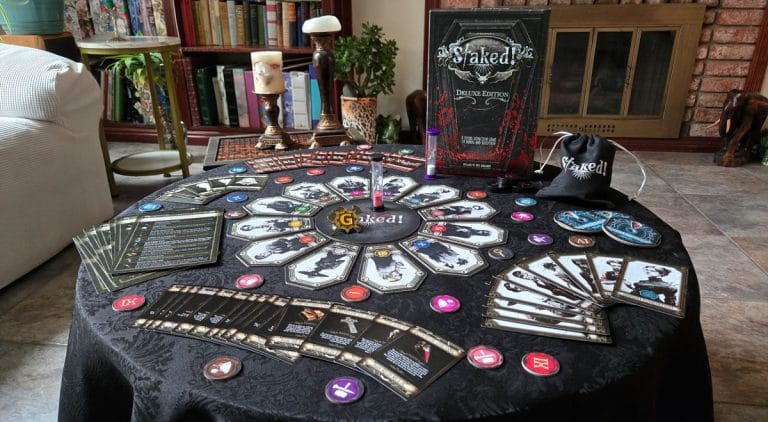
The Objective
At the start of the night, players are secretly split into two opposing factions:
The Vampire Hunters (Good Team): They hold superior numbers but begin the game entirely in the dark regarding who they can truly trust.
The Vampires (Bad Team): They are fewer in number, but they possess the critical advantage of knowing each other’s identities, allowing them to quietly coordinate their deception.
Consequently, the game ends immediately when one faction manages to eliminate every single member of the opposing team.
Key Roles to Watch
Beyond the standard teammates, special roles dramatically alter the strategic landscape:
The Alpha Hunter: A coveted title earned by gaining support from fellow players. Achieving this rank unlocks special abilities, grants access to superior voting power, and allows you to investigate other players.
The Vampire Lord: A dangerous role belonging to the bad team. The Vampire Lord has the unique ability to convert innocent Hunters into Vampires, turning friends into foes mid-game.
Scanable Gameplay Overview
1. Assign Roles & Character Selection
First, players choose from 10 unique Victorian characters and receive a face-down role card determining if they are a Hunter, a Vampire, or the Vampire Lord.
2. Discuss and Accuse
Subsequently, the floor opens for heated debate. Hunters try to spot inconsistencies while Vampires work to sow doubt, confuse the innocent, and turn the group against one another.
3. Cast Secret Votes
Instead of simple open hand-raising, players utilize a dedicated set of custom Voting Tokens. Everyone casts secret votes against the players they suspect of hiding a monstrous secret.
4. Rise from the Dead (Ghost Actions)
Crucially, death is only the beginning. Unlike older social deduction games where eliminated players sit out in silence, eliminated players in Staked! return as ghosts. They use a specific ghost voting dial and unique ghost actions to influence the living and continue fighting for their team from beyond the grave.
5. Advanced Play: Sacred Relics
Furthermore, experienced groups can introduce Sacred Relic Cards. These powerful objects grant unique, game-altering abilities that can completely shift the tide of a vote right when a team needs it most.
How to Play Insider
The Objective
In Insider, players are divided into three distinct hidden roles:
The Master: Knows the secret word and answers the group’s questions honestly.
The Commons (Coyotes): Don’t know the secret word. They must try to guess it within the time limit.
The Insider: Knows the secret word but must stay hidden. Their job is to subtly manipulate the Commons toward the correct answer without making themselves look too smart.
Subsequently, the game is won in stages. First, the group must collectively guess the secret word before time runs out. Following a successful guess, the Commons win if they can correctly identify and vote for the Insider. However, if the time runs out, or if the Commons accuse an innocent player at the end, the Insider walks away with a solo victory.
Setup
Prepare the Roles: Take the Role Tiles (1 Master, 1 Insider, and enough Commons to match the player count). Shuffle them face-down.
Assign Roles: Every player draws one tile secretly.
Reveal the Master: The player with the Master tile announces themselves to the group. They will act as the moderator for the round. The Insider and Commons keep their identities entirely secret.
Place the Components: Place the deck of Theme Cards and the sand timer in the center of the table.
The Night Phase
Before the questioning begins, the Master coordinates a brief “heads down” phase to establish the secret word:
Step 1: The Master asks everyone to close their eyes.
Step 2: The Master opens their eyes, draws the top Theme Card, and looks at the back of the remaining deck. The number visible on the deck determines which word on their drawn card is the secret “Theme Word.”
Step 3: The Master closes their eyes and commands the Insider to open theirs. The Insider looks at the card to learn the secret word.
Step 4: The Insider closes their eyes. The Master puts the card away, tells everyone to open their eyes, and flips the sand timer to start the game.
Gameplay Structure
The game unfolds across two distinct, tense phases, transitioning smoothly from cooperative puzzle-solving to a classic social deduction game interrogation.
Phase 1: The Guessing Game
Once the timer is flipped, all players (including the hidden Insider) begin asking the Master “Yes,” “No,” or “I don’t know” questions to narrow down the secret word (e.g., “Is it an object?”, “Is it bigger than a house?”).
Because the Commons are completely clueless, they rely on natural deduction. Meanwhile, the Insider must carefully pepper in helpful questions to steer the group away from dead ends. If the group fails to guess the word before the sand runs out, everyone loses instantly except the Insider.
Phase 2: The Interrogation
The moment someone shouts out the correct secret word, the timer is immediately flipped upside down to preserve the remaining time. This leftover sand dictates how long the table has for the final discussion.
During this showdown, everyone debates who the Insider is. The group analyzes the questions asked during Phase 1:
Did someone pivot the conversation too perfectly toward the answer?
Did someone guess a highly specific word out of nowhere?
End of the Game & Winning
Once the discussion time expires, the round concludes with a dramatic showdown vote:
The Accusation: First, the player who guessed the correct word is put on trial. The group votes on whether they believe that person is the Insider.
The Vote: If the group votes “Yes” and they are correct, the Commons win. If they vote “Yes” but that person was just a lucky Common player, the Insider wins.
The Free Vote: If the group votes “No” (believing the guesser is innocent), a final countdown happens. On the count of three, everyone points at the person they suspect most. The player with the most votes must reveal their identity. If the group successfully catches the Insider, the Commons win. If the Insider evades detection, they win the game.
What is a Social Deduction Game?
If you’re new to the social deduction games genre, the concept is simple: its all about hidden roles.
In most social deduction games, you are assigned a secret identity at the start. One team is usually the “Good Guys” (the majority), and the other is the “Bad Guys” (the hidden saboteurs). Your objective is to uncover who is on your team and who is lying through their teeth.
I love these games because they revolve around:
Bluffing: Can you keep a straight face when you’re the traitor?
Observation: Did your friend just blink weirdly when you accused them?
Manipulation: Can you convince the group to trust you over someone else?
As Wikipedia puts it, it’s a classic battle of good versus evil where alliances are forged and betrayed in the blink of an eye.
Why These Games Are Perfect for Parties
What makes social deduction board games so thrilling is that the game happens above the table. You don’t need to be a “board gamer” to enjoy them—you just need to be a good liar or a great detective. They act as incredible icebreakers and often result in stories that your friend group will be talking about for years.
Why Do I Find Social Deduction Games fun?
The beauty of social deduction board games lies in their ever-changing dynamics. Each session feels unique, with different players, strategies, and outcomes, making them replayable time and time again.
Social deduction games bring people together through lively, nonstop interaction and analyzing if your friends are being honest or deceptive.
Players talk, make deals, and try to win others over—either by proving they’re trustworthy or by cleverly hiding their true roles. The fun comes from figuring out who’s telling the truth and who might be keeping secrets.
Keep Exploring
- Articles page or
- Board games for adults
- Check out Hybrid Games.
- Try something completely different with fun party games
- Quick social deduction games
- Curious Sober – Best games for a Curious Sober Social Night