

Top 5 Proven Board Games for Shy Kids to Ease Social Anxiety
Board games for shy kids or introverted children or those who prefer to think before they speak, boisterous game nights can feel overwhelming. The pressure of rapid-fire negotiation, shouting, or constant verbal interaction can turn a fun activity into a source of anxiety. In 2026, we understand that play should be inclusive, nurturing social-emotional skills without forcing children out of their comfort zone.
My focus is on board games for shy kids and introverted players, emphasizing non-verbal communication, thoughtful turns, and cooperative or low-confrontation gameplay. I focus on games where strategy, observation, and shared focus shine, allowing every child to engage at their own pace.
Introverted Children's Board Games Must Haves
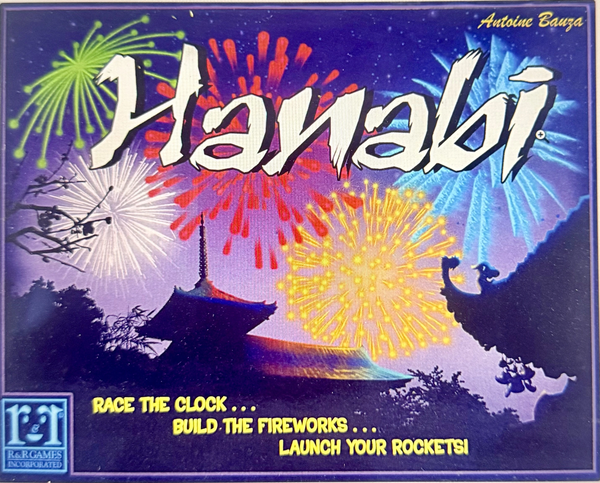
Hanabi
A truly unique cooperative game where you know everyone’s cards but your own.
- Age Rating: 8+
- Number of Players: 2–5
- Game Time: 25–30 minutes
- Game Overview: You and your team are clumsy fireworks technicians who’ve mixed up the firework components. You must work together to play five different colored fireworks in ascending order (1-5) to put on a dazzling display. The catch? You can’t see your own cards!
- Objective: Play all the fireworks correctly (1-5 in each of the 5 colors) before you run out of cards or make too many mistakes.
- Game Type: Cooperative, Deduction, Card Game
- How to Play: Players take turns giving “clues” about a player’s hand (e.g., “You have two red cards” or “You have a ‘3’”). The clues must be precise. The person receiving the clue can then play a card (hopefully the right one!) or discard one to gain more clues. Silence and careful observation are key!
- Games Like: The Mind, Codenames Duet, Time Bomb
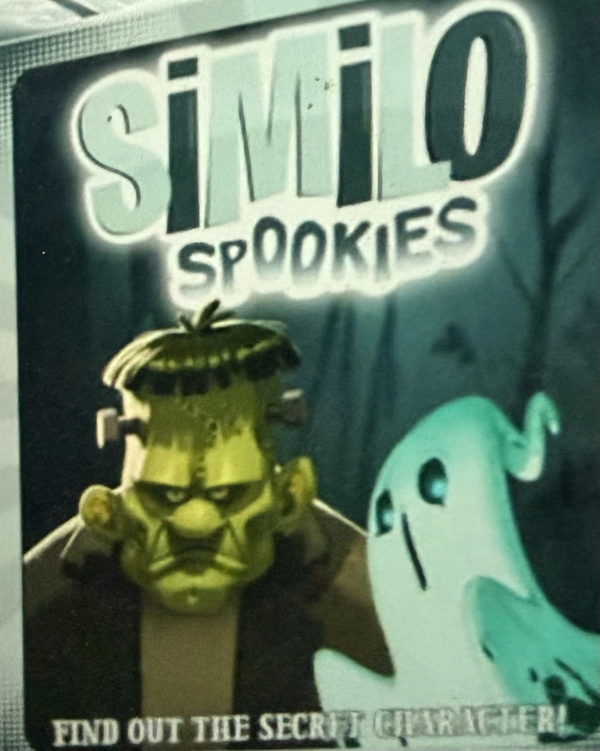
Similo
A lightning-fast deduction game that uses only “similar” or “different” clues to reveal a secret character.
- Age Rating: 8+
- Number of Players: 2+ (best with 3-6)
- Game Time: 10–15 minutes
- Game Overview: One player (the Clue Giver) knows a secret character. The other players (the Guessers) have a spread of 12 character cards on the table. The Clue Giver plays another character card from their hand, indicating if it is “similar” to or “different” from the secret character. The Guessers then eliminate cards.
- Objective: Guessers must correctly identify the secret character before they run out of eliminations.
- Game Type: Cooperative, Deduction, Card Game
- How to Play: The Clue Giver chooses a card and places it vertically if “similar” or horizontally if “different” to the secret character. Guessers discuss and remove cards. With each round, more cards are removed until only one is left. The beauty is in the silence of the clue giver.
- Games Like: Mysterium (but much faster), The Detective Club.
- Bonus – Budget-friendly games with lots of difference versions – Jurassic World, History, Wild Animals.

Parks
A visually stunning, peaceful game about trekking through National Parks.
- Age Rating: 10+
- Number of Players: 1–5
- Game Time: 40–70 minutes
- Game Overview: Players are hikers, journeying through a year of seasons, visiting different National Parks. You collect resources (sun, water, mountains, trees) to “visit” parks and take photos. It’s a game of resource management and set collection with very little direct player conflict.
- Objective: Visit the most valuable National Parks and collect photos to earn the most victory points by the end of the game.
- Game Type: Resource Management, Set Collection
- How to Play: On your turn, you move one of your two hikers along a trail, activating the action of the space you land on (e.g., gain a sun token, swap resources). You then use these resources to claim a Park card. The challenge is in planning your route efficiently.
- Games Like: Everdell, Ticket to Ride (for its calming theme).
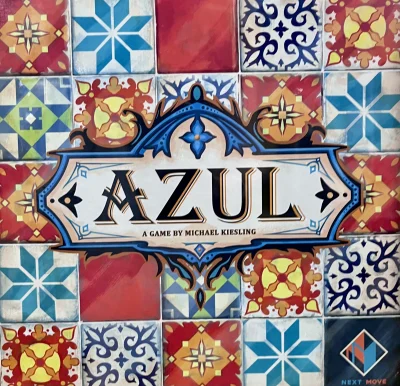
Azul
A beautifully tactile abstract strategy game of tile-laying.
- Age Rating: 8+
- Number of Players: 2–4
- Game Time: 30–45 minutes
- Game Overview: Players are competing mosaic artists, drafting colorful tiles from factory displays to decorate the walls of the Royal Palace of Evora. You want to complete rows and patterns to score points, but be careful not to take too many tiles, or you’ll incur penalties!
- Objective: Score the most points by skillfully arranging tiles on your player board to create patterns and complete columns/rows.
- Game Type: Abstract Strategy, Pattern Building, Tile Drafting
- How to Play: In each round, players take turns drafting all tiles of a certain color from a “factory display” or from the center. You then place these tiles onto your pattern lines on your player board. Once all tiles are drafted, you move completed patterns to your mosaic wall and score points.
- Games Like: Sagrada, Patchwork.
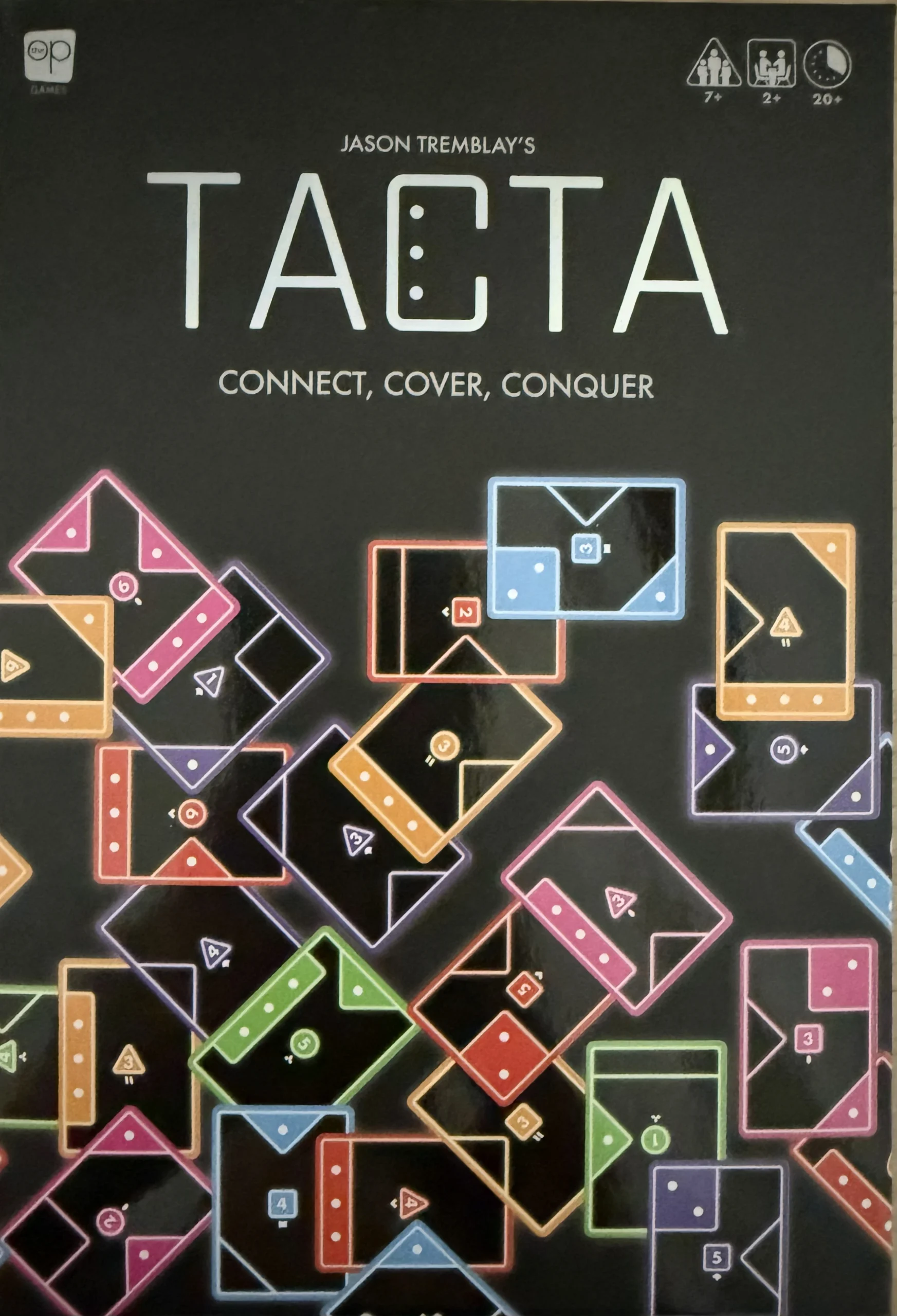
Tacta
A clever abstract strategy game where you try to secure the most dots.
- Age Rating: 6+
- Number of Players: 2-6
- Game Time: 15–20 minutes (2 Players), 40 minutes for 6 players
- Objective: Lay cards to protect your dots and have the most visible dots at the end of the game.
- Game Type: Abstract Strategy,
- How to Play: You flip, rotate, and tactically place cards so your dotted colored shapes overlap your opponents’—you aim to have the most visible “dots” at the end. It’s simple, yet rich with spatial strategy.
- Games Like: Hive
- Bonus – A popular budget-friendly card game.

Splendor
A sleek, elegant game of gem collecting and merchant strategy.
- Age Rating: 10+
- Number of Players: 2–4
- Game Time: 30–45 minutes
- Game Overview: Players take on the role of wealthy Renaissance merchants. You collect gem tokens (rubies, emeralds, sapphires) to buy development cards. These cards give you ongoing gem bonuses and sometimes prestige points, allowing you to buy even more expensive cards and attract nobles.
- Objective: Be the first player to accumulate 15 prestige points to win.
- Game Type: Engine Building, Set Collection, Card Drafting
- How to Play: On your turn, you can either take gem tokens (up to three of different colors, or two of the same), buy a development card (paying with gems and your existing card bonuses), or reserve a card (taking a gold token, which acts as a wild gem).
- Games Like: Century Spice Road, Gizmos.
Common Questions Parents Ask About Board Games for Shy Kids
- Will these games still teach social skills? Absolutely! These games excel at teaching non-verbal communication, active listening, and empathy (understanding what others are thinking), which are crucial social skills for introverted children.
- Are they “boring” if there’s less talking? Absolutely not. I find that with the quiet focus, I often have deeper strategic thinking and more intense moments of shared discovery or suspense. The engagement comes from the puzzle, solution-focused, not the chatter.
- Can these help build confidence? Yes, by providing a safe space for success/achievement. When a quiet child contributes a vital clue in Hanabi or makes a game-winning move, it builds confidence in their abilities without requiring them to “perform” socially.
Hanabi FAQs:
- Q: Can you gesture or point to cards in Hanabi? No, absolutely not. This is a common mistake. Clues must be strictly verbal and follow the rules (color or number). Any non-verbal cue is considered cheating.
- Q: What if someone plays the wrong card? You get a “fuse token.” Collect three fuse tokens, and the fireworks display (and your game) explodes!
- Q: Is it fun with just two players? Yes, Hanabi is excellent at all player counts, but 2-player mode requires even more precise clue-giving and memory.
Similo FAQs:
- Q: Can the Clue Giver In Similo make sounds or facial expressions? No. The Clue Giver is completely silent. Only the placement of the “similar” or “different” card can convey meaning.
- Q: What if the Guessers eliminate the secret character? Game over, you lose! You must be very careful with your eliminations.
- Q: Are there different versions of Similo? Yes! Similo has different themed decks (Fables, History, Wild Animals, Fantasies, etc.) that can be played on their own or mixed together for more challenging clues.
Parks FAQs:
- Q: Is Parks purely competitive? While you are scoring points to win, the interaction is mostly “indirect competition” (someone might take a park you wanted) rather than direct attacks. It feels very collaborative.
- Q: Is there a solo mode in Parks Board Game? Yes, Parks has a well-regarded solo mode where you compete against an automated “Ranger” opponent.
- Q: What makes Parks Board Game good for introverted players? Its serene theme, beautiful artwork, and the focus on individual strategic planning mean players can largely immerse themselves in their own game without needing constant banter.
Azul FAQs:
- Q: Is there much player interaction? Interaction is indirect. You primarily focus on your own board, but you will strategically draft tiles to deny opponents specific colors or force them to take penalty tiles.
- Q: What makes Azul good for shy players? The game is very visual and tactile. Players spend most of their time quietly planning their mosaic, making it ideal for those who prefer less verbal back-and-forth.
- Q: Is there a travel version? Yes, Azul Mini features smaller, recessed boards and tiles that “click” into place, making it perfect for travel.
Tacta FAQs:
- Q: Is Tacta easy to learn? Yes, you can learn this game in less than 60 seconds.
- Q: What makes it good for quiet players? As a 2-6 player abstract game, it’s inherently a quiet, thoughtful play. You need to focus on securing your dots in a safe place while trying to find a way to cover your opponent’s dots.
Splendor FAQs:
- Q: Is there much competition in Splendor? It is a competitive game, but doesn’t require interaction with other players. I love this because it is a strategic game and you can think about your next choice of gems to collect or the card you want and how you might achieve that.
- Q: Does it have good replayability? Yes, the variety of development cards and noble tiles ensures that each game presents new strategic puzzles.
- Q: What makes Splendor good for introverted people? The game’s flow is smooth and turn-based, allowing ample time for players to plan their moves and optimize their “engine” of gem production without needing constant conversation. Personally, it’s one of my all-time favourite board games.
Keep Exploring
- Low Sensory Board Games for Kids with Autism
- Strategy games for families
- Sea Salt & Paper – another competitive but low-interaction game, finding pairs and sets.
- Word games – often low interaction, but fun, strategic thinking games
- Cooperative Games—take the pressure off you and focus on the “we” and “us” factor.
- Best Family Games for 2026
- Have young children and would like to teach emotional self-regulation skills? Read how board games can teach emotional self-regulation here.
Drop a note
Do you have shy children? And have games they enjoy playing without the pressure of social interactions. I’d love to hear from you and share with our wider community. Thanks Gina